
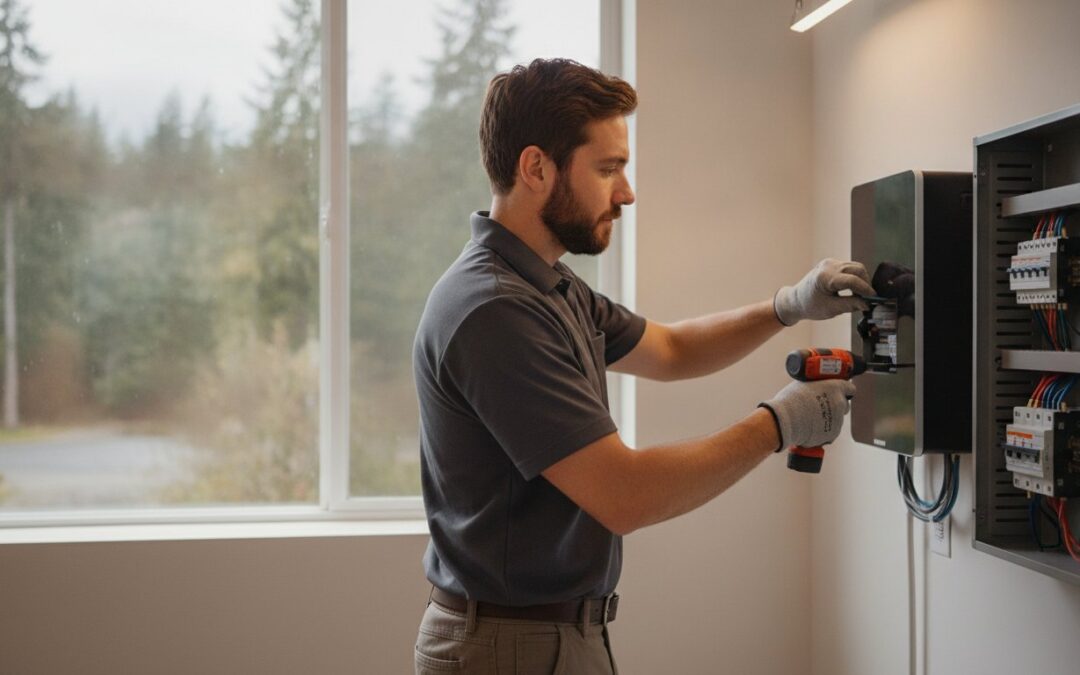
When the next Puget Sound windstorm rolls through Renton, the last thing you want to do is scramble in the dark to thread extension cords through a cracked, wet window. It’s a frustrating, cold, and often dangerous way to manage a power outage that many homeowners simply accept as the norm. You’ve likely worried about the risks of “backfeeding” your home or accidentally damaging your expensive appliances while trying to keep the refrigerator running. It’s stressful to manage a complex, makeshift backup system when you’re just trying to keep your family warm and safe.
Working with a professional generator transfer switch installer is the most reliable way to gain peace of mind before the clouds turn grey. We’ll help you understand the critical differences between manual transfer switches, automatic systems, and interlock kits. You’ll learn how a code-compliant installation protects the local grid, meets the latest Washington State Electrical Code, and provides an easy-to-use power solution that your whole family can operate with confidence during the next big storm.
Key Takeaways
- Learn how a transfer switch acts as a critical safety barrier to prevent backfeeding, protecting both your home’s electronics and local utility workers.
- Compare the practical differences between dedicated transfer switches and cost-effective interlock kits to determine which fits your backup power needs.
- Discover why hiring a licensed generator transfer switch installer is the only way to ensure your system meets current King County permit and safety codes.
- Understand how to correctly size your setup, from 30-amp manual inlets for portable units to fully automatic switches for standby generators.
- Get a clear look at the professional installation process, from the initial electrical audit to the final safety test, so you’re ready before the next storm.
Why Seattle Homeowners Need a Professional Generator Transfer Switch Installer
When a major windstorm hits the Puget Sound, the immediate goal is keeping your family warm and your food cold. Most homeowners start with a portable generator and a tangle of extension cords, but this temporary fix has serious limitations. A transfer switch is a permanent safety device that isolates your home from the utility grid. It acts as a bridge between your backup power source and your electrical panel, ensuring that electricity only flows where it’s supposed to. Without this device, you’re forced to choose which lamps to plug in while your most important systems, like your furnace, stay dark.
The primary reason to hire a professional generator transfer switch installer is to prevent the life-threatening danger of backfeeding. Backfeeding occurs when a generator is plugged directly into a wall outlet, sending electricity out of the house and back into the utility lines. This can electrocute utility workers who are trying to fix the grid. It also risks an electrical fire if the power suddenly returns. A professional installation creates a physical barrier that makes backfeeding impossible. It’s about protecting your neighbors and the crews working in the storm just as much as it’s about protecting your own property.
In South King County, many homes rely on hardwired appliances that extension cords simply can’t reach. If you have a well pump, a furnace, or a built-in microwave, you need a transfer switch to power them. DIY generator setups often fail during major King County windstorms because they lack the robust weatherproofing and proper wire sizing required for our climate. Professional installers ensure your system is ready for the rain and wind that define a Washington winter.
The Role of the Transfer Switch in Home Safety
We install switches that utilize a “break-before-make” mechanism. This means the switch physically breaks the connection to the utility grid before it makes a connection to your generator. This sequence protects your sensitive electronics from the massive power surges that often occur when the grid is restored. Local inspectors in Renton and Kent require these devices because they’re the only way to guarantee a legal and safe backup power transition. It’s a standard that keeps your home’s electrical panel from becoming a hazard during an emergency.
Common Backup Power Challenges in the Pacific Northwest
Our region’s high humidity and heavy rainfall require specific weatherproofing for outdoor power inlets. If these aren’t sealed correctly, moisture can lead to short circuits or corrosion. For larger homes in Auburn and Maple Valley, professional sizing is critical to ensure your switch can handle the amperage your generator produces. A transfer switch is the only code-legal gateway for backup power. Proper sizing prevents you from tripping breakers every time the refrigerator kicks on, giving you a seamless experience when the lights go out.
Transfer Switches vs. Interlock Kits: Which is Right for You?
Homeowners in Renton often ask which system is better for their specific needs. While both methods safely connect your generator to your home, they offer very different experiences during a power outage. Choosing the right setup depends on your budget, your technical comfort level, and how much of your home you need to power. If you want a deeper look at the tradeoffs, our detailed guide on generator transfer switch vs interlock kit breaks down every factor to help you decide. A professional generator transfer switch installer can help you weigh these factors to find the most reliable fit for your family. Both options provide a safe alternative to the “extension cord tangle” and ensure your home remains a sanctuary when the grid goes down.
Generator Interlock Kits (Lockout Kits)
An interlock kit is a clever mechanical solution. It uses a sliding metal plate installed directly on your existing electrical panel. This plate ensures that your main utility breaker and the generator breaker can never be on at the same time. It’s a simple, effective way to prevent backfeeding without adding a secondary panel. Many families in Auburn and Kent prefer this method because it feels less intrusive to their current electrical setup. If you’re new to this option, our step-by-step resource on how to use a generator interlock kit walks you through the entire process so you can operate it safely and confidently during an outage.
- Pros: These kits are generally more affordable than a full transfer switch. They also give you the flexibility to power any circuit in your panel, as long as you don’t exceed your generator’s capacity.
- Cons: Because you have access to the whole panel, you must manually manage the load. If you turn on too many appliances at once, you’ll stall the generator. It requires a bit more technical awareness during a storm.
Dedicated Manual Transfer Switches
A dedicated transfer switch is essentially a secondary electrical sub-panel. We install it next to your main panel and wire specific, critical circuits directly into it. Common choices include the refrigerator, furnace, well pump, and essential lighting circuits. This creates a dedicated “emergency” panel that is ready to go at a moment’s notice.
- Pros: This setup is nearly foolproof. You simply flip the switches from “Line” to “Gen,” and your pre-selected circuits are powered. It’s the best option for family members who want a straightforward, stress-free process.
- Cons: The initial investment is higher because it involves more hardware and labor. You are also limited to the specific circuits we wire into the switch.
Safety is our top priority. Whether you choose an interlock or a transfer switch, your installation must meet the latest safety standards. Washington State is moving toward the 2026 National Electrical Code (NEC) standards, which emphasize clear labeling and robust safety mechanisms. A licensed generator transfer switch installer ensures that your setup passes local Renton inspections and provides the peace of mind you deserve. We’ve helped South King County families stay safe since 1952, and we’ll make sure your system is ready for whatever the Pacific Northwest weather throws your way.
Manual vs. Automatic Transfer Switches: Sizing Your Solution
Choosing the right switch is about matching your power source to your specific daily needs. The choice between a manual and automatic switch usually comes down to what’s sitting in your garage or on your side yard. If you’re using a portable gas generator, a manual switch is the standard partner. If you’ve invested in a permanent standby unit, an automatic system is a requirement. A professional generator transfer switch installer will help you determine the correct amperage for your home to ensure your system doesn’t fail when you need it most.
Sizing is about more than just fitting a box on the wall; it’s about the electrical capacity of your inlet. Most suburban homes in Renton use a 30-amp inlet, which safely handles about 7,200 watts of power. This is typically enough to keep the lights on and the refrigerator running. However, if you’ve upgraded to a larger portable unit that produces 10,000 watts or more, you’ll need a 50-amp inlet. Using an undersized switch can lead to overheating and potential damage to your home’s wiring. We take the time to calculate your total potential load so your backup system remains a reliable asset for years.
When to Choose a Manual Switch
Manual switches are the most common choice for portable generators under 10,000 watts. They’re ideal for homeowners in Renton and Kent who don’t mind a five minute setup process during an outage. You’ll need to roll the generator outside, start it up, and connect the heavy duty power cord to the inlet box on your home. Once the generator is running, you simply flip the levers on the transfer switch to move your home from grid power to generator power. It’s a cost effective, highly reliable solution for suburban residential use.
The Case for Automatic Transfer Switches (ATS)
An automatic transfer switch is the “set it and forget it” solution. These are required for whole home standby generators like those from Generac or Kohler. When the grid fails, the ATS detects the loss of voltage and commands the generator to start. Within seconds, it seamlessly transitions your home to backup power without you ever having to step outside. This is an essential setup for residents in Auburn or Maple Valley who rely on medical equipment, have critical home office needs, or simply want the peace of mind that their home will stay powered even if they aren’t there to manage it.
What to Expect During Your Transfer Switch Installation
Hiring a professional generator transfer switch installer is about more than just mounting hardware on a wall. It’s a methodical process designed to ensure your home remains a safe haven during the unpredictable Pacific Northwest storm season. From the initial site audit to the final safety test, we handle every technical detail so you don’t have to guess if your system will work when the lights flicker and go out. Our goal is to provide a seamless experience that leaves you feeling prepared and confident.
Step 1: Load Calculation and Site Audit
We begin with a detailed load calculation to determine which circuits are truly critical for your lifestyle. This isn’t just about the refrigerator; it’s about your well pump, furnace, and essential lighting. We also evaluate your existing electrical panel to verify it has the physical space and amperage capacity for a new installation. We look for signs of wear or outdated components that could compromise your safety. For many older homes in the Seattle area, we may suggest Electrical Panel Upgrades to ensure your backup system has a stable and modern foundation.
Step 2: Installation and Permitting
After the audit, we install the three main components: the transfer switch, the weatherproof outdoor power inlet box, and the heavy-duty generator cord. Navigating the permitting process is one of the most important services we provide. We coordinate directly with local building departments in cities like Des Moines and Burien to secure the necessary King County permits. This ensures your installation meets the 2026 safety standards and stays fully compliant with local electrical codes. Having a licensed professional handle this paperwork protects your home’s insurance coverage and future property value.
Step 3: Testing and Homeowner Training
The final step is a live simulated outage test where we walk you and your family through the entire process until you feel completely comfortable. We’ll show you how to use the dedicated generator cord and explain the importance of safe generator placement to prevent carbon monoxide poisoning. We treat this walkthrough as a neighborly conversation, making sure every family member knows the routine. To restore power during a real outage, you’ll start your generator, plug it into the exterior inlet, and then flip each circuit on the transfer switch from the “Line” position to the “Gen” position.
If you’re ready to secure your home’s power before the next windstorm, contact a trusted generator transfer switch installer at Reinhart Electric today.
Why Trust Reinhart Electric for Your Backup Power Setup?
Since 1952, our team has been the steady hand for homeowners across the Seattle area. We’ve seen every major windstorm and ice event that has challenged our local grid over the last seven decades. Choosing a generator transfer switch installer is an investment in your family’s safety, and we treat that responsibility with the highest level of care. We are a family-owned business that values honesty and multi-generational stability. Our goal isn’t just to complete a job; it’s to build a long-term partnership with our neighbors in Renton and South King County.
We prioritize transparent, upfront communication. You’ll never deal with high-pressure sales tactics when you call us. We focus on providing helpful guidance so you can integrate your backup power with other essential safety measures. This might include whole-house surge protection or a service change to modernize an aging electrical panel. Our methodical approach ensures every switch meets our strict professional standards. We want you to feel supported from the first phone call to the final walkthrough.
Our Local Expertise in South King County
We have a deep understanding of how local utility grids like Puget Sound Energy and Seattle City Light operate. This knowledge is vital when isolating your home from the utility lines during an outage. We also stay current on the specific building codes in Auburn, Kent, and Tukwila to ensure your installation passes every local inspection without a hitch. Our commitment to reliability means we’re here for our neighbors when the weather turns. We don’t just work in these communities; we’ve been rooted here for generations.
Ready for the Next Storm?
Don’t wait for the first frost or the next major wind event to realize your home isn’t prepared. Scheduling a backup power audit today allows us to design a personalized solution that fits your specific budget and the generator model you already own. We’ll help you choose the right setup to keep your furnace running and your lights on when the rest of the neighborhood goes dark. Your peace of mind is our ultimate goal, and we’re ready to help you achieve it.
Contact Reinhart Electric for a Generator Transfer Switch Quote
Stay Powered and Protected Before the Next Storm
Preparing for a Puget Sound windstorm is about more than just having a generator; it’s about having a safe and reliable way to use it. A professional installation ensures you avoid the hazards of backfeeding while keeping your most critical appliances running smoothly. Whether you choose a manual transfer switch for a portable unit or an automatic system for a standby generator, you’re making a long-term investment in your home’s safety and your family’s comfort.
Since 1952, Reinhart Electric has helped neighbors in Renton and King County navigate these technical decisions with honesty and expertise. As a licensed, bonded, and insured generator transfer switch installer, we prioritize NEC compliance and family safety in every task we perform. We’ll handle the permits and the testing so you can face the next power outage with absolute confidence. Don’t wait for the lights to flicker to start your backup power journey.
Secure Your Home’s Backup Power—Schedule an Installation Quote with Reinhart Electric
Frequently Asked Questions
Is a generator transfer switch required by law in Washington State?
Yes, the Washington State Electrical Code requires a listed transfer switch or an approved interlock kit for any generator connected to your home’s wiring. This law is in place to prevent backfeeding, which occurs when electricity flows from your home back into the utility lines. Backfeeding is illegal because it can electrocute utility workers and damage the local power grid.
Can I install a generator transfer switch myself to save money?
We strongly advise against DIY installation because this task involves working directly inside your main electrical panel. Improper wiring can lead to electrical fires, destroyed appliances, or life-threatening safety hazards. Hiring a professional generator transfer switch installer ensures your system is code-compliant, properly grounded, and passes all required King County safety inspections.
What is the difference between a 30-amp and a 50-amp transfer switch?
The difference lies in the total electrical load the switch can safely handle from your generator. A 30-amp switch is standard for most portable generators and supports up to 7,200 watts of power. A 50-amp switch is designed for larger units and can manage up to 12,000 watts, allowing you to power more heavy-duty appliances like a well pump or water heater.
How much does a professional generator transfer switch installation cost in Renton?
The cost of installation depends on several factors, including the type of switch you choose and the current condition of your electrical panel. While we don’t provide fixed pricing without a site visit, your total investment will include the hardware, professional labor, and the necessary King County permit fees. We focus on providing transparent assessments that reflect the specific needs of your home’s electrical system.
Will a transfer switch work with my portable ‘solar generator’ or power station?
Many modern portable power stations can connect to a transfer switch if they have a 120/240V output. You must verify that your specific unit is compatible with your home’s grounding system and has enough wattage to support your critical circuits. Our team can review your power station’s specifications to ensure it can safely integrate with a professional generator transfer switch installer setup.
How do I know if my electrical panel is compatible with an interlock kit?
Compatibility depends on the brand of your panel and the physical layout of your breakers. An interlock kit requires specific spacing near the main breaker to allow the mechanical safety slide to operate correctly. If your panel is an older model or is completely full, we may recommend a standalone transfer switch as a more reliable and safer alternative. For a full side-by-side comparison of your options, see our guide on generator transfer switch vs interlock kit to understand which solution best fits your panel and budget.
What happens to the transfer switch when the utility power comes back on?
With a manual transfer switch, your home will stay on generator power until you physically flip the switches back to the “Line” position. You’ll typically notice the neighborhood streetlights or your neighbors’ porch lights return, signaling it’s time to switch back. Automatic transfer switches handle this entire process for you, sensing the stable utility power and transitioning your home off the generator without any manual effort.
Do I need a permit to install a generator inlet box in King County?
Yes, an electrical permit is required by the City of Renton and King County for the installation of any generator inlet box or transfer switch. This permit is a critical safety step that allows a local inspector to verify the work meets the 2026 National Electrical Code standards. We handle the entire permitting and inspection process for our clients to ensure your backup power system is fully legal and safe.