
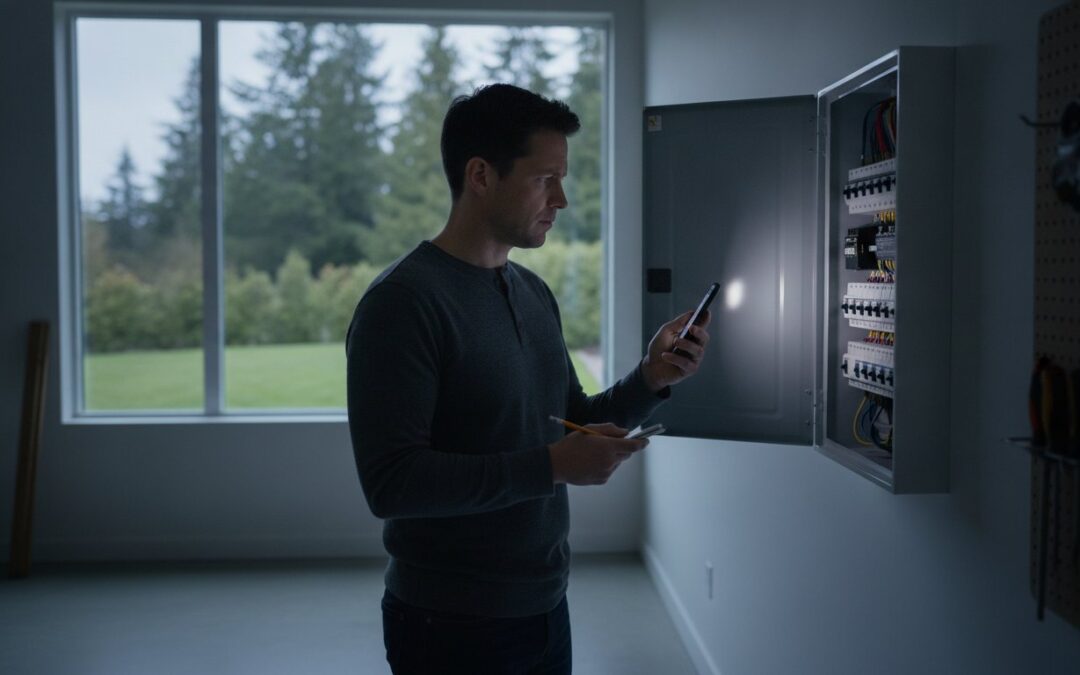
You are halfway through a critical project on your laptop when the power suddenly cuts out, leaving you in the dark and disconnected. For many neighbors in the Renton and Kent areas, this isn’t just a minor inconvenience; it’s a recurring source of stress that disrupts work and raises fears about electrical fires. You’re likely asking yourself, “why is my circuit breaker tripping Seattle?” especially when our damp climate seems to make the problem worse. Since 1952, we have seen how the aging electrical grids in our local homes struggle to keep up with the heavy demands of modern appliances and remote work schedules.
We believe your home should be a place of safety and stability. This guide will help you identify the root causes of frequent trips and explain how Seattle’s unique environmental factors impact your specific wiring. You will learn to distinguish between a simple overloaded outlet and a serious fault that requires professional attention. We will also help you determine if your current system is prepared for 2026 technology or if a panel upgrade is necessary to protect your family. Our goal is to provide the steady, expert guidance you need to keep your household running safely and reliably.
Key Takeaways
- Understand that a tripping breaker is a critical safety mechanism designed to protect your home from electrical fires, not just a simple inconvenience.
- Identify the specific causes behind why is my circuit breaker tripping Seattle households, from modern appliance overloads to the unique effects of our damp climate.
- Learn how persistent Pacific Northwest humidity can corrode older electrical components and compromise your home’s long-term safety.
- Follow a safe, step-by-step troubleshooting process to determine if you have a localized appliance issue or a serious wiring fault.
- Discover when a professional electrical panel upgrade is necessary to safely support 2026 technology like EV chargers and high-efficiency heat pumps.
Understanding Why Your Seattle Home’s Circuit Breaker Trips
The electrical panel in your garage or basement acts as the brain of your home’s power distribution. It takes electricity from the utility line and divides it into branch circuits that power your lights, outlets, and appliances. Each of these circuits is protected by a breaker. You can think of a circuit breaker as a deliberate “weak link” in your electrical system. It is designed to fail so your house doesn’t. What is a circuit breaker? Essentially, it is a safety switch that monitors electrical flow to prevent wire meltdowns. When you find yourself asking why is my circuit breaker tripping Seattle, it’s often because the breaker detected a condition that could lead to a serious hazard.
The Safety Mechanism: How Breakers Prevent Fires
Inside each breaker, two primary mechanisms work to keep your family safe. Thermal triggers respond to gradual heat buildup, which usually happens when a circuit is overloaded. Magnetic triggers react instantly to a massive surge of energy, such as a short circuit. At Reinhart Electric & Service, Inc., we’ve worked with these local systems since 1952. We understand how aging insulation in older Seattle homes increases fire risks as it becomes brittle over time. If a breaker trips, it has done its job. Resetting it repeatedly without investigating the cause is dangerous. You are essentially forcing power into a system that has already signaled a failure. This can lead to overheating behind your walls where you can’t see the damage starting.
Signs Your Breaker is Doing Its Job (And When It’s Failing)
When a breaker trips, you will often hear a distinct “click” sound. The switch usually moves to a middle position rather than flipping completely to the “off” side. This is a visual indicator that the safety mechanism was triggered. When you’re trying to figure out why is my circuit breaker tripping Seattle, look for these physical clues. A “soft” trip often happens after several minutes of heavy usage, suggesting an overload. A “hard” trip happens the second you turn something on, which usually points to a more serious wiring fault. Breakers don’t last forever. If you notice a burning smell near the panel or see visible scorch marks on the plastic, the breaker itself may be failing. These are critical warning signs that require professional troubleshooting to ensure your home remains safe and compliant with local standards.
The 3 Most Common Culprits Behind a Tripped Breaker
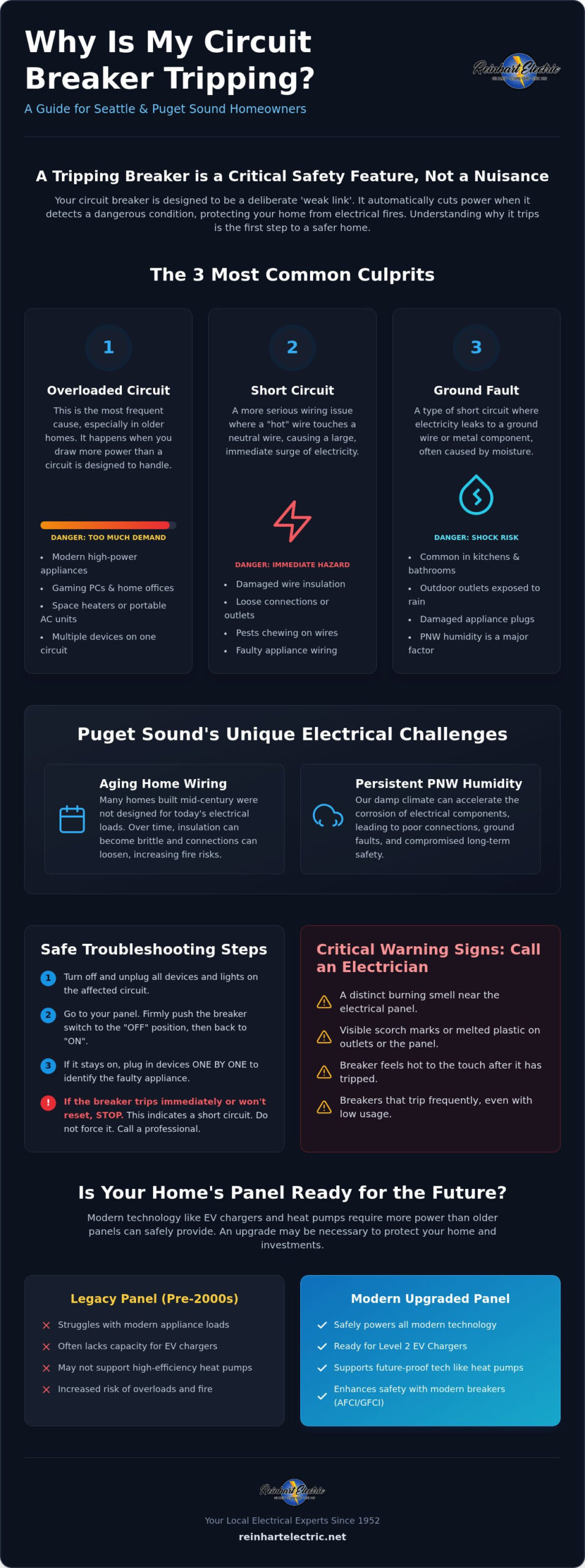
When your power cuts out, it’s rarely a random event. Your breaker is responding to a specific electrical occurrence that could otherwise cause a fire. If you are wondering why is my circuit breaker tripping Seattle, you are likely dealing with one of three primary issues: an overload, a short circuit, or a ground fault. Understanding these culprits helps you decide if you can simply move an appliance or if you need to call a professional for electrical troubleshooting and repair.
Overloaded Circuits in the Modern Home
An overloaded circuit is the result of drawing more Amps than the wire is rated to handle. This is the most common reason for a trip in the older homes we service across King and Pierce County. Many Seattle houses built in the mid-century were designed for a time when a television and a few light bulbs were the only major draws. Today, we plug in high-end gaming PCs, powerful air fryers, and portable space heaters that can easily overwhelm these legacy circuits.
The strain is even more noticeable with the shift toward 2026 technology. Installing a Level 2 EV charger or a high-efficiency heat pump adds a significant load that 1950s panels were never intended to support. You can often identify an overload by checking which appliances were running simultaneously. If the power only dies when the microwave and the vacuum are running on the same line, you’ve found your culprit. This is a clear sign that your home’s power distribution needs a professional evaluation to keep up with your lifestyle.
Short Circuits and Ground Faults: The Hidden Dangers
While an overload is a usage issue, a short circuit is a wiring problem. This occurs when a “hot” wire touches a neutral wire, causing an immediate, high-volume surge of energy. A ground fault is a specific type of short circuit where electricity leaks out of the system and into a ground wire or a nearby surface. These are particularly common in high-moisture areas like kitchens, bathrooms, and outdoor outlets where Pacific Northwest dampness can interfere with connections.
To stay ahead of these risks, you can use a Home Electrical Safety Checklist to inspect your outlets and cords for damage. Current Seattle code requirements now mandate GFCI and AFCI breakers in many areas of the home to detect these faults instantly. These advanced breakers offer a level of protection that standard older breakers simply cannot match. They provide a critical layer of defense for families living in aging Seattle residences where original wiring may be reaching the end of its safe lifespan.
Seattle-Specific Challenges: Aging Wiring and PNW Humidity
Living in the Pacific Northwest means dealing with persistent moisture. This dampness isn’t just an issue for your roof or your garden; it significantly impacts your electrical system. If you’re asking yourself why is my circuit breaker tripping Seattle, the answer often lies in how our local climate interacts with aging infrastructure. Many homes in our area were built in the 1950s or earlier. These systems were designed for a few lamps and a refrigerator, not the high-wattage demands of a 2026 lifestyle. Our team has been navigating these specific local challenges since 1952, and we’ve seen how time and weather can compromise even the best-built systems.
Corrosion and the Seattle Climate
For homes near Puget Sound, salt air is a constant factor that accelerates oxidation in outdoor service panels. Moisture also seeps into basements and crawl spaces, which are common in Seattle’s hilly terrain. This moisture often triggers GFCI breakers as a safety precaution, even if there isn’t a direct short. Seasonal temperature shifts can also cause electrical connections to expand and contract. Over time, this leads to “loose” connections that cause arcing and heat buildup. We always recommend weather-rated enclosures and regular inspections for any outdoor components to fight this inevitable corrosion and keep your home safe.
Legacy Wiring: Knob-and-Tube to Federal Pacific
Beyond the weather, the materials used in King and Pierce County homes vary significantly by decade. Homes from the 60s and 70s often contain aluminum wiring, which is prone to overheating at connection points if not maintained properly. We also frequently encounter legacy panels from brands like Federal Pacific or Zinsco. These specific brands are known to fail during a surge, which is a major fire hazard. Because of these risks, many modern insurance companies now require a professional panel upgrade before they will provide coverage for older homes. Historic neighborhoods still have knob-and-tube systems or ungrounded two-prong outlets. These legacy systems lack a safe path for excess electricity, making them a primary reason why is my circuit breaker tripping Seattle when modern technology is plugged in. Upgrading these systems isn’t just about convenience; it’s about bringing your home into alignment with modern safety standards.
Safe Troubleshooting Before Calling an Electrician
When your power goes out, the first instinct is to flip the switch back. However, a methodical approach is safer and more effective. If you are investigating why is my circuit breaker tripping Seattle, start by locating your electrical panel. Look for a switch that isn’t fully in the “ON” position. It will likely be stuck in the middle. This middle position is a visual indicator that the safety mechanism has been triggered. Before you touch anything, understand that your breaker is trying to protect your home from a potential hazard.
Step one is to unplug every single device on that specific circuit. This removes the load entirely and helps you rule out a simple overload. Next, perform a controlled reset. You must push the breaker handle firmly to the “OFF” position until you hear a click. Only then should you flip it back to “ON”. If the breaker trips again immediately with nothing plugged in, you likely have a serious wiring fault or a short circuit. This is a clear sign that you need professional Electrical Troubleshooting and Repair Services to ensure your wiring is still intact.
The ‘Process of Elimination’ Method
Many older Seattle homes have panel directories that are either unreadable or completely missing. If your labels are blank, you can map the circuit by seeing which outlets are dead. Once the breaker is reset, plug your appliances back in one by one. Start with the largest energy users. If the power cuts out the moment you plug in a specific space heater, the appliance is likely faulty. If it trips only after you’ve plugged in three or four smaller items, the circuit is simply overloaded. This process helps you determine if the problem is what you are using or how your home is wired. It helps you finally answer why is my circuit breaker tripping Seattle without spending money on a service call for a broken toaster.
When Troubleshooting Becomes Dangerous
Sometimes, the answer to why is my circuit breaker tripping Seattle is simply a worn-out mechanical component. Circuit breakers are mechanical devices with internal springs and contacts. Like any switch, they eventually lose their tension and fail to hold a consistent load after decades of service. A simple breaker replacement can often resolve nuisance trips if your underlying wiring is still healthy. However, if your home still runs on a vintage 60-amp or 100-amp service, the problem is likely systemic capacity rather than a single faulty switch.
A common misconception is that a tripping breaker protects your sensitive electronics from external power surges. Breakers are designed to protect your internal wires from overheating, not to save your high-end computers or smart appliances from a utility grid spike. Whole-house surge protection acts as a vital secondary shield. These devices are mounted directly to your electrical panel to divert excess voltage safely into the ground before it reaches your outlets. When combined with a healthy, modern panel, this technology creates a comprehensive safety net for your household. It ensures that your expensive 2026 technology remains operational even during volatile Pacific Northwest storms. Schedule your Seattle electrical safety audit with Reinhart Electric today! to find out if your current system is truly protected.
Secure Your Home’s Electrical Future
Understanding the mechanics of your electrical panel is the first step toward a safer home. We’ve explored how modern power demands and Pacific Northwest humidity can answer the frustrating question of why is my circuit breaker tripping Seattle. Whether you’re dealing with a simple circuit overload or the hidden dangers of legacy wiring, your breaker is working as a vital safety tool to keep your family safe. It’s a signal that your system needs attention to keep up with your daily life.
Since 1952, our family-owned business has provided stable, reliable service to the King and Pierce County community. Reinhart Electric & Service, Inc. employs licensed, bonded, and insured professionals ready to handle everything from routine troubleshooting to comprehensive panel upgrades. If you need immediate assistance, we offer 24/7 emergency electrical repairs to give you total peace of mind. Trust Reinhart Electric & Service, Inc. for Expert Troubleshooting in Seattle—Call (425) 251-5201. You don’t have to navigate these technical challenges alone. We’re here to ensure your home remains a safe and steady haven for years to come.
Frequently Asked Questions
Is a tripping circuit breaker a fire hazard?
A tripping breaker is a vital safety warning that your electrical system is working correctly to prevent a fire. However, the condition that caused the trip, such as an overloaded circuit or a dangerous short, is a fire hazard if left unaddressed. Resetting a breaker repeatedly without fixing the root cause can lead to wire meltdowns or arcing behind your walls. You should treat every trip as a serious signal that your home’s safety requires a professional evaluation.
How many times can I reset a breaker before it’s dangerous?
You should only reset a breaker once or twice for troubleshooting purposes. If the switch trips again immediately, stop attempting to reset it. Forcing a breaker to stay in the “on” position or repeatedly resetting it can damage the internal safety mechanism or cause a fire. If you find yourself asking why is my circuit breaker tripping Seattle more than once in a short period, it’s time to call a licensed professional for a safety inspection.
Why does my breaker trip only when the microwave or hair dryer is on?
This usually indicates an overloaded circuit. Microwaves and hair dryers draw high amounts of amperage, often between 10 and 15 amps. If these appliances share a circuit with other high-draw devices, they exceed the wire’s rated capacity. In older Seattle homes, these circuits were never intended to handle modern kitchen or bathroom loads. We often recommend installing a dedicated circuit for these appliances to prevent nuisance trips and ensure consistent power delivery.
What is the difference between a short circuit and an overloaded circuit?
An overloaded circuit happens when you plug in too many devices, drawing more power than the circuit can safely handle. A short circuit is a more dangerous wiring fault where a “hot” wire touches a neutral or ground wire. Short circuits cause an immediate, high-volume surge that trips the breaker instantly. While you can fix an overload by unplugging a device, a short circuit requires a professional to locate and repair the damaged wiring or connection.
Can a bad appliance cause a whole-house power flicker?
A faulty appliance can cause localized flickering on a specific circuit, but whole-house flickering often signals a deeper issue. This might indicate a loose neutral wire at your main panel or an issue with the utility service line. In our damp Pacific Northwest environment, corrosion at the meter base or main connection points is a common culprit. If your entire home’s lights dim when a large appliance starts, your electrical panel likely needs a professional diagnostic check.
How much does it cost to replace a circuit breaker in Seattle?
The cost to replace a circuit breaker varies based on the type of breaker and the complexity of the installation. Standard breakers are generally affordable, but specialized AFCI or GFCI breakers required by modern Seattle codes are more expensive. Other factors include the age of your panel and whether the bus bar is damaged. For an accurate estimate, a professional must inspect the panel to ensure the replacement meets current safety and compliance standards.
Why is my breaker buzzing or humming?
A buzzing or humming sound from your electrical panel is never normal. It often indicates a loose connection, a failing breaker, or internal arcing. Arcing occurs when electricity jumps between two points, creating intense heat that can melt plastic components. This is a high-priority safety concern that requires immediate attention. If you hear these sounds, avoid touching the panel and contact a licensed electrician to prevent a potential electrical fire or total system failure.
Does my 1950s Seattle home need a panel upgrade for an EV charger?
Most homes built in the 1950s have 60-amp or 100-amp service, which is insufficient for the heavy load of a Level 2 EV charger. These chargers typically require a dedicated 40-amp or 50-amp circuit. Adding this load to a legacy panel can lead to frequent trips or overheating. Upgrading to a modern 200-amp service ensures you have the capacity for electric vehicle charging while maintaining the safety and stability of the rest of your household’s power.