
You’re finally relaxing after a long day when the kitchen lights start a rhythmic, ghostly pulse. It’s a frustrating moment that immediately triggers a sense of worry. Is it just a cheap bulb reaching the end of its life, or is something deeper happening behind your walls? This uncertainty is exactly why understanding the basics of electrical troubleshooting and repair is essential for every homeowner. Whether you live in a historic home or a modern build, your electrical system shouldn’t be a source of stress.
We know how confusing technical jargon like “neutral wires” or “grounding” can feel when you just want your home to be safe. It’s completely normal to feel anxious about potential fire hazards when your power acts up. This guide will walk you through the most common causes of flickering lights and explain the latest 2026 safety standards, including the new NEC requirements for GFCI protection. You’ll learn how to identify simple fixes you can handle yourself and recognize the critical warning signs that require a professional hand. By the end, you’ll have the clarity needed to restore your peace of mind and ensure your home remains the safe haven it’s meant to be.
Key Takeaways
- Identify early warning signs like dimming lights and tripping breakers to prevent electrical fires and appliance damage.
- Master the “Hidden Hazard” rule to safely perform basic checks while knowing exactly when to call for professional electrical troubleshooting and repair.
- See how a methodical diagnostic process uncovers the root cause of power issues rather than just masking the symptoms.
- Gain peace of mind by understanding the latest 2026 safety standards and how they protect your home’s most sensitive electronics.
- Learn why multi-generational local experience is the key to resolving complex electrical issues in older Seattle-area homes.
Electrical Troubleshooting: Why Your Home Needs It
Electrical troubleshooting is far more than just a quick check of your breakers. It is a systematic search for the source of a problem within your home’s complex wiring network. Many homeowners mistake a visible symptom for the final issue. For instance, a flickering light is often just a sign of a deeper struggle. The true root cause might be a loose neutral wire or a failing connection inside your electrical panel. By focusing on the origin of the glitch, professional electrical troubleshooting and repair ensures your home stays safe and your electronics remain protected from damaging power fluctuations.
Ignoring these minor signs can lead to dangerous outcomes. A small, intermittent spark today can easily become a major electrical fire tomorrow. Beyond safety, systematic diagnostics also save you significant money. Instead of replacing expensive light fixtures or appliances that appear broken, a professional identifies the specific circuit failure. This prevents you from paying for unnecessary part replacements when a simple wiring adjustment or a new outlet was all that was actually required.
The Science of Electrical Diagnostics
Electricity requires a clear, continuous path to function safely. Interruptions often occur due to high resistance, which generates excessive heat and creates fire risks. We look for voltage drops and check for continuity to see exactly where the flow is breaking down. Electrical troubleshooting is the process of isolating circuit failures to ensure long-term safety. Understanding these technical nuances allows us to find hidden faults before they cause a total system shutdown or damage your home’s sensitive devices.
When Troubleshooting Becomes an Emergency
Some electrical issues simply cannot wait until the next business day. If you notice a persistent burning smell near an outlet or feel heat radiating from your electrical panel, these are critical red flags. For our neighbors in Renton, especially those living in homes built during the 1950s, aging insulation and outdated components can become immediate hazards. Don’t take a “wait and see” approach with these symptoms. We provide 24/7 emergency troubleshooting because your family’s safety is the highest priority. A hot panel or a buzzing breaker is a sign that your system is struggling to handle its load and needs an expert hand right away. Prompt action restores your peace of mind and keeps your property secure.
Common Warning Signs That Require Electrical Troubleshooting and Repair
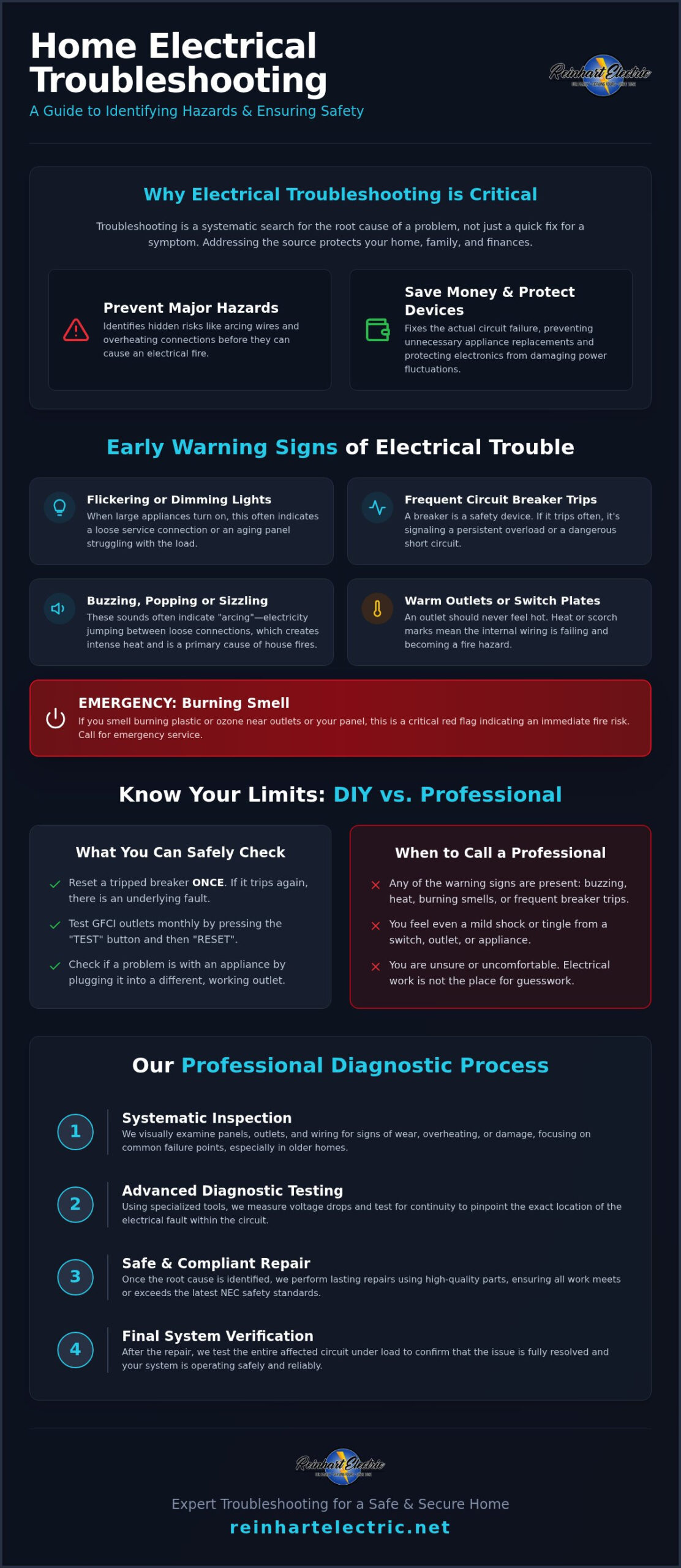
Recognizing early warning signs is the best way to prevent a minor inconvenience from becoming a hazardous emergency. Your home’s electrical system usually provides clear signals when it’s struggling. You might notice circuit breakers that trip frequently without an obvious overload or hear strange noises like buzzing, popping, or sizzling behind the walls. These sounds often indicate “arcing,” where electricity jumps between loose connections. This creates intense heat and is a primary cause of house fires. If you experience these issues, professional electrical troubleshooting and repair is necessary to find the exact point of failure before damage occurs.
Discoloration on your switch plates or outlets is another red flag that demands immediate attention. If you see brown or black scorch marks, it means the internal temperature has already reached a point where it’s singing the plastic. This isn’t a problem that fixes itself. It’s a sign of a failing connection that will only get worse with time. We often find that these issues stem from “back-stabbed” wiring or loose terminals that have wiggled free over decades of use. Catching these small changes early protects your appliances from power surges and keeps your family safe.
Flickering Lights and Power Fluctuations
Many homeowners in the Seattle area live in beautiful properties built in the 1950s. While these homes have character, their original electrical panels often lack the capacity for modern life. You might notice your lights dimming or flickering the moment your HVAC system kicks on or when you plug in a high-draw appliance. This isn’t always a sign of a bad bulb. It often indicates a loose service connection or an aging panel that can no longer handle the demand. In South King County, where many grids are aging alongside the homes, these fluctuations are a common call for help that shouldn’t be ignored.
The Danger of Hot Outlets and Burning Smells
An outlet or switch plate should never feel warm to the touch. If you notice charring or a temperature rise, you have an immediate fire risk. This heat is caused by resistance in the wiring, which can melt insulation and ignite surrounding materials. Pay close attention to unusual odors. A “fishy” or “metallic” smell is a telltale sign of melting plastic or wire coating. If you detect these scents, turn off the power at the breaker immediately. For families in our community, catching these signs early provides essential peace of mind. If you’re concerned about a specific outlet, our team can provide a thorough electrical safety assessment to secure your home. Understanding these warning signs is the first step in maintaining a safe, functioning electrical system.
DIY Electrical Troubleshooting vs. Professional Repair: Knowing the Limits
Many homeowners want to handle minor issues themselves to save time and money. It’s a great way to understand how your home functions. However, electricity is unforgiving. Knowing where your skills end and professional expertise begins is the key to keeping your family safe. While some basic checks are perfectly fine for a weekend project, complex systems require a seasoned hand. Professional electrical troubleshooting and repair ensures that your home stays up to code and remains a safe environment for your loved ones.
When It’s Safe to Troubleshoot Yourself
You can safely handle several basic diagnostic steps without specialized training. If a room suddenly goes dark, start at your electrical panel. To reset a tripped breaker, push the switch firmly to the “off” position until it clicks, then flip it back to “on.” For power issues in kitchens or bathrooms, test your GFCI outlets by pressing the “Test” button and then the “Reset” button. These simple actions often resolve the problem without any further intervention.
Other safe tasks include:
- Checking if a lightbulb is loose or has simply reached the end of its life.
- Ensuring a plug is fully seated in the outlet and not wiggling loose.
- Inspecting appliance cords for visible fraying or damage before plugging them in.
- Testing a different, known-working lamp in an outlet to see if the outlet itself is dead.
If these steps don’t fix the issue, you have reached the limit of safe DIY work. Don’t push further into the unknown.
The Risks of Unqualified Electrical Repairs
We follow the “Hidden Hazard” rule: if you have to remove a cover plate or open the main service panel, it’s time to call a pro. Opening these components exposes live wires that can cause severe shock or trigger a dangerous arc fault. When you hire a professional for electrical troubleshooting and repair, you’re paying for more than just a fix. You’re getting a guarantee that every connection is torqued to modern standards, preventing the heat buildup that leads to house fires.
There are also legal and financial consequences to consider. In King County, most electrical work requires specific permits and must be performed by a licensed contractor. If an unpermitted DIY repair causes a fire, your insurance provider might deny the claim entirely. This can leave you responsible for thousands of dollars in damages. Hiring a licensed expert provides a documented paper trail and the protection of professional liability. It’s a small investment that prevents much larger, more expensive headaches in the future. Our team brings decades of experience to every job, ensuring your older home meets the strict requirements of the 2026 National Electrical Code.
The Step-by-Step Professional Diagnostic and Repair Process
Professional electrical troubleshooting and repair follows a methodical path to ensure your home remains safe. It starts with a simple conversation. We ask you to describe the history of the issue. Does the flickering happen when the wind blows? Is it triggered by the microwave? This initial interview helps us narrow down the search area and saves you time during the diagnostic phase. By understanding the context of the failure, we can often rule out simple appliance issues before we begin technical testing.
After the interview, we move to a thorough visual inspection. We examine your electrical panel, outlets, and any visible wiring for signs of wear, corrosion, or heat damage. In many South King County homes, we find that decades of minor house settling or vibration have loosened connections that were once perfectly secure. These loose terminations are often the primary culprit behind intermittent power loss and “ghost” flickers in your lighting. Identifying these physical flaws is a critical step before we introduce advanced diagnostic equipment into the circuit.
Advanced Diagnostic Tools the Pros Use
Our team uses specialized technology to find what the naked eye cannot see. Thermal imaging cameras are essential for detecting hidden “hot spots” inside your walls. These spots indicate high resistance and potential fire hazards before they ever produce smoke or odors. We also utilize multimeters to verify proper voltage and grounding levels; this ensures your sensitive electronics aren’t being subjected to “dirty” power that can shorten their lifespan. Circuit tracers and mapping tools are also vital, especially in complex residential layouts where previous renovations may have left behind a confusing web of wires.
Repairing the Root Cause
Isolating the fault allows us to execute a permanent repair rather than a temporary patch. We determine if the issue is a single faulty component, like a worn-out breaker, or if it requires a larger upgrade to your electrical panel. For older properties, this might involve modernizing outdated aluminum or knob-and-tube wiring to meet 2026 safety standards. A professional repair includes a full system test to ensure no secondary faults exist. This methodical approach is why families have trusted us for generations. If you’re ready to resolve your power issues for good, schedule an expert diagnostic visit today to secure your home’s future.
Reliable Electrical Troubleshooting and Repair in Renton and South King County
Reinhart Electric & Service, Inc. isn’t just another contractor; we’ve been a steady part of the community since 1952. That’s over seven decades of keeping Seattle-area families safe through honest, hard work. Our deep roots mean we understand the specific challenges of our local electrical grids. Whether you live in Kent, Auburn, or Burien, we know how regional infrastructure and aging systems can affect your home’s performance. We’re committed to transparent, upfront pricing on every diagnostic call. You deserve to know the facts about your system without any hidden surprises or high-pressure sales tactics.
Electrical emergencies don’t stick to a standard schedule. That’s why our 24/7 emergency service is always available to provide immediate help when you need it most. We want you to have total peace of mind, knowing a neighborly expert is just a phone call away. When you require electrical troubleshooting and repair, you’re getting a team that treats your property with the same care we’d give our own. We focus on long-term reliability rather than quick, temporary fixes.
Specialists in Older Home Modernization
Many 1950s Seattle homes were built for a different era of power needs. Today’s high-draw appliances, home offices, and EV chargers put immense strain on original electrical components. We specialize in custom solutions for these older properties, including essential panel box upgrades that bring your system into the modern age. Ensuring your home meets current code requirements is vital for safety and for successful home sales in areas like Des Moines and Maple Valley. If you’re struggling with intermittent power issues, you can find more tailored advice in our guide on Electrician Renton WA: Troubleshooting Flickering Lights.
The Reinhart Guarantee of Safety
Every service call receives the same methodical attention, regardless of the size of the task. We take pride in our “service-above-all” mentality, focusing on the precision and order required for a safe environment. Residents in Tukwila or Covington can easily book a comprehensive safety audit to identify hidden risks before they become expensive disasters. We believe in building trust through dependability and technical excellence. Contact Reinhart Electric & Service, Inc. for Expert Troubleshooting and Repair to ensure your home’s electrical system remains a safe, functioning asset for years to come.
Securing Your Home’s Electrical Future
Your home’s electrical system shouldn’t be a source of constant worry. By recognizing early warning signs like flickering lights or warm outlets, you can address small issues before they become dangerous hazards. While simple checks like resetting a breaker are safe for any homeowner, remember the “Hidden Hazard” rule: if the cover comes off, it’s time to call in the experts. Investing in professional electrical troubleshooting and repair is the surest way to protect your property and your family’s safety.
Reinhart Electric has been a trusted partner for Seattle-area families since 1952. As a family-owned and operated business, we prioritize your peace of mind. We are fully licensed, bonded, and insured in Washington State, offering 24/7 emergency service to ensure you’re never left in the dark. Don’t let electrical glitches disrupt your life or compromise your safety. Schedule Your Professional Electrical Diagnostic with Reinhart Electric today. We’re here to provide the steady, honest expertise your home deserves, making sure your system remains reliable for years to come.
Common Questions About Electrical Troubleshooting and Repair
Why does my circuit breaker keep tripping even after I reset it?
A breaker that trips immediately after a reset usually indicates a persistent short circuit or a ground fault rather than a simple overload. It is a safety mechanism designed to prevent fires. If you have already unplugged your appliances and the problem continues, the issue likely lies within your home’s permanent wiring. Continuous resetting can damage the breaker or the panel, so it is best to leave it off until an expert can inspect the circuit.
Is it dangerous if my outlets make a buzzing or humming sound?
Yes, buzzing or humming sounds from an outlet are a sign of loose connections or arcing. This happens when electricity jumps across a gap, creating intense heat that can melt plastic and ignite surrounding materials. This is a serious fire hazard that requires immediate attention. You should stop using that outlet and turn off the corresponding breaker until an expert can perform the necessary electrical troubleshooting and repair to secure the connection.
How much does a professional electrical troubleshooting service call cost?
Professional troubleshooting costs vary based on the complexity of the issue and the time required for diagnostics. Most reputable contractors charge a service call fee that covers travel and the initial assessment using specialized tools like thermal imagers. While national averages for standard repairs often hover around $350, the specific nature of your home’s wiring and the diagnostic hours involved will determine the final investment needed to restore safety and functionality to your system.
What should I do if I smell something burning but can’t find the source?
If you detect a burning smell, turn off your main electrical breaker immediately and call for emergency assistance. A “fishy” or ozone-like scent often indicates melting wire insulation hidden behind walls or inside the panel. Don’t waste time searching for the exact source yourself, as the heat could already be igniting structural materials. Prompt action prevents a small electrical fault from turning into a devastating house fire. Safety is always the first priority.
Can a flickering light wait until morning, or is it an emergency?
A single flickering lamp might just be a bad bulb, but widespread flickering across multiple rooms is an emergency. This often signals a loose neutral wire or a failing connection in your main panel, which can cause massive power surges. If the flickering is accompanied by buzzing sounds or burning smells, don’t wait. Our 24/7 emergency team can help identify if your home is at immediate risk or if the repair can safely wait until the next day.
Why do my lights dim when the air conditioner or vacuum turns on?
Your lights dim because large appliances pull a significant amount of current when they start up, causing a temporary voltage drop on the circuit. This is common in older homes where the wiring wasn’t designed for modern, high-draw equipment. While often just a nuisance, persistent dimming suggests your system is operating at its limit. Adding a dedicated circuit for heavy appliances or upgrading your panel can resolve this strain and protect your sensitive electronics from wear.
Is it worth repairing an old electrical panel, or should I just upgrade?
Upgrading is usually the better long-term investment for safety and reliability. While minor repairs are possible, older panels often lack the capacity for modern electrical loads and may use obsolete components that no longer meet 2026 safety standards. An upgrade ensures your home is compatible with new technologies like EV chargers and provides the peace of mind that comes with modern arc-fault and surge protection features that older panels simply do not have.
How often should I have an electrical safety audit for my older home?
We recommend a comprehensive electrical safety audit every three to five years for homes older than 40 years. You should also schedule an inspection after major renovations, when buying a new property, or if you’ve recently added high-demand appliances. Regular audits help identify aging insulation or loose connections before they cause failures. This proactive approach to electrical troubleshooting and repair keeps your older Seattle home safe and compliant with the latest local electrical codes.