
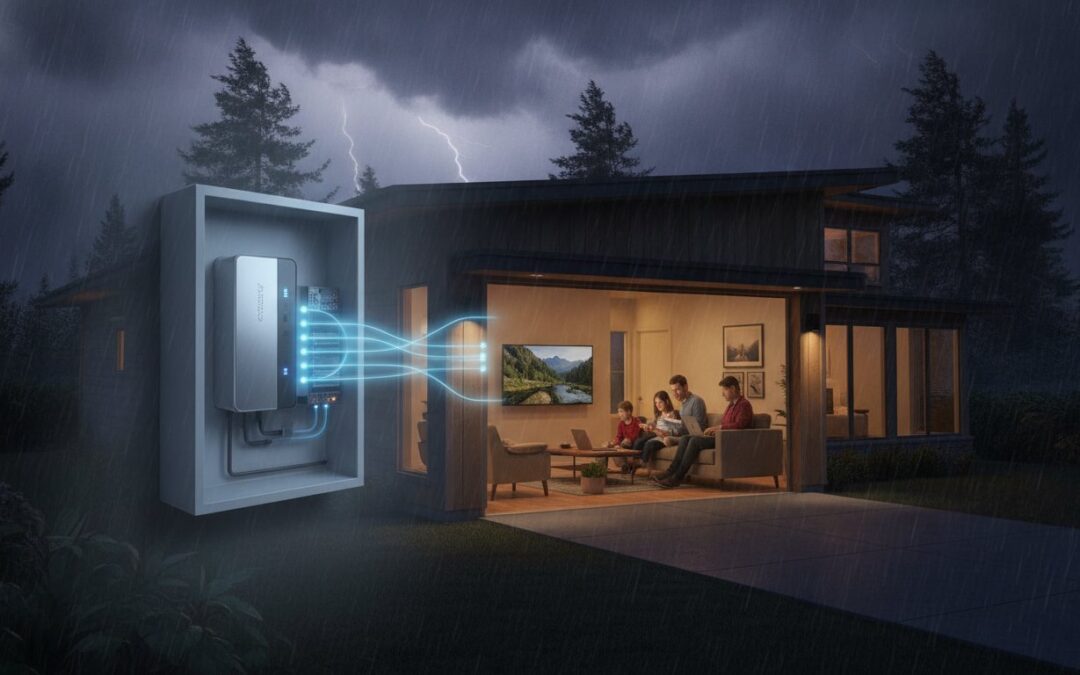
Imagine a typical Renton winter night where the wind is howling and the power flickers just once. In that single second, a massive voltage spike can travel through your wiring, silently frying the motherboards in your smart fridge, OLED TV, and EV charger. Many local homeowners assume a few power strips from a big-box store offer enough safety, but they don’t stop the surges that enter through your main panel. Investing in a professional whole house surge protector Renton families can rely on is no longer just a luxury; it’s the only way to safeguard your home’s entire electrical heartbeat.
We know how stressful it is to worry about your expensive appliances every time a PNW storm rolls through. It’s often confusing to navigate changing electrical codes and the different types of protection available. This guide will show you how a whole-house defense system provides total peace of mind while ensuring you stay compliant with the latest 2026 Washington State safety requirements. You’ll learn exactly how these systems work and why they’re the most reliable insurance policy for your modern home’s technology.
Key Takeaways
- Stay compliant with the 2026 Washington State Electrical Code by understanding the new mandatory requirements for whole-home surge protection.
- Discover why a professional whole house surge protector Renton installation is the ultimate “insurance policy” for your expensive EV chargers and smart appliances.
- Learn how to implement a “layered defense” strategy to stop power surges from both external lightning strikes and internal appliance cycles.
- Identify the specific technical ratings, like surge current capacity, needed to ensure your protection device matches your home’s electrical panel.
- Understand the safety risks of DIY panel work and why professional installation is necessary to maintain manufacturer warranties and system reliability.
Understanding Power Surges in Renton and South King County
A power surge is essentially a transient overvoltage. It occurs when the electrical pressure in your home’s wiring exceeds the standard 120V or 240V levels that your appliances are designed to handle. While we often think of these as sudden, massive events, they can also be subtle ripples that quietly damage your property. In Renton and South King County, our environment plays a major role in these electrical disturbances. Our city’s beautiful, mature tree canopy is a hallmark of the Pacific Northwest, but it also presents a risk. During wind storms, falling branches frequently strike power lines, causing immediate voltage spikes that travel directly into neighborhood homes.
Local utility conditions also contribute to the problem. Puget Sound Energy (PSE) manages a complex grid that faces immense pressure during peak winter loads. When the grid switches to balance these high demands, it can create fluctuations. Installing a whole house surge protector Renton homeowners can rely on acts as a necessary buffer against these external forces, ensuring that grid instability doesn’t become an expensive problem inside your four walls.
External vs. Internal Surges: What Is the Real Threat?
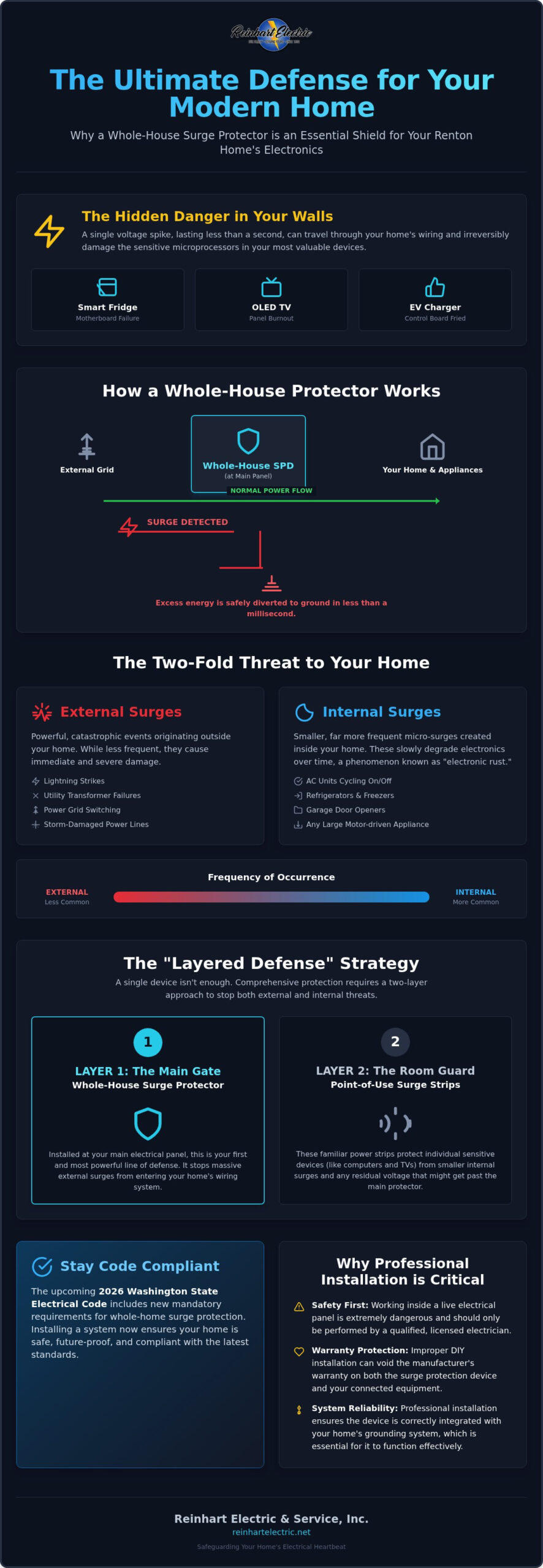
Most people worry about external surges, like a rare lightning strike or a transformer failure down the street. These events are catastrophic and can melt wiring or start fires instantly. However, internal surges are actually more common. These are micro-surges caused by large appliances, such as your AC unit or refrigerator, cycling on and off. Every time a heavy motor starts, it sends a small jolt of excess energy through your circuits. A surge protection device (SPD) is designed to sense these spikes and divert them safely to the ground. Without this protection, these frequent internal jolts slowly degrade the sensitive circuit boards in your modern electronics, leading to “electronic rust” that shortens the lifespan of your gear.
The Vulnerability of Modern Smart Homes
The technology we use in 2026 is far more delicate than the appliances of the 1950s. Old-fashioned toasters and lamps could handle a bit of extra voltage without much trouble. Today, your smart fridge, LED lighting systems, and EV chargers rely on tiny microprocessors. These components are incredibly sensitive to heat and voltage changes. If you have invested in a home automation system or a high-end security network, the cost of replacing integrated components far exceeds the cost of prevention. For a broader look at maintaining your home’s electrical health, you can review our Electrician Renton WA: Homeowner’s Troubleshooting & Safety Checklist. Protecting your home with a whole house surge protector Renton residents trust is the most effective way to safeguard these high-tech investments from the unpredictable nature of our local power supply.
How Whole-House Surge Protectors Work (And Why Codes Changed)
A whole-house surge protector acts as a constant sentry at your electrical panel. It monitors the incoming voltage from the utility line. When it detects a spike, it immediately redirects that excess energy into the ground. This process prevents the surge from ever reaching your wall outlets. Without this defense, your home’s wiring acts like a highway for high-voltage transients. This is why a whole house surge protector Renton homeowners install is often referred to as a “service entrance” protector; it stops the threat before it can spread through your rooms.
The Science of Shunting: How Your Panel Stays Safe
Most modern units utilize Metal Oxide Varistor (MOV) technology. These components have a variable resistance. Under normal conditions, they have high resistance and don’t interfere with your power. When a surge occurs, the resistance drops instantly. This allows the device to “shunt” or divert the dangerous energy to your home’s grounding system in less than a millisecond. This speed is vital because digital components can be destroyed in the blink of an eye.
Clamping voltage is the specific voltage level at which a surge protective device begins to divert excess electricity away from the home’s circuits and into the grounding system. According to the NIST guide on power surges, having this protection at the service entrance is the first step in a comprehensive safety plan. It ensures that the largest spikes are handled before they enter your living space. If you’re curious about your system’s health, you can schedule a safety inspection with our team.
NEC Code Requirements for Surge Protection in 2026
The National Electrical Code (NEC) has recognized the increasing vulnerability of modern homes. Recent updates, including the 2023 NEC currently used in Washington, mandate the installation of a Type 1 or Type 2 surge protective device for all new and replaced electrical services. By the end of 2026, these rules will be even more strictly enforced as the state adopts the latest safety standards.
This change means that if you are planning an electrical panel upgrade in King County, a surge protector is no longer an optional add-on. It’s a legal requirement for compliance and safety. This mandate exists because almost every major appliance sold today contains a sensitive circuit board. Protecting these components is now considered a fundamental safety standard rather than a luxury. Installing a whole house surge protector Renton families can trust ensures your home remains up to code while providing the peace of mind that your investment is protected from the ground up.
Whole-House Protection vs. Surge Strips: The Layered Defense
A common misconception is that you have to choose between a panel-mounted unit and individual power strips. In reality, these devices work best when they function as partners. We recommend a “Layered Defense” strategy, also known as cascading protection. This approach ensures that if a massive voltage spike bypasses the first line of defense, secondary protectors are there to catch the remainder. Your whole house surge protector Renton installation serves as the primary shield, while high-quality power strips act as the final safety net for your most sensitive gear.
The difference in capacity between these two layers is significant. Energy absorption is measured in Joules. A standard retail power strip might offer 1,000 to 2,000 Joules of protection. In contrast, a professional panel-mounted device is rated to handle tens of thousands of Joules. While a strip might protect a laptop from a minor internal flicker, it simply cannot stop a large external surge from entering your home’s wiring. By the time a surge reaches a plastic power strip, the energy has already traveled through your walls, potentially damaging outlets and hidden connections along the way.
Type 1 vs. Type 2 vs. Type 3 Devices
Understanding the different categories of surge protective devices helps you build a better defense. Electrical professionals classify these units into three main types:
- Type 1: These are installed on the “line side” of your electrical meter. They are designed to protect against massive external surges, such as direct lightning strikes on utility poles, before the power even enters your home.
- Type 2: This is the most common whole house surge protector Renton homeowners choose. It’s installed at your main electrical panel and protects all the circuits in your house from both external and internal spikes.
- Type 3: These are your point-of-use strips and specialized receptacles. They provide localized protection for specific items like televisions, computers, or gaming consoles.
Why a Power Strip Alone Isn’t Enough
Selecting the right whole house surge protector Renton families need requires more than just picking a box off a shelf. Compatibility is your first priority. Most electrical panels require a surge device specifically designed for that brand and model to ensure a secure, code-compliant connection. If you have an older panel in a neighborhood like Burien or Tukwila, finding a compatible unit might be more complex, but it’s essential for the device to function as intended. We always check the manufacturer’s specifications to ensure the protector and the panel are a perfect match before we begin any work.
You also need to look for “End of Life” indicators. Unlike a light bulb that simply goes out, a surge protector can be exhausted without any obvious signs. High-quality units feature LED lights or audible alarms that alert you when the internal components have shunted their last surge and need replacement. To add an extra layer of financial security, look for products that include a “Connected Equipment Warranty.” These policies can provide coverage for your appliances if the protector fails to stop a surge, offering a secondary safety net for your home’s most expensive technology.
Key Specifications to Look For
Technical ratings tell the real story of how a device will perform. The Nominal Discharge Current (In) indicates the level of surge the device can handle repeatedly without failing. For homes in Renton or Kent, a higher rating is generally better to handle our local grid’s utility switching. You should also pay close attention to the Voltage Protection Rating (VPR). This number tells you the maximum voltage the protector will allow to pass through to your electronics. A lower VPR offers tighter protection for sensitive digital gear. If your electrical panel is located in a garage or outdoors, ensure the unit has a NEMA 4X enclosure rating to protect it from moisture and dust.
Future-Proofing Your Home Infrastructure
As we head into 2026, our homes are becoming more reliant on high-tech electrical systems. If you’re planning an EV charger installation in Renton, adding surge protection is a vital step to safeguard your vehicle’s sensitive charging hardware. These protectors also play a critical role in maintaining the reliability of generator transfer switches during winter power outages. We recommend making surge protection the foundation of your electrical safety audit to ensure every part of your system is prepared for the years ahead. To get started on securing your home, contact our Renton team for a professional assessment.
Professional SPD Installation with Reinhart Electric & Service, Inc.
Opening a live electrical panel is one of the most hazardous tasks a homeowner can attempt. While retail kits are available, they rarely emphasize the extreme danger of working inside a main service panel. Professional installation from Reinhart Electric & Service, Inc. is essential for your safety and the device’s performance. One technical detail that often gets overlooked in DIY projects is lead length. For a whole house surge protector Renton installation to be effective, wires must be short and straight. Every extra inch increases impedance, which can delay the device’s response. Our experienced electricians position these units to ensure they activate the millisecond a spike is detected.
The Installation Process: What to Expect
We follow a methodical process to ensure your property is shielded. We begin with an initial safety inspection of your home’s existing grounding system. A surge protector’s job is to divert energy to the ground, so a loose or corroded grounding rod makes the device useless. Once the ground is verified, we mount the SPD and wire it to a dedicated double-pole breaker. This setup provides the most reliable path for monitoring voltage. After hardware is in place, we perform a final test and provide a homeowner walkthrough. We’ll show you how to read the status indicators to verify your protection is active at a glance.
Why Hire Reinhart Electric & Service, Inc. for Your Renton Home?
We’ve been serving the Renton, Kent, and Auburn communities since 1952. As a family-owned business, Reinhart Electric & Service, Inc. believes in a neighborly approach that prioritizes your safety over a quick sale. We understand the specific quirks of the local power grid and the challenges our Pacific Northwest weather presents to residential wiring. Our reputation is built on multi-generational stability and transparent service. We treat every task, from a simple repair to a complex whole house surge protector Renton setup, with the same methodical care and professional standards.
Choosing us means choosing a partner who will be here for the long haul. We provide 24/7 reliability and technical proficiency that you can count on during the worst winter storms. Your peace of mind is our primary goal, and we take pride in being the steady hand that keeps your home’s electrical system running safely. Schedule your whole-house surge protection installation with Reinhart Electric & Service, Inc. today to secure your home against the unpredictable.
Secure Your Home’s Future Today
Modern homes in the Pacific Northwest face unique electrical challenges, from wind-blown branches to winter grid fluctuations. As we move into 2026, meeting the latest safety codes is about more than just compliance; it’s about protecting the high-tech investments that keep your household running. By implementing a layered defense strategy, you can ensure that every device, from your EV charger to your smart refrigerator, remains safe from unpredictable voltage spikes.
Installing a whole house surge protector Renton homeowners can trust is the single most effective way to gain lasting peace of mind. At Reinhart Electric, we’ve been serving the Renton area since 1952. Our team of licensed, bonded, and insured professional electricians brings expert knowledge of local King County electrical codes to every job. We treat your property with the same care we’d give our own homes, ensuring every installation is precise and dependable.
Don’t wait for the next major storm to test your home’s defenses. Protect your home from surges. Contact Reinhart Electric for a professional installation today. We’re here to help you build a safer, more resilient electrical system for your family.
Frequently Asked Questions
Do whole-house surge protectors really work?
The cost for professional installation varies based on your existing panel’s condition and the specific device selected for your home. Factors like whether your system needs grounding updates or a dedicated breaker will influence the final price. We prioritize transparent, project-based pricing so you understand the investment in your home’s safety before any work begins. This ensures there are no surprises when it comes to protecting your expensive electronics.
How long do whole-house surge protectors last?
Most whole-house surge protectors last between five and ten years, but their lifespan depends on how many surges they absorb. These devices use Metal Oxide Varistors that degrade every time they divert excess voltage. If you live in an area with frequent storms or grid fluctuations, the components may wear out faster. It’s important to check the indicator lights regularly to ensure your home’s protection is still active and reliable.
Can I install a whole-house surge protector myself?
We strongly advise against DIY installation because it requires working inside a live main electrical panel. This task involves significant risks of arc flash and electrocution for those without professional training. Additionally, professional installation ensures the shortest possible lead lengths, which is critical for the device’s performance. Hiring a licensed electrician also maintains your manufacturer’s warranty and ensures the work meets the 2026 Washington State electrical codes for safety.
Does whole-house surge protection protect against lightning strikes?
Whole-house surge protectors provide excellent protection against nearby lightning strikes that travel through power lines. However, no device can stop a direct hit from a massive bolt of lightning. For complete safety, we recommend a layered defense that includes point-of-use surge strips for sensitive electronics. This cascading approach handles the massive external spikes and the smaller ripples that might bypass the main panel protector during a storm.
Will a whole-house surge protector lower my insurance premiums?
Installing a whole house surge protector Renton families trust can sometimes lead to lower insurance premiums or discounts. Many insurance providers recognize these devices as a proactive safety measure that reduces the risk of fire and appliance damage. You should contact your specific insurance agent to see if your policy offers credits for professional surge protection installation. It’s a smart way to offset the initial cost of the safety upgrade.
What is the difference between Type 1 and Type 2 surge protectors?
Type 1 protectors are installed on the line side of your meter to stop external surges before they even enter your home. Type 2 protectors are the standard choice for residential use and are installed at your main electrical panel. Both types are designed to shunt high-voltage transients safely to the ground. In many 2026 code-compliant installations, a Type 2 device provides the comprehensive coverage most Renton homeowners need for modern technology.
How do I know if my surge protector has been tripped or needs replacement?
You can determine if your device is working by checking the status LEDs or audible alarms on the unit itself. Most professional-grade protectors feature a green light to indicate active protection. If the light turns red or goes out, the internal components have likely been exhausted from absorbing surges. We recommend checking these indicators after any major storm or power outage to ensure your home remains fully shielded from future voltage spikes.