
Imagine a typical Tuesday night in January. The wind is howling off the Sound, and suddenly, your lights flicker and dim. That split second of darkness isn’t just an inconvenience. It’s the moment your high-end MacBook or home office server could be permanently damaged by a sudden power spike. If you’re worried about the safety of your electronics, you aren’t alone. Many homeowners are now prioritizing whole house surge protector installation Seattle to combat the unpredictable nature of our local power grid during winter storms.
It’s stressful to think that one lightning strike or a transformer failure could “fry” your most expensive appliances. You’ve likely relied on power strips for years, but those small devices can’t stop the massive surges that enter through your main panel. This 2026 guide is designed to take the mystery out of electrical safety. We’ll explain exactly how professional protection works, clarify confusing terms like clamping voltage, and walk you through the latest 2025 Seattle Electrical Code requirements. By the end, you’ll know how to keep your home office and appliances running safely for years to come.
Key Takeaways
- Discover why Seattle’s aging grid and intense winter storms create a high risk for sudden, damaging power spikes.
- Learn how a professional whole house surge protector installation Seattle provides a primary line of defense that power strips simply can’t match.
- Identify the specific “mission-critical” technology in your home office that requires advanced protection to prevent permanent data loss.
- Understand the technical differences between Type 1 and Type 2 devices so you can choose the right safety level for your electrical panel.
- Find out how local expertise and transparent service help safeguard your home’s long-term electrical health and your family’s peace of mind.
Understanding Power Surges in Seattle: Why Your Home is at Risk
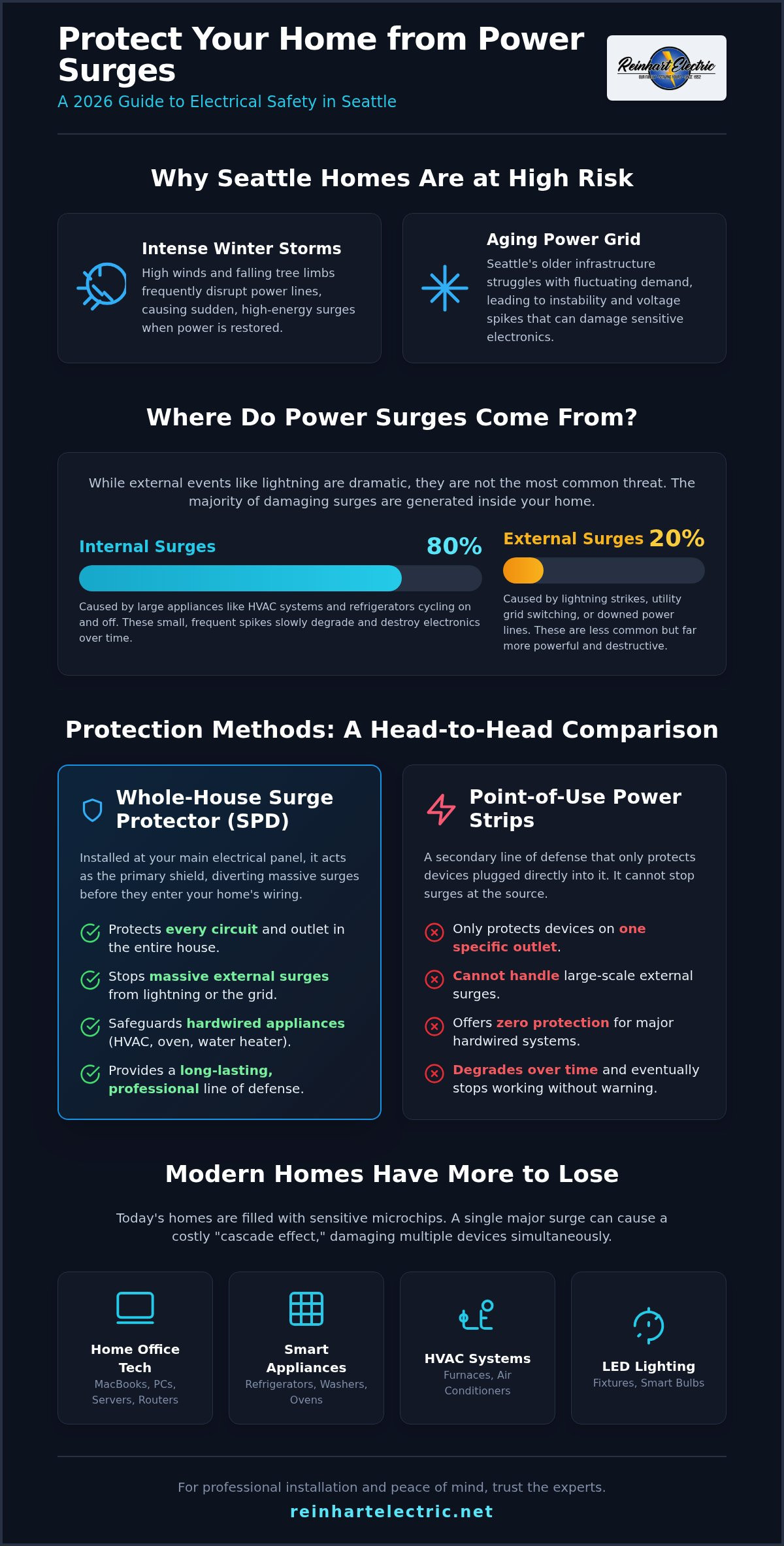
A power surge is a transient voltage spike that exceeds the standard 120V flow your outlets are designed to handle. Think of it like a sudden wall of water hitting a plumbing system. To get a deeper technical background, you can read about What is a Surge Protector? and how it diverts this excess energy safely to the ground. In Seattle, these spikes aren’t just occasional accidents; they’re a frequent byproduct of our environment and infrastructure.
Our city faces unique challenges. Heavy winter storms bring down tree limbs on power lines, causing immediate disruptions. Additionally, our aging local grid often struggles with fluctuating demands. When the power comes back on after a blackout, it often carries a massive surge that hits every plugged-in device simultaneously. This is a common occurrence in neighborhoods with older electrical infrastructure that hasn’t been updated in decades.
When Reinhart Electric & Service, Inc. started serving the community in 1952, a typical home had a few light bulbs and perhaps a radio. Today, your house is a sophisticated network of sensitive microchips. Everything from your smart refrigerator to your high-end MacBook is vulnerable. This is why whole house surge protector installation Seattle has shifted from a luxury to a necessity. Modern electronics are much more delicate than the heavy-duty appliances of the past. Even a small fluctuation can cause permanent damage to a processor.
External vs. Internal Surges
Most people worry about external events like lightning strikes or utility grid switching. While these are high-impact and dangerous, they aren’t the most common threat. In fact, about 80% of surges originate inside your own home. Every time your HVAC system or refrigerator cycles on and off, it sends a small spike through your wiring. These recurring internal surges act as a “silent killer,” slowly degrading the lifespan of LED bulbs and smart appliances until they fail prematurely. Over time, this constant stress wears down the insulation in your electronics.
The Cost of Unprotected Electrical Systems
The financial impact of a surge can be devastating. For example, replacing a fried HVAC control board in a Seattle home can be an expensive repair that many homeowners don’t budget for. Beyond the immediate repair bill, there is the “cascade effect.” One failing component in a circuit can stress other connected devices, leading to a series of failures over several months. You might fix the microwave today only to have the dishwasher fail next week.
Don’t rely on insurance to save the day. Insurance claims for surge damage are notoriously difficult to prove. Adjusters often look for evidence of a direct lightning strike, but they rarely cover the cumulative damage caused by internal spikes. Investing in professional protection ensures you won’t have to fight for a payout after your tech is already destroyed. It’s about protecting your investment before the damage happens.
Whole-House Surge Protection vs. Power Strips: A Comparison
Many homeowners believe a few $20 power strips from a big-box store provide enough safety. While point-of-use strips are helpful for “clamping” small voltage blips at the outlet, they are only one part of a complete safety plan. For true security, a whole house surge protector installation Seattle offers a defense that starts at the main electrical panel. This ensures that every circuit in your home, not just the ones with a strip plugged in, remains protected from high-energy events.
Why Power Strips Are Not Enough
Standard power strips have significant limitations. They simply cannot handle massive external surges from the utility grid or nearby lightning strikes. Additionally, they offer zero protection for your most expensive hardwired appliances, such as ovens, water heaters, and smart washers. Perhaps most concerning is the “expiration date” of these devices. Most power strips use internal components that degrade every time they absorb a spike. Many Seattle residents continue to use these strips long after their protective capabilities have vanished, leaving their tech completely exposed.
How a Whole-House SPD Works
A whole-house Surge Protective Device (SPD) acts like a pressure relief valve for your home’s electrical system. When it detects a dangerous voltage spike, it instantly diverts the excess energy safely into your home’s grounding system before it can reach your sensitive electronics. Metal Oxide Varistors (MOVs) are the core technology used to absorb and redirect these surges. This This Old House guide to surge protectors explains that while no device is 100% invincible, the panel-mounted version is your best line of defense for the entire structure.
For the best results, we recommend a “Tiered Protection” strategy. This involves using a whole-house unit to stop the big surges at the door, while still using high-quality power strips for mission-critical items like your computer or home theater. When comparing units, pay attention to the clamping voltage and response time. A lower clamping voltage means the device triggers sooner to protect your gear. If you are unsure which technical specs are right for your specific panel, our team can help with professional electrical troubleshooting to evaluate your current setup. This methodical approach ensures your Seattle home remains a safe haven for all your modern technology.
How to Evaluate Your Home Office Protection Needs
In a city where tech is the backbone of the economy, your home office is more than just a desk and a chair. It’s a high-performance environment filled with servers, high-end monitors, and complex networking gear. For many residents, whole house surge protector installation Seattle is the only way to ensure these mission-critical tools remain functional. A single transient voltage spike doesn’t just threaten your hardware; it puts your data at risk. While you can buy a new hard drive, recovering lost files from a fried storage device is often impossible or incredibly expensive.
If you live in an older home in Renton or Kent, your electrical panel might not be equipped for the modern office load. These systems were built for a different era. Adding multiple monitors, high-powered PCs, and smart devices can strain an aging grid. Protecting your router is especially vital. A surge that hits your networking equipment can disrupt your internet connectivity, leading to frustrating downtime and lost revenue. This is why we focus on the entire electrical path, ensuring your connection to the world stays stable.
Surge Protection for Remote Professionals
Remote work relies on a “Triple Threat” of technology: your computer, external storage, and your high-speed modem. Each of these components is sensitive to even minor electrical fluctuations. Many home office insurance riders now require professional surge mitigation before they will honor a claim for damaged equipment. When you look at the return on investment, a one-time professional installation is far more affordable than the cost of a week of lost productivity or the price of replacing a professional-grade workstation. It’s about securing your livelihood against the unpredictable Seattle winter storms.
Smart Home and IoT Vulnerabilities
Your home office tech isn’t the only thing at risk. Smart thermostats and security cameras are often the first components to fail during a storm because they are constantly connected and highly sensitive. Repairing integrated smart home systems after a spike is a complex and expensive process that often requires specialized troubleshooting. At Reinhart Electric & Service, Inc., we take a methodical approach to auditing home office safety. We’ve been helping our neighbors since 1952, and we understand how to protect the modern, connected lifestyle that Seattle tech workers enjoy. Our team ensures your entire system is up to code and ready for whatever the Pacific Northwest weather throws your way.
The Installation Process: What to Expect from a Professional
A professional installation is the only way to guarantee your safety equipment performs correctly when a Pacific Northwest storm hits. At Reinhart Electric & Service, Inc., we’ve refined our process since 1952 to ensure every home receives a precise, reliable setup. While a DIY approach might seem tempting, working inside a live electrical panel is dangerous and often requires a permit in Seattle. Our team follows a methodical four-step sequence to secure your home.
- Step 1: Panel Inspection: We perform a comprehensive inspection and load calculation. We check for loose connections, signs of heat damage, and ensure your system can handle the modern demands of your electronics.
- Step 2: Selecting the Right SPD: We help you choose between a Type 1 device, which sits at the service entrance, or a Type 2 device, which is the most common residential choice installed directly into the main panel.
- Step 3: Dedicated Wiring: We mount the device and wire it directly to a dedicated double-pole breaker. This ensures the surge protector has its own “lane” in your electrical system for maximum efficiency.
- Step 4: Grounding System Test: A surge protector is only as good as its ground. We test your home’s grounding system to ensure the diverted electricity has a clear, safe path to exit the structure.
Compatibility with Older Seattle Electrical Panels
Many homes in our area still feature the original electrical boxes from the 1950s. These panels are often crowded, leaving very little physical space for new components. During a whole house surge protector installation Seattle, we frequently encounter “Zinsco” or “Federal Pacific” panels. These specific brands are known for high failure rates and pose unique fire risks. If your home has one of these aging systems, a full electrical panel upgrade is usually necessary before we can safely install modern surge protection. We’ll always give you an honest assessment of whether your current box can support the new hardware.
Post-Installation Maintenance and Monitoring
Once the installation is complete, you don’t have to guess if you’re protected. Most high-quality SPDs feature simple indicator lights. A “Green” light typically means the device is active and guarding your home, while a “Red” light indicates the internal components have sacrificed themselves to stop a major surge. We recommend having your system inspected by a professional every few years. While these units are durable, their typical lifespan is between 5 and 10 years. This duration depends heavily on the frequency of surge activity in your specific neighborhood. Staying proactive ensures you’re never left vulnerable during the next big windstorm.
Why Seattle Homeowners Trust Reinhart Electric Since 1952
Since 1952, Reinhart Electric has been a steady, reliable presence in the Pacific Northwest. We’ve served generations of families throughout Renton, Kent, Auburn, and the Greater Seattle area. This long history gives us a unique perspective on how our city’s infrastructure has evolved over the decades. We understand the specific quirks of the local power grid, from the aging lines in our historic neighborhoods to the high-demand requirements of modern, tech-heavy homes. This deep local knowledge is vital for a successful whole house surge protector installation Seattle. We don’t just mount a device; we ensure your entire system is prepared for the unique stresses of our environment.
We believe in transparent pricing and “no-surprise” service calls. You’ll always receive a clear explanation of the work required before we begin. Because we know that Seattle’s winter storms don’t follow a 9-to-5 schedule, we provide 24/7 emergency support for critical electrical repairs. When the wind picks up off the Sound and the lights start to flicker, you can count on a calm, professional expert to be ready when you need us most. Our commitment to the community is built on decades of honest work and dependable results.
Family-Owned Values, Professional Standards
We maintain a “service-above-all” mentality for every project, regardless of its scale. As a family-owned business, we treat your home’s safety with the same level of care we give our own families. You’ll have direct access to seasoned experts who prioritize your peace of mind over a sales quota. We don’t use high-pressure marketing or aggressive tactics. Instead, we act as helpful guides to help you make informed decisions about your home’s electrical health. We take pride in being a steady hand that neighbors can rely on for technical proficiency and neighborly advice.
Get Started with a Seattle Surge Protection Audit
If you’re ready to secure your home office and expensive appliances, a professional safety evaluation is the first step. During a Reinhart Electric safety compliance check, we perform a methodical review of your current system. This audit includes:
- A comprehensive evaluation of your main electrical panel’s physical health.
- A verification of your home’s grounding system to ensure surges have a safe exit path.
- An assessment of your home office load to identify mission-critical tech vulnerabilities.
- A review of your current protection levels to ensure they meet 2025 Seattle Electrical Code standards.
Don’t wait for the next major storm to find out if your electronics are at risk. Our team is here to provide the professional authority and transparent service you deserve. You can Schedule your whole house surge protector installation in Seattle today to protect your investment and gain the peace of mind that comes with a professionally secured home.
Secure Your Seattle Home Against the Unexpected
Your electronics and home office equipment are significant investments that deserve more than just a basic power strip. By choosing a professional whole house surge protector installation Seattle, you ensure that every device from your refrigerator to your high-end laptop is shielded from unpredictable voltage spikes. You’ve learned how internal surges from your own appliances can be just as damaging as external lightning strikes; a tiered defense is the gold standard for modern tech workers.
Reinhart Electric has been the steady, trusted choice for local homeowners since 1952. As a family-owned and operated business for three generations, we treat your safety with the same care we would our own. Our team consists of licensed, bonded, and insured professionals who provide the transparency and dependability you need for complex electrical work. Don’t wait for the next winter storm to test your home’s defenses. Protect your home and tech, contact Reinhart Electric today! We look forward to helping you achieve lasting peace of mind and a safer electrical system for your family.
Frequently Asked Questions about Seattle Surge Protection
Do whole house surge protectors really work against lightning?
Yes, they provide a strong defense by diverting high-voltage energy safely to the ground. While a massive direct lightning strike can occasionally overwhelm any residential system, these devices are specifically engineered to handle the secondary surges from nearby strikes that travel through utility lines. This protection is vital for Seattle homes where winter storms often cause disruptions to the local power grid and overhead lines. It’s your best line of defense against atmospheric electrical events.
How much does whole house surge protector installation cost in Seattle?
The total investment for a whole house surge protector installation Seattle depends on your home’s electrical panel condition and the specific model of protector you choose. Since every home’s wiring and space availability is unique, we recommend a professional evaluation to get an accurate estimate for your specific setup. Our team focuses on transparent service to ensure you understand every part of the process before work begins. This ensures you get a solution tailored to your home’s needs.
Will a surge protector lower my home insurance premiums?
Many insurance providers recognize the significant safety value of whole-house protection for modern electronics. Some companies offer discounts on premiums or lower deductibles for homeowners who have these systems professionally installed by a licensed electrician. It’s a good idea to contact your insurance agent directly to see what specific benefits they offer. This small step can often lead to long-term savings while providing extra peace of mind for your home’s most expensive appliances.
Can I install a whole house surge protector myself?
No, you shouldn’t attempt this installation yourself because it involves high-voltage work inside your main breaker panel. Working inside a live panel is extremely dangerous and requires specialized training to prevent electrical shock or fire. Professional installation ensures the device is wired correctly to a dedicated breaker and follows all current Seattle Electrical Code requirements. This also ensures your product warranty remains valid and your home stays safe during the installation process.
How do I know if my current electrical panel is compatible?
Most modern electrical panels can accommodate a surge protector with a few minor adjustments to the breaker layout. However, if your home still uses older Zinsco or Federal Pacific panels, you’ll likely need a panel upgrade before a safe installation is possible. Our team can quickly identify your panel type during a safety audit and let you know if your current box has the necessary space for a new unit. We always prioritize your home’s long-term safety.
Does a whole house surge protector protect against power outages?
No, these devices don’t provide backup power during an outage. Their primary job is to stop high-voltage spikes from damaging your sensitive electronics and appliances when the power fluctuates or returns. If you want to keep your lights on and your refrigerator running during a blackout, you’ll need to look into generator transfer switches or lockout kits. These services complement surge protection for a complete home safety plan that handles both spikes and outages.
How long do these devices typically last in the Pacific Northwest?
In the Pacific Northwest, these devices typically last between 5 and 10 years. Their actual lifespan depends on how many surges they absorb over time from the grid and your own appliances. Frequent winter storms or a less stable local grid can wear out the internal components faster than in other regions. We recommend checking the indicator lights regularly and having a professional inspection every few years to ensure your protection remains active and effective.
What is the difference between Type 1 and Type 2 surge protectors?
Type 1 surge protectors are installed before your main breaker at the service entrance to stop large surges from the utility grid. Type 2 devices are installed directly in your main electrical panel and protect against both external surges and the small spikes created by your own internal appliances. For most Seattle homes, a Type 2 device is the standard choice for comprehensive protection against the daily fluctuations of a modern household and the aging infrastructure of the city.