
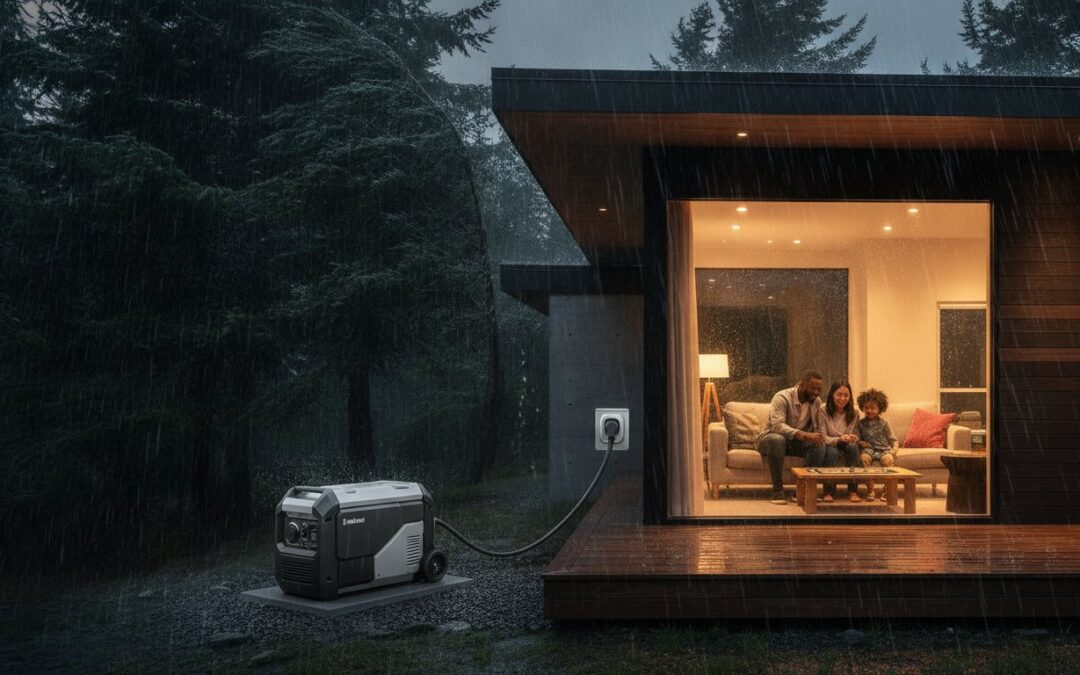
When the wind starts howling through the Douglas firs and the lights flicker, the last thing you want is to be fumbling with extension cords in the dark. You know that having backup power is essential for your family’s comfort, but the technical side of a portable generator hookup to house can feel overwhelming. It’s natural to worry about damaging your expensive furnace or accidentally endangering utility workers on the grid.
We understand that peace of mind comes from knowing your home is prepared for whatever a Pacific Northwest winter throws your way. You deserve a system that is reliable, easy to use, and fully compliant with current safety codes. This guide will teach you the safest methods to connect your generator so you can run critical equipment like well pumps and HVAC systems without a second thought.
We will walk through the specific differences between manual transfer switches and interlock kits, helping you choose the right fit for your electrical panel. You will learn the exact steps to create a permanent connection point that keeps your electronics safe and your home running smoothly until the utility crews finish their work.
Key Takeaways
- Move beyond the clutter of extension cords by establishing a permanent, safe connection point for your backup power.
- Compare the benefits of manual transfer switches versus interlock kits to determine the best portable generator hookup to house for your budget.
- Protect your family and utility workers by understanding why code-compliant installations are required to prevent dangerous backfeeding.
- Learn how professional load calculations help you successfully power critical appliances like well pumps and furnaces during Seattle storms.
- Discover why integrating whole house surge protection is a vital step in maintaining the health of your home’s modern electronics.
Understanding Your Options for a Portable Generator Hookup
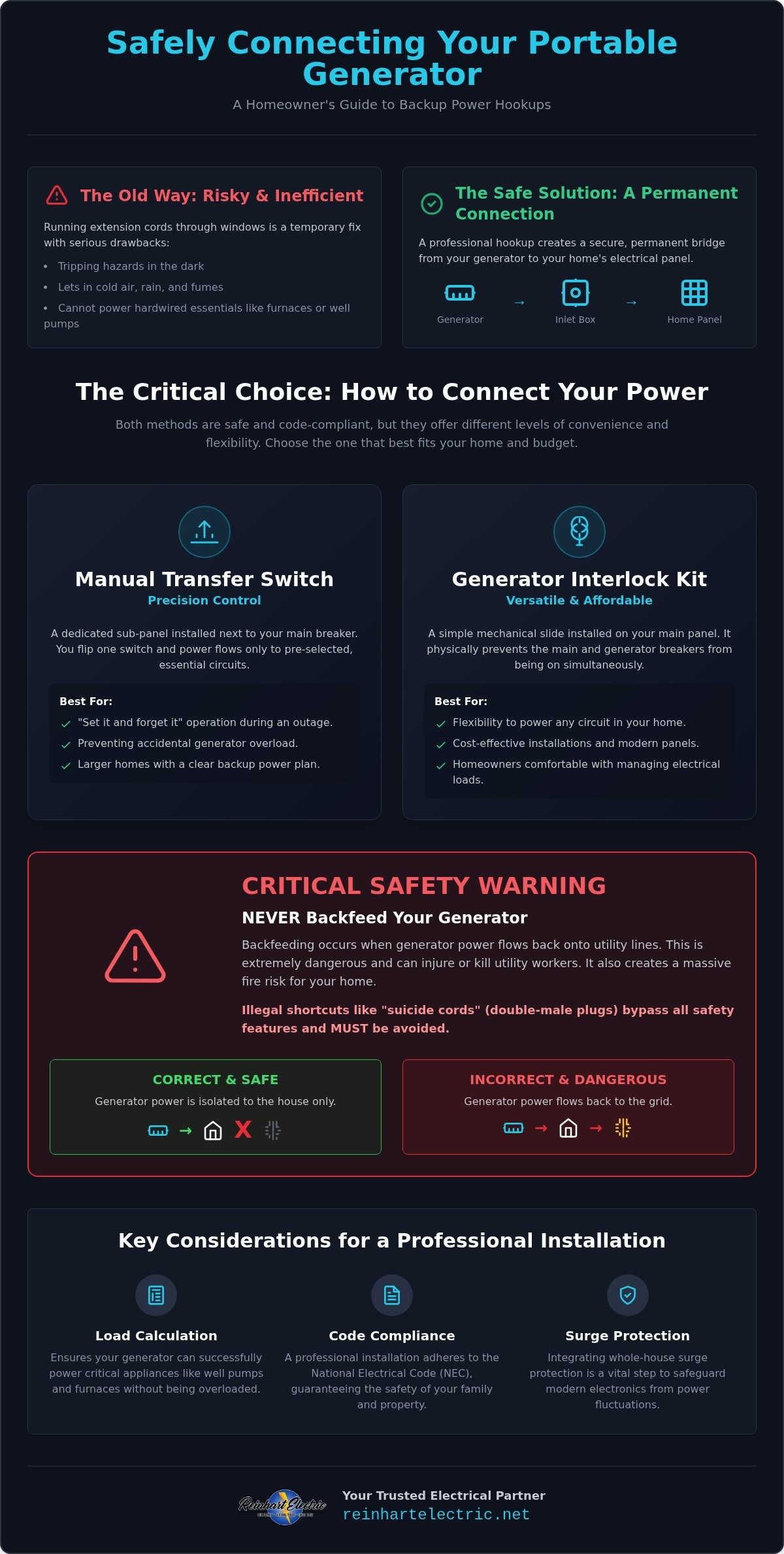
Setting up a reliable backup plan involves more than just buying a machine from a big-box store. The goal of a portable generator hookup to house is to create a secure, permanent bridge between your portable unit and your electrical panel. While running extension cords through a cracked window might work for a single lamp, it’s a tripping hazard and lets freezing air or exhaust fumes into your living space. A permanent connection is the only professional way to power hardwired appliances like your furnace, water heater, or well pump.
Most emergency power systems for residential use rely on three core components: the generator itself, a heavy-duty power cord, and a weather-tight inlet box. The final piece is the switching mechanism inside your home. We must address a dangerous shortcut often discussed in online forums: the “suicide cord.” This involves a double-male plug used to backfeed power through a dryer or oven outlet. Never attempt this. It bypasses all safety measures, creates a massive fire risk, and can send high-voltage electricity back into the utility lines. This backfeeding can seriously injure or kill utility workers trying to restore power in your neighborhood.
The Role of the Power Inlet Box
An inlet box is the external mounting point where you plug in your generator cord. In Seattle, we typically install these on the exterior wall closest to your main electrical panel or in a spot that’s easily accessible during a storm. You’ll need to choose between a 30-amp or 50-amp inlet based on your generator’s maximum output. Since we live in the Pacific Northwest, these boxes must be rain-tight and properly sealed. A high-quality inlet box features a spring-loaded cover that keeps moisture and debris away from the electrical contacts when not in use.
The Critical Need for a Disconnect
Your home cannot be connected to the utility grid and your generator at the same time. If they meet, the results are often explosive and destructive to your home’s wiring. A mechanical disconnect ensures that your main breaker must be off before the generator can provide power. This physical barrier is required by the National Electrical Code (NEC). It gives you the peace of mind that you aren’t accidentally sending electricity back onto the grid or damaging your own equipment when the utility power finally returns. Whether you use a transfer switch or an interlock kit, this disconnect is the most vital safety feature in your entire backup system.
Manual Transfer Switches vs. Generator Interlock Kits
Once you’ve decided to move away from the chaos of extension cords, you must choose how the power actually enters your electrical system. This is the heart of a portable generator hookup to house. Most homeowners in our local area find themselves weighing the pros and cons of a manual transfer switch versus a generator interlock kit. Both methods are safe and code-compliant. However, they offer very different experiences when the lights go out. Your existing electrical panel often dictates which path is the most reliable for your home’s specific layout.
Manual Transfer Switches: Precision Control
A manual transfer switch is a dedicated sub-panel installed next to your main electrical box. During an outage, you flip a single large switch to move power from the utility to the generator. You then select specific, critical circuits like your refrigerator, furnace, and a few essential lights. This method is excellent for larger homes in Renton or Kent where you want a predictable, pre-set power plan. It prevents you from accidentally overloading your generator because only the hardwired circuits can draw power. Following generator safety guidelines is much easier when your system is designed to handle only what your unit can produce.
Generator Interlock Kits: Versatile and Affordable
An interlock kit is a simpler, more flexible mechanical solution. It consists of a metal slide or bracket installed directly onto your main panel. This bracket physically prevents the generator breaker from being turned on while the main utility breaker is active. It’s an elegant way to ensure safety without the need for a separate sub-panel. Interlocks are a popular choice for modern panel upgrades across King County. They allow you to power any circuit in your house, provided you stay within the generator’s capacity. If you want to run the well pump for ten minutes and then switch to the microwave, an interlock gives you that freedom.
The best choice depends on your comfort level with managing electrical loads in the dark. A transfer switch is more “set it and forget it,” while an interlock offers more flexibility for a lower initial investment. If you’re unsure which system fits your current panel, our team can help you evaluate your options for Generator Transfer Switches & Lockout Kits to ensure your family stays warm and safe during the next storm.
Electrical Safety, Backfeeding, and Local Code Compliance
Safety isn’t just about keeping your lights on during a storm. It’s about following the law to protect your neighborhood and the utility crews working to restore power. The National Electrical Code (NEC) is very clear: any portable generator hookup to house must have a physical mechanical interlock or transfer switch. This isn’t a suggestion. It’s a mandatory requirement designed to prevent backfeeding. Backfeeding occurs when electricity flows from your generator back into the utility lines. This can energize a “dead” line several houses away, putting utility workers and neighbors at extreme risk of electrocution.
Professional installation also serves as a vital shield for your home insurance coverage. If an unpermitted, DIY electrical modification causes a fire, your insurance provider may deny the claim entirely. By ensuring your system is code-compliant, you protect your financial investment and your family’s safety simultaneously. We prioritize these standards to give you a system that works every time without compromise.
The Dangers of DIY “Suicide Cords”
You may find “advice” on social media suggesting the use of a “suicide cord.” This is a cable with two male plugs that allows you to backfeed power through a dryer or oven outlet. These cords are incredibly dangerous. They leave live, exposed prongs that can cause immediate electrocution. Relying on your memory to “just flip the main breaker” is not a valid safety strategy. If you forget or if a family member accidentally flips the switch, the results can be catastrophic. Beyond the fire risk, backfeeding can cause permanent damage to your generator’s alternator when the utility power suddenly returns and hits your unit with a massive surge. Following FEMA generator safety guidelines means avoiding these shortcuts and choosing a permanent, mechanical solution.
Meeting Seattle Area Electrical Codes
In cities like Auburn, Kent, and Renton, local electrical codes are strict for a reason. Washington State law requires a licensed electrician for any modifications made to your main service panel. Each installation must also pass a Labor & Industries (L&I) inspection. This inspection is your third-party verification that the grounding and bonding of your generator system meet modern safety standards. We handle the technical details of these local requirements so you don’t have to. From ensuring the correct wire gauge to verifying the neutral-to-ground bonding, we make sure your backup system is legally sound and physically safe for decades of use.
The Installation Process: What to Expect from a Professional
While some online guides suggest a portable generator hookup to house is a simple Saturday afternoon project, the reality of working inside a live service panel is complex. Professional installation ensures that every connection is torque-tested and every wire is correctly sized for the load it carries. This methodical approach is why a licensed expert is vital for a system that must perform perfectly during a crisis. We focus on precision to eliminate the risks of electrical fires or equipment failure when you need power the most.
Step 1: Load Assessment and Planning
It starts with a plan. We calculate the specific power needs of your home’s most hungry appliances, such as the furnace blower or the well pump, to ensure your generator won’t stall under pressure. This involves distinguishing between “running watts” and the higher “starting watts” required to kick over large motors. We also determine the safest physical location for your generator. It must be placed far enough from windows, doors, and vents to prevent carbon monoxide from entering your living space. Finally, we select the correct gauge of copper wire for the run between your inlet box and the main panel. Using wire that is too thin for the distance can lead to voltage drops that damage sensitive electronics.
Step 2: Panel Integration and Safety Testing
The “inside work” involves more than just snapping in a breaker. We must safely de-energize your home to install the new generator breaker and the mechanical lockout device. This device is the physical barrier that prevents your generator and the utility grid from ever connecting at the same time. Once the hardware is in place, we conduct a full simulation of a power outage. We’ll walk you through the proper startup sequence:
- Positioning and starting the generator outside.
- Connecting the heavy-duty power cord to the inlet box.
- Flipping the main utility breaker off and the generator breaker on.
- Selecting the specific household circuits you need to run.
This hands-on demonstration ensures you feel confident and safe operating the system in the dark. If you’re ready to secure your home’s backup power, we can provide a professional Generator Transfer Switches & Lockout Kits installation tailored to your specific electrical panel.
Choosing the Right Backup Power Solution for Your Home
Deciding between a portable unit and a permanent standby generator often comes down to your specific power needs and budget. While standby units offer hands-free operation, a professional portable generator hookup to house provides a versatile and cost-effective alternative. It allows you to keep the lights on and the fridge running without the high initial investment of a whole-home system. For many families in the Seattle area, this setup offers the perfect balance of reliability and value during our unpredictable storm seasons.
A backup system is only useful if it starts when you need it. Maintenance is the key to readiness. We suggest running your generator for twenty minutes once a month to keep the engine lubricated and the battery charged. Always use fresh, stabilized fuel to prevent carburetor issues. Don’t forget to inspect your exterior power inlet box, which is the heart of your portable generator hookup to house, for any signs of debris or insect nests that might have accumulated since the last storm. These small steps ensure that when the next big windstorm hits, your system is ready to perform.
Integrating Surge Protection
We’ve been serving the Renton and Kent communities since 1952. Our team understands the unique electrical needs of Pacific Northwest homes. We offer transparent pricing and a “service-above-all” approach that treats your home with the same care we’d give our own. Whether you need a simple interlock kit or a comprehensive transfer switch setup, we are here to provide the steady hand you need for storm preparation. Our long-term commitment to the community means we stand behind every wire we pull and every breaker we install.
Schedule your generator transfer switch installation with Reinhart Electric today and gain the peace of mind that comes with a code-compliant, professional connection.
Secure Your Home’s Power Before the Clouds Gather
Integrating a portable generator into your home’s electrical system is one of the smartest investments you can make for the storm season. By choosing between a manual transfer switch or a versatile interlock kit, you ensure your family stays warm and your electronics stay safe when the grid fails. A professional portable generator hookup to house is about more than convenience; it’s a vital safety measure that protects your neighbors and utility workers from the hidden dangers of backfeeding.
At Reinhart Electric, we’ve been the steady hand for Seattle area homeowners since 1952. With over 70 years of local expertise, our family-owned team understands the specific needs of King County homes. We offer 24/7 emergency service to ensure you never have to face a blackout alone. Taking this step now means you’ll be ready to handle whatever the Pacific Northwest weather brings your way.
Get a Professional Generator Hookup Quote from Reinhart Electric. We’re here to help you keep the lights on.
Frequently Asked Questions
Can I plug my portable generator into a standard wall outlet?
No, you should never plug a generator into a standard wall outlet. This practice is known as backfeeding and it is incredibly dangerous for your home and the community. It sends electricity back into the utility lines, which can electrocute utility workers or neighbors. A proper portable generator hookup to house requires a mechanical interlock or transfer switch to keep your home safely isolated from the utility grid. This ensures your family remains safe during any Seattle storm.
What is the difference between a transfer switch and an interlock kit?
A manual transfer switch is a separate subpanel that controls specific, pre-selected circuits like your fridge and furnace. In contrast, an interlock kit is a mechanical bracket installed on your main panel that allows you to choose any circuit in the house, provided you stay within the generator’s wattage limit. Both methods provide a safe way to manage your portable generator hookup to house, though interlocks are often more flexible for modern King County homes.
How much does it cost to have an electrician install a generator hookup?
The cost of a professional installation varies based on several local factors. Your existing electrical panel’s age, the distance from the panel to the exterior power inlet box, and whether you choose a transfer switch or an interlock kit all influence the total investment. Because every home in Renton, Kent, or Auburn has a unique layout, we recommend a personalized consultation to evaluate your specific electrical needs and ensure your system meets all current safety standards.
Do I need a permit to install a generator transfer switch in King County?
Yes, installing a generator transfer switch or interlock kit in King County requires an electrical permit and a subsequent inspection. Washington State Labor & Industries (L&I) regulations mandate that any modification to your main service panel must be verified by a third-party inspector. This process ensures that the grounding, bonding, and mechanical safety features are installed correctly, providing you with long-term peace of mind and protecting your home insurance coverage.
What size portable generator do I need to power my whole house?
Most homes in the Seattle area require a generator between 7,500 and 10,000 watts to power essential appliances like a furnace, refrigerator, and well pump. To find your exact needs, you must calculate the total starting watts of your largest motors. If you plan to run a central air conditioner or a large well pump, you may need a unit with a higher peak output to handle the initial surge during startup.
Is it safe to run a portable generator in the rain or snow?
It is not safe to run a portable generator directly in the rain or snow without protection. Water can cause electrical shorts or permanent damage to the alternator. You should use a specialized generator tent or a well-ventilated cover designed for wet weather. Always ensure the unit is at least 20 feet away from your home’s windows and vents to prevent carbon monoxide poisoning, regardless of the weather conditions in Tukwila or Burien.
Can a portable generator power my central air conditioner or furnace?
We recommend testing your backup system at least once a month. Start the generator and run it under a small load for about twenty minutes to ensure the engine stays lubricated and the battery remains charged. Additionally, you should perform a full system check once a year before the winter storm season arrives. This routine maintenance ensures that your cords, inlet box, and switching mechanism are ready when a real emergency strikes your neighborhood.