
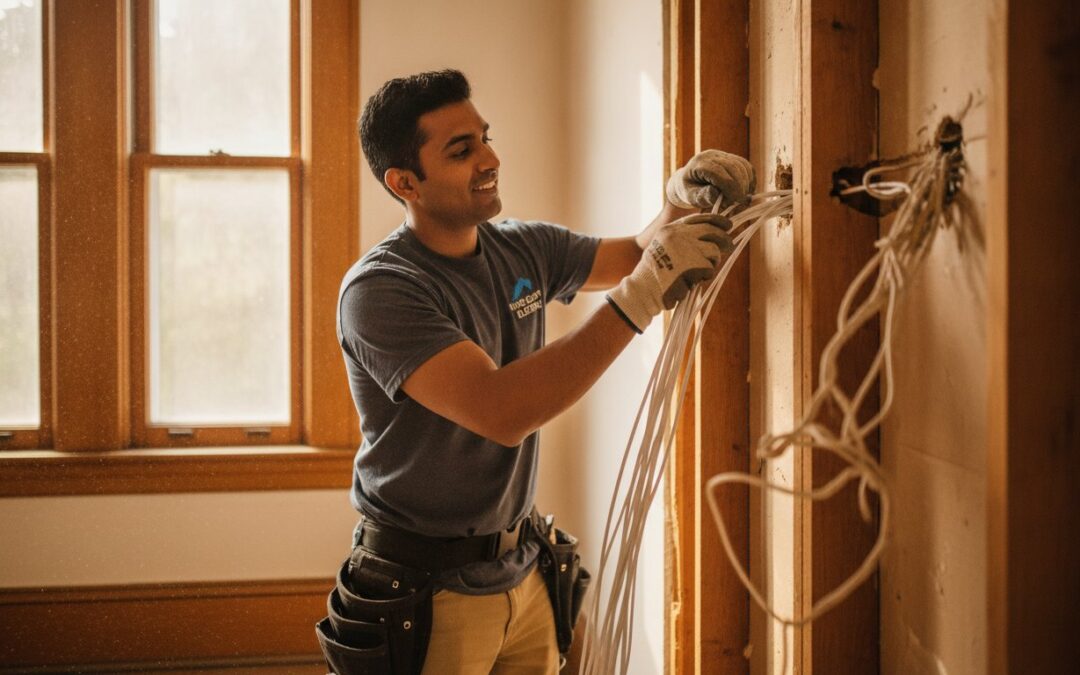
Imagine finally moving into a charming 1920s home in Seattle, only to receive a letter from your insurance company threatening to cancel your coverage due to “unacceptable risk.” For many local homeowners, discovering that a property still relies on century-old electrical systems is a stressful wake-up call. You shouldn’t have to choose between historical charm and modern safety. Understanding the knob and tube wiring replacement cost is the first step toward securing your home’s future and ensuring your family stays safe from the very real threat of electrical fires.
It’s exhausting to deal with flickering lights or the inability to use basic appliances without tripping a breaker. We agree that your home should support your modern lifestyle while maintaining its integrity. This guide explores the specific factors that influence your project’s scope, from King County permit requirements to the necessity of service panel upgrades. You’ll learn why this investment is essential for insurance approval and how it increases your property’s market value. We’ll provide a clear path to a safe, code-compliant home so you can stop worrying about your wires and start enjoying your space.
Key Takeaways
- Learn why knob and tube wiring poses a fire risk in older homes and how its lack of a grounding wire affects your modern electronics.
- Understand how Seattle insurance providers view outdated systems and why replacement is often required within 30 days of a home purchase.
- Identify the primary house features, such as attic accessibility and total square footage, that determine your knob and tube wiring replacement cost.
- Discover why pairing a full rewire with a service panel upgrade ensures your historic home can safely handle modern electrical loads.
- Gain peace of much-needed peace of mind by learning the step-by-step process of transitioning your home to a safe, code-compliant electrical system.
What is Knob and Tube Wiring and Why is it a Risk?
Knob and tube wiring was the first standardized electrical method used in North American homes. It remained the industry standard from roughly the 1880s through the 1940s. If you live in a historic Seattle neighborhood, there’s a good chance your home’s original skeleton includes these distinctive white ceramic cylinders and spools. To understand the technical history, reading about What is Knob and Tube Wiring? reveals how it relied on single copper conductors. These wires run through porcelain tubes when passing through wood framing or wrap around ceramic knobs to maintain tension and support.
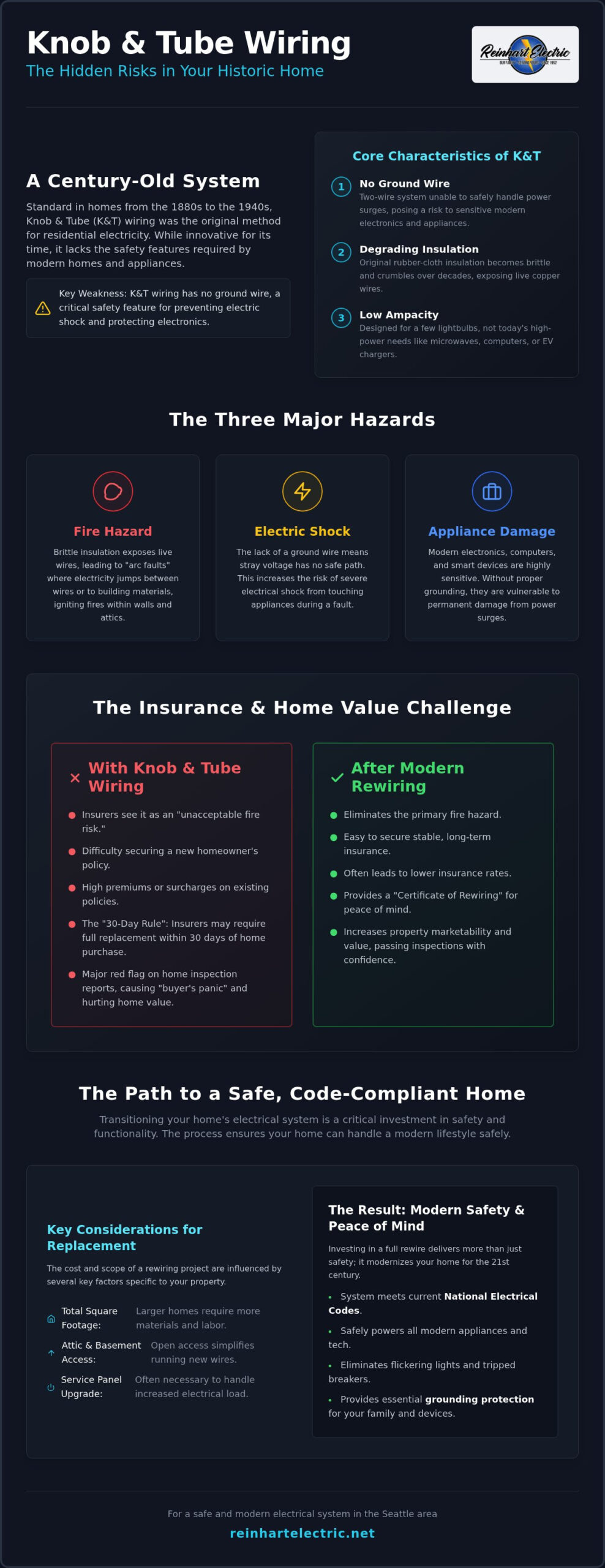
In the early 20th century, this design was quite effective for the times. Homes had very few electrical needs, usually just a few light bulbs and a radio. The wires were intentionally spaced apart to allow heat to dissipate through open air. Today, our homes demand much more power. A primary concern for homeowners evaluating the knob and tube wiring replacement cost is that knob and tube wiring is a two-wire system lacking a dedicated grounding conductor.
The Absence of a Grounding Wire
Modern appliances and electronics require a ground wire to safely redirect excess electricity during a surge or fault. Without this third wire, you face a much higher risk of electrical shock and permanent damage to your equipment. You might see three-prong outlets in an older home, but if they’re connected to knob and tube, that third hole isn’t actually functional. This is particularly dangerous for sensitive modern electronics like smart home hubs and high-end computers. It also creates a massive hurdle if you’re looking at modern upgrades like EV charger installation. These systems require a robust, grounded circuit that old wiring simply cannot provide.
Insulation Degradation and Fire Hazards
The original insulation on these wires consisted of rubber-saturated cloth. Over nearly a century, this material becomes brittle and eventually crumbles away. This leaves bare copper exposed. When this happens, “bridging” can occur where the electricity jumps between wires or to nearby building materials. This leads to arc fires. The danger increases when modern “Romex” wiring is improperly joined to the old system by an amateur. These mismatched connections often overheat. For many local families, the knob and tube wiring replacement cost is a necessary investment to eliminate these hidden hazards and ensure the home meets current safety codes.
The Impact on Insurance and Home Value in Seattle
Living in a historic home in the Pacific Northwest comes with a unique set of challenges. One of the most pressing issues for homeowners in Seattle and Renton is how older electrical systems affect their property’s standing with insurance providers. Washington state insurance companies increasingly view knob and tube wiring as an unquantifiable fire risk. This isn’t just a minor technicality. It’s a major factor that can determine whether you can even secure a policy for your property. Most modern carriers require a professional electrical certification of K&T removal before issuing a policy.
If you’re in the process of buying a home, you’ll likely encounter the “30-day rule.” Many local insurers will only offer a binder or a temporary policy on the condition that the wiring is fully replaced within 30 days of closing. This creates a high-pressure situation for new owners who are already juggling the stresses of moving. Proactively addressing the knob and tube wiring replacement cost before listing a home or immediately after purchase is often the only way to keep your coverage intact.
Insurance Surcharges vs. Denial of Coverage
The financial reality of legacy wiring is often reflected in your monthly bills. While some companies might still allow knob and tube for existing long-term customers, they frequently apply significant surcharges to the premiums. For new policies, however, denial is becoming the standard. Insurers prefer predictable risks, and century-old rubber insulation doesn’t fit that profile. Once the work is finished, a “Certificate of Rewiring” serves as your golden ticket. It provides long-term policy stability and can often lead to lower insurance rates because the primary fire hazard has been eliminated.
Marketability and the “Buyer’s Panic”
In the competitive King County real estate market, active knob and tube wiring stands out on a standard home inspection report like a red flag. It often triggers what we call “buyer’s panic.” Savvy buyers and their agents recognize that the knob and tube wiring replacement cost is a significant investment. They frequently use this as a major negotiation lever to demand deep price drops or seller credits. By modernizing your home’s electrical system, you remove this hurdle entirely. A “modernized” label on a listing provides peace of much-needed peace of mind, making the property far more attractive to a wider pool of buyers. If you’re preparing to sell or have just moved into an older property, a whole-house safety audit can provide the clarity you need to move forward with confidence.
Factors Influencing Knob and Tube Replacement Cost
Every historic home in the Puget Sound area has its own unique personality and architectural challenges. This means the knob and tube wiring replacement cost varies significantly from one property to the next. It’s not a one-size-fits-all calculation. We look at the total square footage and the number of stories first. Multi-story homes require a much more complex “fishing” process to move wires between floors. Without the right expertise, this can lead to unnecessary damage to your home’s structural integrity.
The accessibility of your attic and crawlspace serves as the primary highway for new circuits. If an electrician can move freely in these areas, the work proceeds much faster. If these spaces are cramped, sealed, or filled with old insulation, the labor requirements increase. We also examine your wall materials. Cutting into modern drywall is a straightforward task, but historic lath and plaster is brittle. It requires a much steadier hand to avoid spreading cracks. Finally, the total number of devices you want to modernize, including outlets, switches, and lighting fixtures, directly impacts the project scope.
Labor Intensity: The “Fishing” Process
Rewiring a home is roughly 80% labor and only 20% materials. Most of that time is spent “fishing” new copper lines through narrow, hidden cavities. Electricians often encounter “fire blocks,” which are horizontal wood pieces between studs designed to slow the spread of flames. Navigating around these obstacles without making massive, unsightly holes is an art form. It takes years of experience to minimize intrusive cuts in historic finishes. Our goal is always to preserve the character of your home while making it fundamentally safe for the next generation.
Associated Upgrades: Panels and Permits
A full knob and tube replacement often reveals that your current electrical panel is undersized for 2026 power demands. We frequently find that the knob and tube wiring replacement cost naturally includes a panel upgrade to 200 amps. This ensures your home can handle modern loads like EV chargers or high-efficiency heat pumps. Local regulations in cities like Auburn and Kent also require specific municipal permits and mandatory inspections. These steps aren’t just red tape; they provide a formal record that your home meets current safety codes. You’ll also need to account for modern safety devices like GFCI and AFCI protection, which are now mandatory for most areas of the home to prevent shocks and arc fires.
What to Expect During the Rewiring Process
Many homeowners feel a sense of anxiety when they think about the physical work required to modernize their electrical systems. It’s a common misconception that your entire house must be torn apart to remove old wiring. In reality, a professional rewiring project is a methodical and organized process designed to respect your home’s history. We begin with a thorough initial assessment. Our team maps out every active circuit in the house to ensure the knob and tube wiring replacement cost reflects the full scope of work needed to make your home safe.
Preparation is the most important step for protecting your living space. Plaster dust is a reality of historic home renovation. We use heavy-duty drop cloths and plastic barriers to shield your furniture and flooring before any work begins. Once the house is protected, we move into the “cut and pull” phase. This involves safely disconnecting the old, brittle wires and fishing modern NM-B cables through your existing wall cavities. After the new lines are in place, we meticulously test every outlet and switch. We also provide clear, professional labeling on your new electrical panel so you’ll never have to guess which breaker controls which room.
Minimizing Damage to Lath and Plaster
You don’t need to move out during a rewiring project. We typically work zone-by-zone, meaning only specific areas of the house lose power at any given time. This allows you to maintain a relatively normal routine. However, you should plan for a full-day power shutoff when we perform the electrical panel upgrade. For a typical 2,000-square-foot home in the Seattle area, the electrical portion of the project generally takes between 7 and 14 business days. If you’re ready to start planning your project, you can schedule an electrical safety audit to get a clear picture of your home’s specific needs.
Modernizing Your Home with Reinhart Electric & Service, Inc.
Our team has been a steady presence in the Renton and Seattle area since 1952. We understand the unique quirks of King County’s historic housing stock because we were there when many of these systems were still the industry standard. When you’re calculating the knob and tube wiring replacement cost, you aren’t just paying for copper and labor. You’re investing in the peace of mind that comes from a team that knows exactly how to navigate local building codes and pass inspections the first time. We treat every home with the care it deserves, ensuring your property’s history is respected while its safety is modernized.
Reinhart Electric & Service, Inc. builds its approach on transparency and dependability. We offer project-based pricing to ensure there are no surprises or hidden fees once the work begins. Every major project starts with a comprehensive safety audit. This allows us to identify the specific needs of your home, from outdated panels to brittle insulation, ensuring the final plan is both safe and efficient. Our deep roots in the community mean we’re committed to being a steady and honest partner for the long term.
A Legacy of Electrical Safety
There’s a significant difference between a general handyman and a specialized electrical contractor. We’ve spent generations working with the very systems we are now replacing. This deep technical knowledge allows us to work more efficiently and safely than those who lack experience with vintage materials. We maintain a neighborly approach with honest communication at every step. Because this is high-liability work, our status as a licensed, bonded, and insured team is essential. It protects your property and your family throughout the entire modernization process.
Future-Proofing Your Investment
Replacing your old wiring is the perfect time to prepare for the future. We often help homeowners combine their project with EV charger installation or whole house surge protection. These additions make your home more functional for modern life and significantly increase its resale value. We also understand the administrative side of home ownership. We’ll help you navigate the necessary documentation for your insurance carrier to prove your home is now code-compliant. This often leads to smoother renewals and more stable coverage. Schedule your electrical safety audit with Reinhart Electric & Service, Inc. today to get a clear, professional view of your home’s needs and a detailed breakdown of the knob and tube wiring replacement cost for your specific property.
Secure Your Historic Home’s Future
Investing in your home’s electrical system is about more than just passing an inspection. It’s about protecting the heritage of your Seattle property and ensuring your family’s safety for years to come. By addressing the knob and tube wiring replacement cost now, you avoid the sudden stress of insurance denials and the hidden hazards of century-old insulation. A modernized system also prepares your home for the high-tech demands of 2026, from reliable smart home hubs to efficient EV charging.
Reinhart Electric has served King County since 1952 with a commitment to honesty and technical excellence. Our licensed, bonded, and insured professionals maintain an A+ BBB rating by treating every historic home with the care it deserves. Don’t let outdated wiring hold your property back or compromise your peace of mind. We’re ready to help you transition to a safe, code-compliant environment that supports your modern lifestyle while preserving your home’s unique character.
Request a Professional Rewiring Estimate from our family-owned team today. We look forward to helping you build a safer and more reliable home.
Frequently Asked Questions
Is knob and tube wiring illegal in Washington state?
It is not illegal to live in a home that contains knob and tube wiring. However, the system is considered obsolete and doesn’t meet modern safety standards. Washington state building codes and the National Electrical Code generally prohibit adding new outlets or extensions to these circuits. If you plan a major renovation, local jurisdictions like Seattle or Renton often require you to update the system to current standards as part of your permit process.
Can I just replace the visible knob and tube wiring in the attic?
Partial replacement is rarely a safe or effective solution. While the wiring in your attic might be the easiest to access, the most significant risks often hide inside your walls where insulation is brittle or connections are loose. Replacing only the visible portions creates dangerous “bridging” between old and new systems. To accurately address your knob and tube wiring replacement cost, we recommend a full system update to ensure every circuit is grounded.
How do I know if my home has knob and tube wiring?
You can often spot this system by looking for white ceramic spools or tubes in your attic, basement, or crawlspace. These components support single copper wires running parallel to each other. Inside the living areas, a lack of three-prong outlets or the presence of original push-button light switches are strong indicators. If you’re unsure, a professional safety audit is the most reliable way to map out your home’s electrical skeleton and identify hidden hazards.
Will my insurance company cancel my policy if they find knob and tube?
Many insurance carriers in the Pacific Northwest will decline to issue a new policy or may threaten to cancel existing coverage if active knob and tube is discovered. They view the lack of a ground wire and the age of the insulation as an unacceptable fire risk. Some companies offer a short grace period to complete a total rewire. Proactively managing your knob and tube wiring replacement cost is often necessary to maintain your coverage.
Can I insulate my attic if I have active knob and tube wiring?
You should never install loose-fill or batt insulation over active knob and tube wiring. This system was designed to stay cool by dissipating heat into the open air. When you cover these wires with insulation, heat builds up rapidly and can ignite the surrounding material. Most building inspectors will require the full removal of active knob and tube circuits before they allow any new insulation to be added to your attic or wall cavities.
Does the National Electrical Code (NEC) require full removal of K&T?
The NEC does not mandate the immediate removal of knob and tube wiring just because it exists. However, it strictly regulates how it can be used. For example, the code prohibits covering it with insulation and restricts how it can be spliced with modern wiring. In King County, strict renovation rules often trigger a requirement for full removal when you modify your home’s footprint or update your electrical panel to support modern power loads.
How long does a whole-house rewiring project typically take?
For a standard 2,000-square-foot home, the electrical portion of a rewiring project usually takes between 7 and 14 business days. This timeline includes the initial mapping, fishing new wires through wall cavities, and installing the new panel. Factors like attic accessibility and the number of stories can influence the duration. We work methodically to ensure the project stays on schedule while maintaining the high safety standards our Renton neighbors have trusted since 1952.
Can I stay in my house while the wiring is being replaced?
Most homeowners choose to remain in their homes during the rewiring process. We typically work in sections, which means you’ll only lose power in specific zones at any given time. While there will be some noise and plaster dust, we use protective coverings to keep your living spaces clean. You should plan for a full-day power outage when we swap your old panel for a modern service upgrade, but we coordinate this carefully to minimize disruption.