
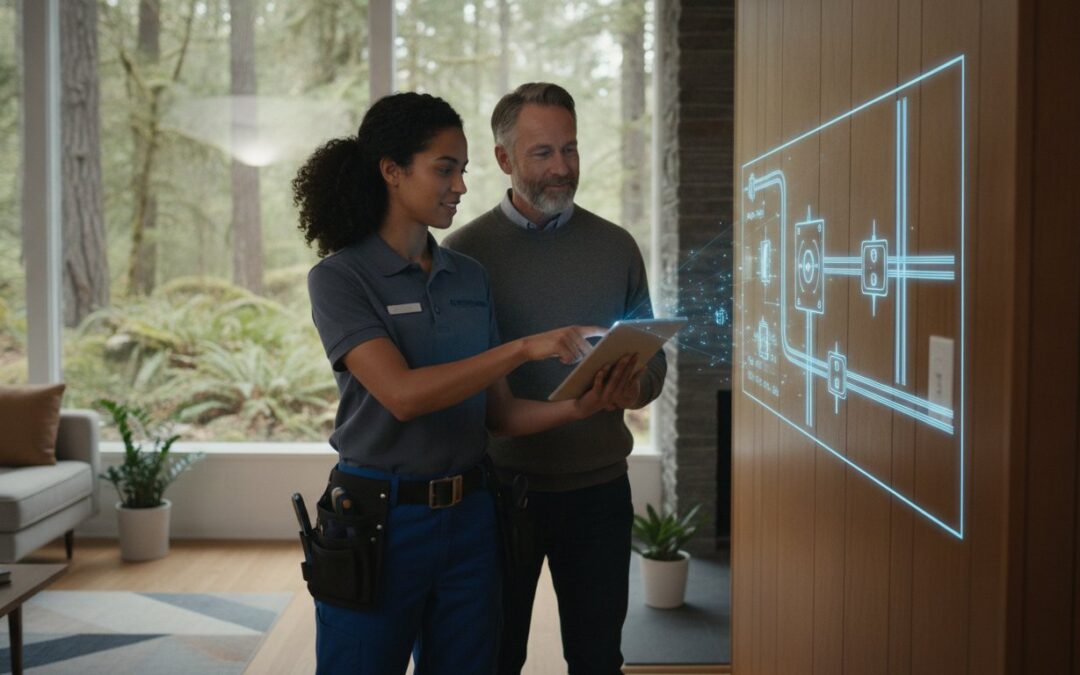
What if the most dangerous part of your home in our communities is the one thing you can’t see behind your walls? It’s a common worry for many of our neighbors, especially those living in the beautiful mid-century homes that define our area. You might wonder if your outlets are truly grounded or if your electrical panel is quietly struggling to keep up with modern appliances. Staying updated on safety isn’t just about peace of mind; it’s about protecting your family and your investment.
We understand that the thought of hidden hazards and complex building codes can feel overwhelming. You want a safe environment without the stress of “what-ifs” or surprise repair bills. This article walks you through everything involved in a home electrical safety check local homeowners need to stay compliant and secure. We’ll show you how to identify warning signs, explain the latest GFCI and AFCI requirements, and provide a straightforward path to modernizing your home. By the end, you’ll have a clear roadmap to ensure your electrical system is ready for the future. At Reinhart Electric & Service, Inc., we are dedicated to ensuring your home’s electrical safety.
Key Takeaways
- Understand why a professional audit goes deeper than a standard home inspection to reveal hidden wiring issues.
- Learn the critical components of a 50-point checklist, including breaker sizing and proper system grounding.
- Recognize red flags such as flickering lights or tripped breakers that signal you need a home electrical safety check Seattle experts recommend.
- Discover the unique hazards found in older King County homes, from 1950s modernization needs to risky aluminum wiring.
- See how proactive safety audits prevent costly emergency repairs and ensure your home meets the newest 2026 electrical standards.
What Is a Home Electrical Safety Audit?
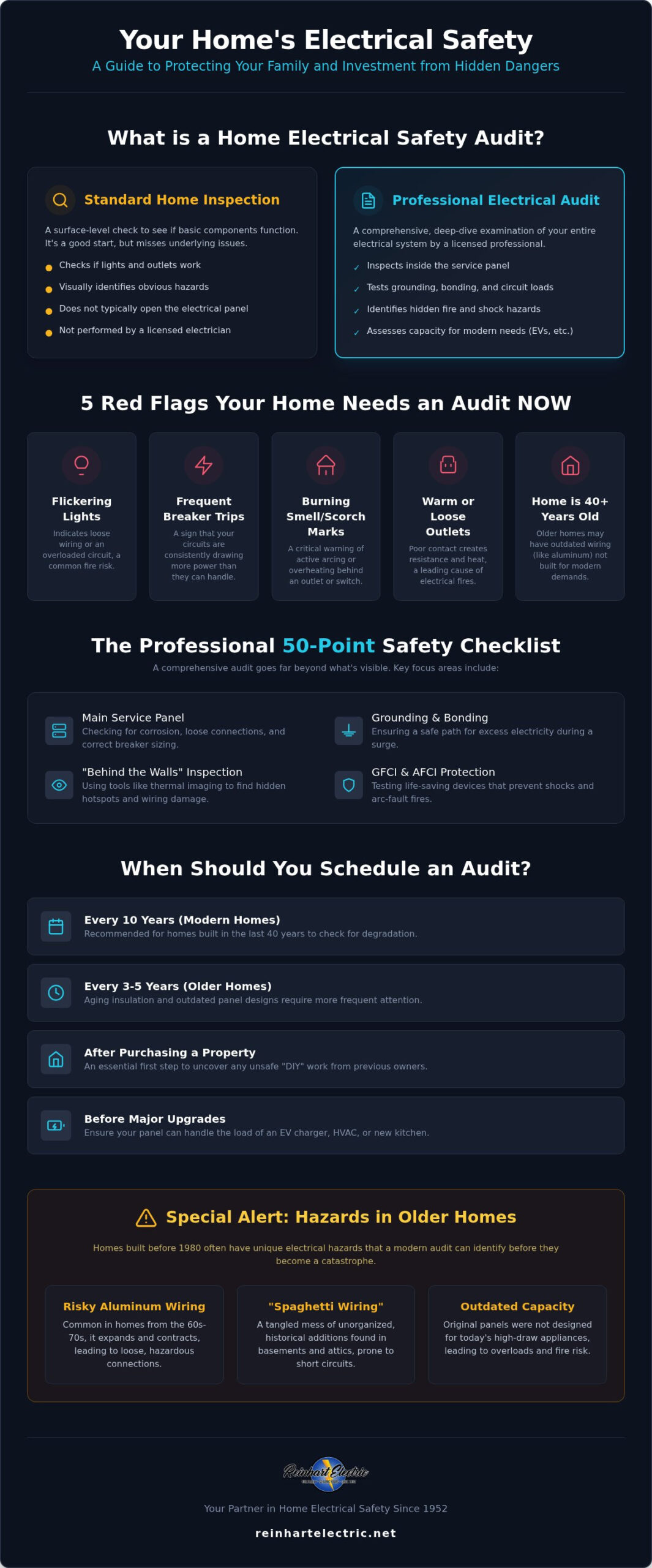
A home electrical safety audit is a thorough examination of your property’s entire electrical infrastructure. It starts where the utility power enters your meter and follows every wire through the service panel down to the smallest outlet in your bedroom. This isn’t a surface-level glance. While a general home inspector checks if lights turn on, a licensed electrician performs a deep dive into the system’s physical integrity. We look behind the panel cover and test for proper circuit loading to ensure your home operates reliably. The main objective is to pinpoint fire hazards, shock risks, and any violations of electrical safety standards. We also evaluate if your current setup can handle modern demands like Level 2 EV chargers or high-end kitchen appliances that pull more power than older systems were designed for.
The Difference Between an Audit and a Repair Visit
Think of an audit as a proactive physical exam for your home. Most people only call an electrician when something breaks, like a dead outlet or a persistent smell of burning. That’s a repair visit. A repair visit focuses on a single symptom. In contrast, a home electrical safety check Seattle homeowners choose is a system-wide root cause analysis. We look for the “why” behind potential problems before they manifest as an expensive emergency. At Reinhart Electric & Service, Inc., we’ve seen how these systems evolve since we started serving the area in 1952. Sometimes, the most valuable result is a clean bill of health. Knowing your wiring is sound provides a level of peace of mind that a simple repair can’t offer.
When Should You Schedule an Audit?
Timing depends on your property’s age and your specific power needs. A professional home electrical safety check Seattle experts provide can reveal hidden damage before it becomes a hazard. We suggest scheduling an audit during these key moments:
- Every 10 years: This is the standard recommendation for modern homes to ensure no components have loosened or degraded.
- Every 3 to 5 years for older homes: Older Seattle homes often require more frequent attention due to aging insulation and outdated panel designs.
- After purchasing a property: If you just moved to the Renton or Kent area, an audit should be your first priority to catch any “DIY” work from previous owners.
- Before major upgrades: Ensure your panel can handle the load before installing an EV charger or a new HVAC system.
Staying ahead of these checks prevents the need for 24/7 emergency calls later. It’s a small, methodical investment that protects your family and your larger investment in your home.
The 50-Point Electrical Safety Checklist
A professional home electrical safety check Seattle residents trust covers far more than just the visible components. It starts at the main service panel, which is the heart of your home’s power. We look for signs of corrosion, loose connections, and ensure every breaker is sized correctly for its specific circuit. We also verify the grounding and bonding systems. Without a solid, dedicated path for excess electricity to reach the earth, your home remains vulnerable during a power surge or a lightning strike. These foundational checks ensure your system can safely distribute power without overheating.
The Behind the Walls Professional Inspection
Our team goes where most homeowners don’t. We inspect attics and crawlspaces to verify wiring integrity and look for damage from pests or aging insulation. In older Auburn or Burien basements, we often find “spaghetti wiring,” which is a tangled mess of historical additions that can lead to dangerous shorts. We use thermal imaging tools to find heat signatures behind walls that indicate active arcing. We also check outlet tension. If a plug falls out easily, the internal contact is loose. This creates resistance and heat, which is a leading cause of electrical fires. This level of detail follows the official Home Electrical Safety Checklist standards to ensure your family stays protected.
Testing GFCI and AFCI protection is another critical step. These devices are life-savers in kitchens, bathrooms, and bedrooms. They shut off power instantly when they detect a ground fault or a dangerous arc. If your home hasn’t been updated to meet the latest 2026 standards, you might be missing these vital safety layers that prevent shocks and fires before they start.
DIY Pre-Audit: What You Can Check Today
While you should never open your electrical panel yourself, there are safety steps you can take right now. Walk through your home and look for “octopus plugs.” These are power strips plugged into other power strips or too many high-draw appliances sharing one outlet. These setups easily overload circuits and create hidden heat. You should also check your outlets for any discoloration or surfaces that feel warm to the touch. This is a major red flag that requires immediate attention.
Test your smoke and carbon monoxide detectors to ensure they’re functional and have fresh batteries. If you find discolored outlets or frequent issues during your walk-through, it’s a good idea to schedule a professional consultation to address these hazards. A proactive approach is always better than waiting for a breaker to trip or a device to fail during a busy Seattle winter.
5 Red Flags Your Seattle Home Needs an Audit Now
Your home often tries to tell you when something is wrong. Small glitches like a flickering bulb or a breaker that trips once a month might seem like minor annoyances, but they’re frequently symptoms of deeper systemic issues. Ignoring these signs can lead to costly emergency repairs or, in the worst cases, electrical fires. A professional home electrical safety check Seattle homeowners schedule can identify these risks before they escalate. If you notice any of the following five red flags, it’s time to have a licensed expert look at your system.
- Flickering or dimming lights when the refrigerator or AC kicks on.
- Frequent circuit breaker trips that disrupt your daily routine.
- Persistent burning smells or fishy odors near outlets or the panel.
- Buzzing or popping sounds coming from your switches or walls.
- Outlets that are discolored, warm to the touch, or spark when plugged in.
Understanding Flickering Lights in the PNW
In the Pacific Northwest, our weather plays a significant role in electrical health. Seattle storms often bring high winds and heavy rain that can exacerbate loose service entrance wires where power enters your home. If your lights flicker specifically during a storm, it might be a utility grid issue. However, if they dim every time your HVAC system starts up, you likely have a circuit overload or a loose connection within your own walls. Electrical arcing occurs when a current jumps across a gap in a connection, and it’s a primary cause of residential electrical fires. This heat can slowly degrade your wiring over years without you ever seeing a flame.
The Danger of Discolored Outlets
Heat buildup is a silent threat. When an outlet’s internal components become loose or corroded, they create resistance. This resistance generates intense heat that causes the plastic faceplate to yellow or turn brown. It’s a clear indicator that a fire may be smoldering behind the drywall where you can’t see it. You should never just paint over a darkened outlet or ignore a “fishy” smell, which is often the scent of melting heat-resistant plastic. A home electrical safety check Seattle residents rely on includes using thermal imaging to see this heat before it ignites. If your outlets feel warm, stop using them immediately and seek professional help to ensure your home remains a safe environment for your family. Taking these steps now prevents the anxiety of a midnight emergency later.
Local Considerations: Auditing Older Homes in King County
Seattle’s architectural history is beautiful, but it presents unique challenges for modern electrical systems. Many homes in Renton and Auburn built during the 1950s were designed for a fraction of today’s power needs. If you live in one of these mid-century properties, a home electrical safety check Seattle specialists provide is essential to identify aging components. We frequently find knob and tube wiring in the city’s oldest neighborhoods. This system lacks a grounding wire and wasn’t built to handle modern insulation. Similarly, homes built between 1965 and 1973 often contain aluminum wiring. Aluminum expands and contracts more than copper; this movement can loosen connections and create a fire hazard over time.
The Puget Sound climate adds another layer of risk. Our persistent dampness and salt air can cause rapid corrosion in outdoor meter bases and panels. If you see rust or white powdery deposits on your panel, the integrity of your connection is likely compromised. These environmental factors make regular inspections a necessity rather than a luxury for local homeowners.
Modernizing for the 2026 Electrical Code
Staying compliant is becoming more complex. The 2023 Seattle Electrical Code, which became effective on August 18, 2026, introduces stricter safety mandates. Modern standards now emphasize tamper-resistant outlets to protect children and whole-house surge protection to shield expensive electronics. While King County inspectors may allow some “grandfathered” systems to remain, any significant remodel or upgrade usually triggers a requirement to meet current codes. It’s also wise to act sooner rather than later; King County permit fees are scheduled to increase by approximately 14% on January 1, 2026. Proactively updating your system ensures you aren’t hit with unexpected costs during a future sale or renovation.
Preparing for EV Charging in Des Moines and Burien
If you’re planning to join the many drivers in Des Moines or Burien switching to electric vehicles, a home electrical safety check Seattle homeowners use for pre-installation is your first step. A Level 2 home charging station requires a significant amount of power. Many older homes still operate on a 100-amp service, which might not have the capacity to support a car charger alongside your dryer and stove. We assess your load capacity to determine if a service change is necessary. A dedicated circuit is mandatory for vehicle safety to prevent overheating your existing wiring. To ensure your home is ready for these modern upgrades, you can schedule an electrical code update and safety compliance check with our experienced team.
Why Reinhart Electric & Service, Inc. Is Your Safety Partner
Choosing a partner for your electrical needs is fundamentally a matter of trust. Since 1952, Reinhart Electric & Service, Inc. has served the Seattle and Renton communities with a focus on stability and neighborly care. We’ve spent over seven decades learning the specific quirks of local housing stock, from mid-century ramblers to modern builds. When you schedule a home electrical safety check Seattle homeowners trust, you aren’t getting a high-pressure sales pitch. You’re getting an honest assessment from a family-owned business that treats your property like our own. Our goal is to provide transparency and a clear path toward a safe living environment.
Our team doesn’t just identify problems; we solve them. From the initial audit to complex electrical panel upgrades or custom lighting installations, we provide end-to-end support. This continuity ensures that the person who diagnosed the issue is part of the team that fixes it, maintaining a high standard of accountability. We take pride in our local reputation and our commitment to the well-being of the families we serve.
The Reinhart Audit Experience
When our technician arrives at your Renton or Kent home, they follow a methodical process designed to be as non-intrusive as possible. We document every finding with precision, providing you with a detailed report that is invaluable for your personal records or insurance requirements. We take the time to explain our findings in plain language, avoiding the dense jargon that often causes confusion. You’ll know exactly why a specific recommendation was made and how it impacts your daily safety. We understand that your home is your sanctuary. That’s why we maintain a clean, respectful work environment, ensuring we leave your space exactly as we found it.
Taking Action: Next Steps After Your Audit
Secure Your Home’s Future Today
Protecting your household involves more than addressing visible repairs; it’s about anticipating risks before they become emergencies. As we’ve explored, a professional audit uncovers the silent hazards like arcing or outdated grounding while ensuring your system aligns with the 2026 electrical codes. Whether you are maintaining a mid-century Renton rambler or prepping a Burien home for an EV charger, staying proactive is the most effective way to secure your investment.
Reinhart Electric & Service, Inc. has been a steady, family-owned partner for local homeowners since 1952. We are fully licensed, bonded, and insured in Washington State, offering the transparency and technical precision required for a safe living environment. While we provide 24/7 emergency service for unexpected faults, our mission is to help you avoid those urgent calls through methodical, preventative care. Don’t wait for a flickering light to signal a deeper problem. Take the first step toward lasting peace of mind by booking the home electrical safety check Seattle families have trusted for over seven decades.
Schedule Your Professional Electrical Safety Audit with Reinhart Electric & Service, Inc.
We look forward to serving you and keeping your home safe for the next generation.
Frequently Asked Questions
How much does a home electrical safety audit cost in the Seattle area?
Industry reports suggest that a professional inspection in the Seattle area typically ranges between $75 and $500, with many comprehensive assessments averaging around $325. The final cost often depends on the square footage of your home and the complexity of your electrical system. While we don’t provide specific quotes here, a thorough evaluation is a small investment that often prevents the need for much more expensive 24/7 emergency repairs later.
Do I need to be home for the entire electrical inspection?
Yes, you generally need to be present while the electrician performs the audit. Our technician will need access to your main service panel, attic, crawlspace, and every room in the house to test outlets and switches. Being home also allows us to walk you through our findings in real time. We can show you exactly where hazards exist and explain our prioritized safety recommendations so you feel fully informed about your home’s condition.
Will the electrician need to cut into my walls during the audit?
No, a standard safety audit is a non-invasive procedure that does not require cutting into your drywall. We use advanced diagnostic tools, such as thermal imaging cameras, to detect heat signatures and potential arcing behind your walls without causing any damage. We also remove the cover of your main electrical panel to inspect the internal wiring. Our goal is to provide a complete picture of your system’s health while keeping your home clean and intact.
Can an electrical safety audit help lower my homeowners insurance premiums?
Many insurance providers offer discounts or lower premiums if you can prove your home meets modern safety standards. Providing your insurer with a documented home electrical safety check Seattle experts have performed shows that you are proactive about risk management. This is especially true for older homes with legacy systems like knob and tube or aluminum wiring. Always check with your specific agent to see what documentation they require to apply these safety-related credits.
What is the most common safety violation found in Renton homes?
In older Renton neighborhoods, the most frequent violation we encounter is the lack of GFCI protection in kitchens and bathrooms. Many mid-century homes were built before these life-saving devices became a code requirement. We also commonly see “double-tapped” breakers, where two wires are connected to a single-circuit breaker designed for only one. These issues are simple to identify during a home electrical safety check Seattle homeowners schedule to stay compliant with local King County codes.
Is an electrical safety audit the same as a code compliance inspection?
While they overlap, a safety audit is often more comprehensive than a basic code compliance check. A code inspection focuses strictly on whether your system meets the minimum legal requirements for your jurisdiction. A safety audit looks at the overall health and “wear and tear” of your system, including aging insulation and outlet tension. We aim to ensure your home is not just legal, but truly safe for your family to live in every day.
How long does a typical residential safety audit take to complete?
A typical residential audit usually takes between 90 minutes and three hours to complete. The exact duration depends on the size of your property and how many outbuildings, like detached garages or workshops, need to be inspected. We work methodically to ensure no component is overlooked, from the meter base to the furthest bedroom outlet. Once finished, we provide a clear summary of our findings so you can plan any necessary upgrades without feeling rushed.