
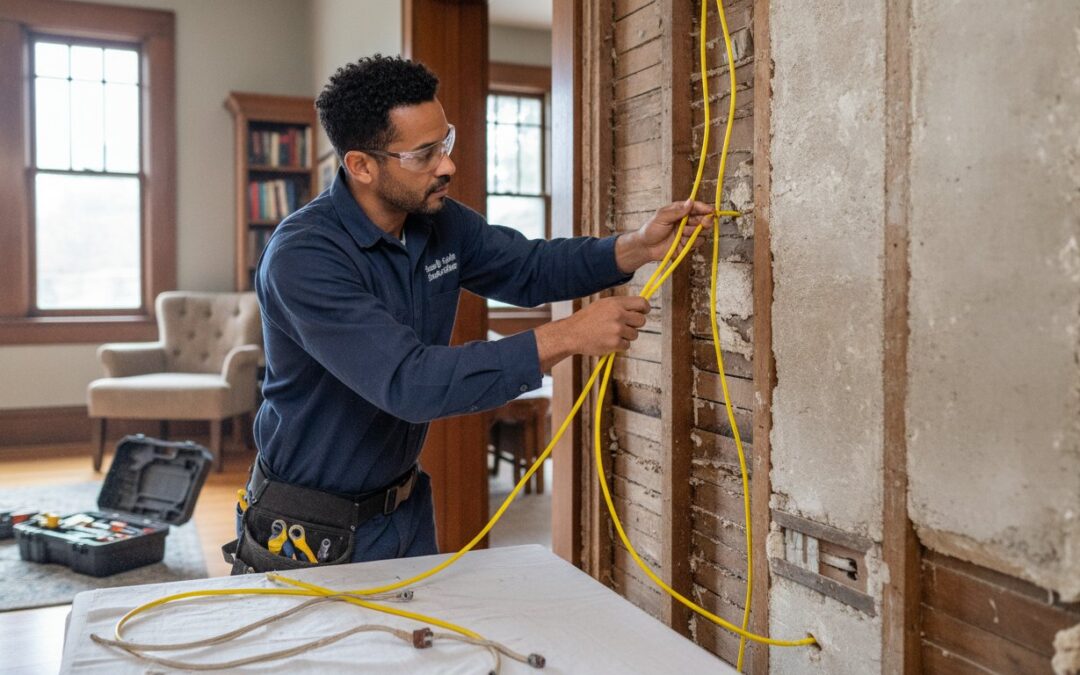
What if your home’s original charm is actually the very thing keeping you from getting insurance coverage? It’s a stressful reality for many neighbors in historic districts like Queen Anne or Ballard who find themselves facing dropped policies or soaring premiums due to outdated wiring. You’ve likely spent nights worrying if those old circuits can handle your modern appliances or if a fire hazard is hiding behind your plaster walls. We understand that the cost to rewire a house Seattle homeowners must plan for is a significant investment, especially when you’re anxious about the mess and “wall-cutting” involved in the process.
Since 1952, our team has seen how Seattle’s unique architecture requires a methodical approach to electrical safety. You deserve a clear, honest breakdown of what to expect, from 2026 SDCI permit requirements to the specific challenges of upgrading King County’s historic housing stock. This guide will walk you through the factors that influence project pricing, the realities of working with plaster walls, and how to satisfy insurance providers with confidence. We’ll help you bridge the gap between your home’s 1920s architecture and the high-tech electrical demands of today.
Key Takeaways
- Understand how square footage and circuit requirements drive the total investment for modernizing your home’s electrical infrastructure.
- Learn why insurance providers often require the removal of knob-and-tube or aluminum wiring and how an upgrade secures your home’s policy.
- Navigate the 2026 Seattle Department of Construction & Inspections (SDCI) permit process to ensure your project meets all local safety compliance standards.
- Review estimated price ranges for various home sizes to help you plan for the cost to rewire a house Seattle.
- Discover how specialized expertise in vintage homes can minimize wall damage and simplify the transition to a safer, modern electrical system.
Factors Influencing the Cost to Rewire a Seattle Home
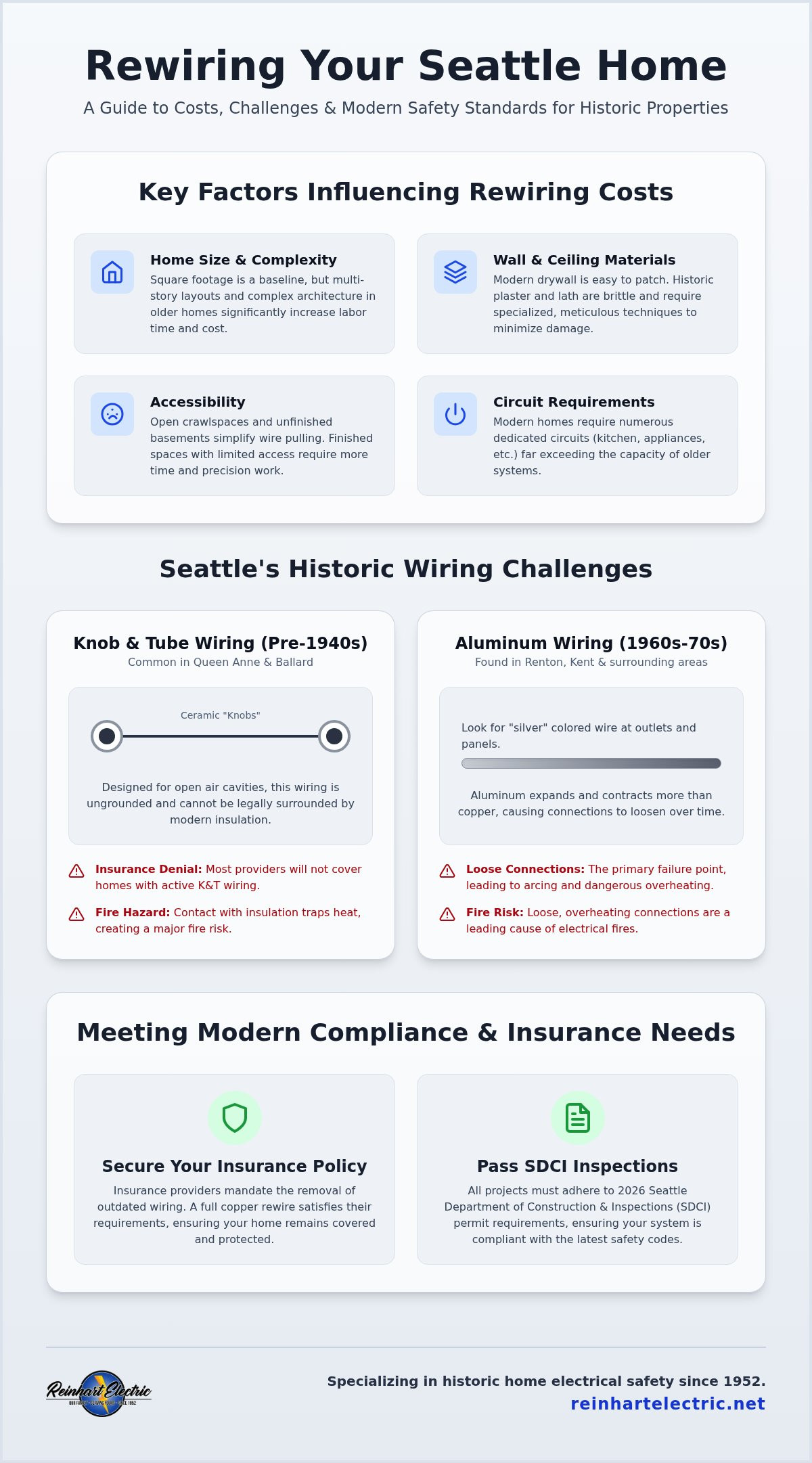
Planning for the cost to rewire a house Seattle homeowners often find that square footage is only the beginning of the story. While the size of your home provides a baseline for materials, the architectural era of your neighborhood plays a much larger role in the final investment. Modern Electrical wiring must meet the National Electrical Code (NEC), which requires significantly more circuits than were standard when many Seattle homes were built. A kitchen that once ran on a single circuit now needs dedicated lines for the refrigerator, microwave, and small appliances to ensure safety and prevent tripped breakers.
Accessibility is another major variable. If your home has an open crawlspace, an unfinished basement, or a spacious attic, our team can often pull new wires with minimal disruption. However, homes with finished basements or limited attic access require more time and precision. The “wall factor” is equally critical. Modern drywall is relatively easy to patch, but the plaster and lath walls found in many historic homes are brittle and labor-intensive to work with. We prioritize a methodical approach to minimize the number of openings needed, preserving as much of your home’s original character as possible.
Square Footage vs. Complexity
A 1,500 square foot Craftsman in Queen Anne often presents more challenges than a modern 1,500 square foot home. Multi-story layouts require vertical wire pulling through wall cavities that may be blocked by fire blocking or horizontal bracing. In these vintage structures, “opening up” a wall isn’t just about making a hole; it’s about identifying the safest path for new copper while avoiding old plumbing or gas lines. The complexity of the layout and the number of floors will influence the total labor hours required for a complete system overhaul.
Labor Rates in the Puget Sound Area
Seattle’s cost of living and strict regulatory environment mean that professional labor rates reflect a high level of expertise and insurance. While it’s tempting to look at “handyman” rates, a whole-home project requires a licensed, bonded journeyman electrician who understands local SDCI requirements. Since 1952, we’ve seen how specialized “old work” expertise actually saves money in the long run. An experienced electrician knows how to fish wires through tight spaces without turning your living room into a construction zone, significantly reducing your eventual costs for drywall or plaster repair.
Seattle’s Historic Wiring Challenges: Knob & Tube and Aluminum
Seattle’s older neighborhoods, like Wallingford or Mount Baker, are filled with beautiful pre-1940s homes. Many of these still contain original knob and tube (K&T) wiring. Identifying it is simple; look for ceramic “knobs” that support the wire and “tubes” where it passes through wood. While some online forums suggest K&T is safe if left alone, the 2026 reality is different. Most Washington insurance providers now issue a hard ultimatum: remove the outdated wiring or lose your coverage. These insurance mandates are a major factor in the total cost to rewire a house Seattle residents face today.
Homes built between the 1960s and mid-1970s, particularly in areas like Renton and Kent, often feature aluminum wiring. You can spot this by looking for “silver” colored wire at the electrical panel or behind outlet covers. Unlike copper, aluminum expands and contracts significantly when under load. This movement leads to loose connections, which generate heat and can eventually cause a fire at the outlet or switch. If you aren’t sure what’s hiding behind your walls, a professional electrical code update and safety compliance inspection can identify exactly what you’re dealing with.
The Problem with Knob & Tube Insulation
Original K&T was designed to dissipate heat into open air cavities. When modern homeowners add blown-in insulation to attics, they inadvertently trap that heat, creating a significant fire risk. Code compliance is another hurdle. Splicing modern Romex into old K&T is a violation that can stop a kitchen or bath remodel in its tracks. Discovering these hidden lines during a renovation often leads to unexpected expenses and timeline delays. This is a primary driver behind the cost to rewire a house Seattle families must consider when purchasing a classic home.
Aluminum Wiring and Modern Safety
Modern electronics are sensitive to the voltage fluctuations caused by failing aluminum connections. Remediation doesn’t always require a full gut-job. Options like AlumiConn or COPALUM crimp connectors can secure connections at every point of use. However, for long-term peace of mind, many homeowners choose a full copper upgrade. Many historic Seattle homes also still have two-prong, ungrounded outlets. These lack the third “ground” wire that protects your expensive laptops, smart TVs, and appliances from surges. Upgrading these isn’t just about convenience; it’s about protecting the modern technology you rely on every day.
Budgeting for Your Overhaul: Price Ranges and ROI
Estimating the cost to rewire a house Seattle homeowners should expect involves looking beyond just the square footage. While a 1,000 square foot home naturally requires fewer materials than a 3,000 square foot multi-story residence, the complexity of the installation often dictates the final budget. A full system replacement is a significant infrastructure investment that addresses years of “handyman” additions and outdated safety standards. Beyond the copper itself, your budget must account for several essential components that are often overlooked in initial estimates. These include new grounding rods to protect your home from lightning or surges and the installation of sub-panels if you plan on adding an ADU or a finished basement in the future.
One of the most expensive mistakes a homeowner can make is opting for a partial rewire. Attempting to “patch” modern wiring into old sections frequently leads to higher labor costs down the road. You end up paying for mobilization, permitting, and wall repairs twice. Doing the job right the first time ensures that every inch of your home meets 2026 safety standards, providing a clean bill of health for insurance providers and future buyers alike. In the competitive Puget Sound real estate market, industry professionals often see a 5% to 10% increase in resale value for homes with fully modernized electrical systems.
Mandatory Panel Upgrades
Most historic Seattle homes were built with 60-amp or 100-amp service, which simply cannot keep up with modern life. A full rewire almost always necessitates an upgrade to a 200-amp electrical panel. This change provides the capacity needed for high-draw items like EV chargers and heat pumps. Modern code also requires AFCI (Arc Fault Circuit Interrupter) breakers, which are designed to detect dangerous sparking and shut off power before a fire starts. Integrating whole-house surge protection during this phase is a smart way to safeguard your expensive electronics from the fluctuations common in urban grids.
Long-Term ROI and Insurance Savings
The financial benefits of a rewire extend far beyond the day of installation. By providing proof of 100% copper wiring, many homeowners can negotiate significantly lower insurance premiums or avoid being dropped by their carrier entirely. As Seattle continues its push toward electrification, having a robust system ready for induction cooktops and high-efficiency HVAC systems future-proofs your property. You’re not just paying for wires; you’re buying peace of mind and ensuring your home remains a viable, high-value asset in a changing energy landscape.
The Rewiring Process: Permits, Inspections, and Timelines
Understanding the logistics of a project is just as vital as calculating the cost to rewire a house Seattle families are planning for. The process begins with securing the correct documentation. In Seattle, electrical permits are separate from general building permits. This ensures that a specialized inspector reviews the work for safety and code compliance. Skipping this step is a major risk. Unpermitted work can derail a home sale or lead to insurance claim denials if an issue arises later. We’ve seen many transactions fall through because of “bootleg” wiring found during a buyer’s inspection.
Seattle and King County Permitting
Projects within the city limits fall under the Seattle Department of Construction and Inspections (SDCI). For 2026, the base fee for an electrical permit is $371.35, plus a 5% technology fee and a $6.50 state surcharge. If the project requires extensive review, the SDCI base hourly rate of $292 applies. In South King County areas like Kent or Auburn, you’ll work with the Washington State Department of Labor & Industries (L&I). Regardless of the jurisdiction, we handle the paperwork to ensure your project is 100% legal and documented. This transparency protects your home’s value and your family’s safety.
The Step-by-Step Rewire Timeline
A full rewire usually takes between five to ten business days. On days one and two, our team identifies every circuit and prepares access points in your attic or crawlspace. The “Pull” phase follows. This is where we navigate new copper through your existing wall cavities. We aim to keep your power on as much as possible, though you should expect a few hours of downtime when we perform electrical panel upgrades and service changes to connect the new system. This transition is carefully planned to minimize the impact on your daily routine.
Living in your home during the process is entirely possible. We use a methodical approach to minimize dust and organize our workspace at the end of each day. We treat your home with the same care we would our own. Once the new lines are pulled, we move to the final trim-out. This involves installing modern switches, outlets, and fixtures. After a final inspection from the city or state, your home’s infrastructure is officially modernized and safe for decades to come. You’ll receive a signed-off permit that serves as permanent proof of your home’s safety and value.
Modernizing Your Seattle Home with Reinhart Electric
Our team at Reinhart Electric has served the Puget Sound area since 1952. This means we were often the ones installing the very systems that homeowners are now looking to replace. This deep history gives us a unique advantage when navigating the complexities of vintage Seattle architecture. We understand how these homes were built and where the original wiring is likely hidden. When you consider the cost to rewire a house Seattle residents must balance, our expertise translates into a more efficient process with significantly less guesswork. We prioritize a methodical approach that focuses on minimizing wall damage while maximizing the safety of your new electrical infrastructure.
We provide transparent, project-based pricing for homeowners in Renton, Ballard, and throughout King County. You won’t find high-pressure sales tactics here. Instead, we offer a service-first mentality built on three generations of family ownership. We treat every historic home with the respect it deserves, ensuring that modern safety doesn’t come at the expense of your property’s original character. By combining a rewire with other essential services like electrical panel upgrades, we help you create a cohesive system that is ready for the next several decades of use.
A Legacy of Local Reliability
Stability matters when you’re making a major investment in your home. Our long-term commitment to the community means we’ve developed a deep familiarity with King County and Pierce County building codes. We know exactly what local inspectors are looking for during the final sign-off. This local knowledge prevents costly delays and ensures your project meets every safety standard required by the state. We take pride in being a steady, honest partner for our neighbors, providing the peace of mind that comes from a job done right the first time.
Ready for the Future: EV and Smart Home Integration
Modernizing your home is the perfect time to think about future energy needs. A whole-home rewire provides the ideal foundation for an EV charger installation. We can ensure your new system is equipped to handle a Level 2 charger without overloading your circuits. Many neighbors also choose to integrate smart switches and dimming systems during the rewiring process. This allows for seamless control over your lighting while maintaining the integrity of your new copper wiring. If you are ready to secure your home’s infrastructure, schedule your comprehensive electrical safety audit with Reinhart Electric today. We’ll provide a clear path forward that addresses your safety concerns and prepares your home for the high-tech demands of 2026 and beyond.
Secure Your Seattle Home’s Electrical Future
Deciding to modernize your home’s electrical system is about more than just convenience; it’s about protecting your biggest asset and your family’s safety. Upgrading from outdated knob and tube or aluminum wiring ensures you remain eligible for insurance coverage while preparing your property for 2026 energy demands. While the total cost to rewire a house Seattle residents plan for varies by home size and complexity, the long-term return on investment is undeniable. You’ll gain peace of mind, increased resale value, and a system ready for modern high-draw appliances.
Since 1952, Reinhart Electric has specialized in the unique challenges of King County’s historic homes. Our team of licensed, bonded, and insured journeymen understands exactly how to navigate vintage architecture without unnecessary damage. We’re here to be your steady, honest partner in this process. Don’t let outdated wiring be a source of anxiety any longer. Get a Transparent Rewiring Estimate from Reinhart Electric and take the first step toward a safer, more efficient home. We look forward to helping you power your home’s next chapter with confidence.
Frequently Asked Questions
Do I really need to rewire my whole house if only some outlets are old?
It depends on the underlying system. If your home has consistent knob and tube or aluminum wiring throughout, a full upgrade is usually recommended for safety and insurance compliance. Patching modern outlets into an outdated system can create hidden hazards where old wires meet new ones. A professional inspection determines if a partial update is safe or if the cost to rewire a house Seattle project should cover the entire structure.
How much does an electrical permit cost in Seattle for 2026?
For 2026, the Seattle Department of Construction and Inspections (SDCI) lists a base electrical permit fee of $371.35. You must also account for a 5% technology fee and a $6.50 Washington state surcharge. If the project complexity requires extra review time, the SDCI base hourly rate is $292 per hour. These fees ensure your home modernization is officially inspected and meets current safety standards for your neighborhood.
Will my insurance company drop me if I have Knob & Tube wiring?
Yes, many insurance providers in Washington will refuse to renew policies or drop coverage entirely if they discover active knob and tube wiring. Even if they offer coverage, premiums are often significantly higher due to the increased fire risk. Upgrading your system is the most reliable way to secure a stable, affordable policy. We provide documentation of the removal to help you negotiate better rates with your insurance carrier.
Can I stay in my house while it is being rewired?
You can definitely stay in your home during the process. We work methodically to ensure you have power in essential areas at the end of each workday. While there will be some noise and dust, we use protective coverings and clean our workspace daily to minimize the impact on your routine. Our team coordinates with you to schedule brief power outages during the final panel connection phase to keep things moving.
How long does it take to rewire a standard 2,000 sq ft home in Seattle?
A typical 2,000 square foot home usually takes between five and ten business days to complete. This timeline includes identifying circuits, pulling new copper through wall cavities, and the final trim out of switches and outlets. Factors like the number of floors and the presence of plaster walls can influence the duration. We provide a clear schedule before starting so you know exactly what to expect from the first day.
What is the difference between a panel upgrade and a full rewire?
A panel upgrade involves replacing the main service box to increase capacity, such as moving to 200 amp service. A full rewire involves replacing every foot of electrical cable behind your walls. While the panel is the brain of the system, the wires are the arteries that carry power to your rooms. Both are often necessary in older homes to handle modern loads like EV chargers and high efficiency HVAC systems.
Does rewiring include fixing the holes in the drywall or plaster?
Most electrical contracts do not include final drywall or plaster repair. Our specialists use old work techniques to minimize the number of openings needed, but some small holes are often necessary to pull wire through existing cavities. Once the electrical inspection is signed off, you will typically need a separate contractor to patch and paint. We can often recommend local specialists who are familiar with historic Seattle wall materials and textures.
Is aluminum wiring always dangerous, or can it be repaired?
Aluminum wiring isn’t broken, but its tendency to expand and contract leads to loose, hot connections that create fire hazards. While remediation options like AlumiConn connectors are available for $2,000 to $5,000, they only address the connection points. A full copper rewire is the only way to completely eliminate the risk. Many homeowners find that the long term safety and insurance benefits justify the cost to rewire a house Seattle investment.