
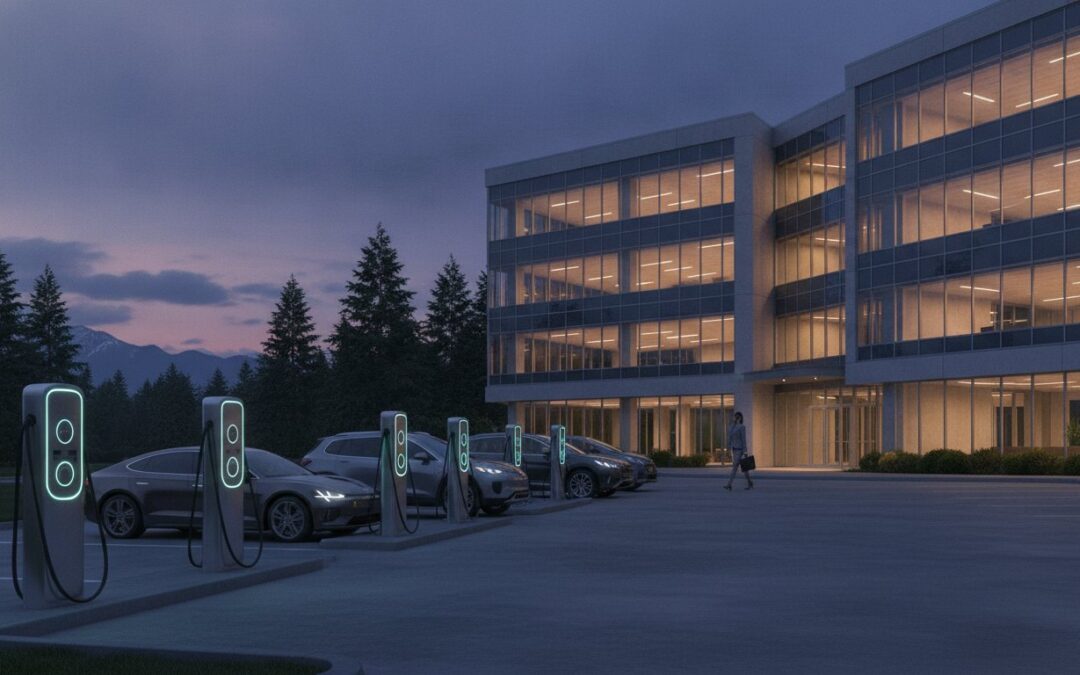
By 2030, every new light-duty vehicle sold in Washington will be electric, effectively turning your parking lot into a critical piece of the city’s energy infrastructure. You likely recognize that offering charging stations is no longer a luxury, but a baseline requirement for attracting top-tier tenants and employees. Still, the reality of high upfront costs and the maze of King County permitting can feel daunting. It’s even more complex when you’re managing an older building with an electrical panel that wasn’t designed for today’s high-power demands.
We understand these concerns because we’ve been helping our neighbors navigate local electrical challenges since 1952. This guide provides a clear roadmap for commercial EV charger installation Seattle, focusing on how to maximize 2026 federal tax credits and Seattle City Light incentives. You’ll learn how to build a scalable charging solution that protects your property’s safety while providing a reliable service to your visitors. We’ll cover everything from necessary panel upgrades to long-term maintenance, ensuring your investment remains a steady asset for years to come.
Key Takeaways
- Maximize your project budget by stacking Seattle City Light commercial rebates with federal tax credits available through June 2026.
- Ensure your property is ready for high-power demands by starting with a professional load calculation and any necessary electrical panel upgrades.
- Choose between Level 2 and DC Fast Charging hardware based on whether you’re serving long-term office tenants or high-turnover retail customers.
- Streamline your commercial EV charger installation Seattle by following a methodical process that prioritizes safety and strict local code compliance.
- Gain long-term peace of mind by partnering with a local electrical team that has navigated King County regulations for over seven decades.
Why Seattle Businesses are Investing in EV Infrastructure in 2026
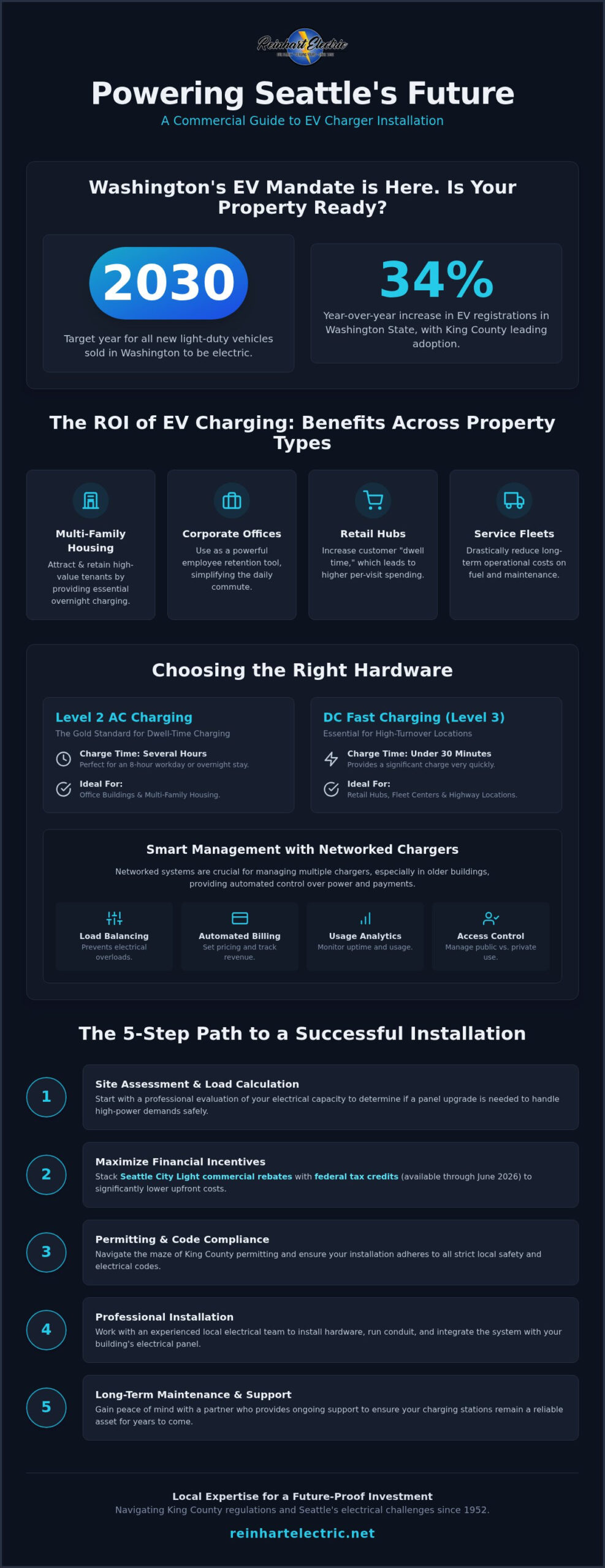
Seattle isn’t just following the electric vehicle trend; it’s setting the pace for the entire Pacific Northwest. As of late 2024, Washington State saw a 34% year-over-year increase in EV registrations, and King County continues to lead the state in adoption. For property managers overseeing multi-family developments, providing charging access has shifted from a luxury to a baseline necessity. High-value tenants now prioritize buildings where they can charge overnight, making commercial EV charger installation Seattle a key factor in reducing vacancy rates and maintaining competitive lease terms.
This shift extends well beyond residential living. Corporate offices in Renton and Kent are utilizing charging stations as a powerful employee retention tool. It’s a practical benefit that simplifies the daily commute for a workforce that’s rapidly moving away from internal combustion engines. In retail hubs like Tukwila and Auburn, charging infrastructure increases “dwell time.” When customers plug in, they stay longer at your location, which often leads to higher per-visit spending. You’re not just providing power; you’re creating a reason for premium shoppers to choose your storefront over a competitor’s.
Meeting Washington State Carbon Goals
Washington’s Clean Cars 2030 law sets an ambitious goal for all new light-duty vehicles to be electric by 2030. This is followed by a binding requirement for all new cars sold to be zero-emission by 2035. Commercial properties are the primary partners in this “Green Seattle” initiative, providing the essential infrastructure needed to support this transition. The Clean Buildings Performance Standard in Washington mandates that owners of commercial buildings over 20,000 square feet track energy use and meet specific efficiency targets to lower the state’s carbon footprint. Installing modern charging systems helps properties align with these evolving environmental standards while serving the community’s needs.
The ROI of Commercial EV Charging
Investing in electric vehicle supply equipment (EVSE) offers a mix of direct revenue and indirect property value increases. While some owners choose to monetize the electricity directly, the broader value often lies in the “halo effect” it has on your brand. It signals a commitment to innovation and stability. For Seattle-based service businesses, transitioning to an electric fleet and installing on-site chargers drastically reduces long-term operational costs. You’ll spend less on fuel and mechanical maintenance, allowing those savings to be reinvested back into your core business operations. It’s a methodical way to future-proof your assets while staying ahead of local market demands.
Choosing the Right Commercial EV Hardware for Your Property
Selecting hardware isn’t just about speed; it’s about matching the equipment to how your property is used. When planning a commercial EV charger installation Seattle, the hardware you choose dictates the long-term success of the project. For most office buildings and multi-family housing, Level 2 AC charging is the gold standard. These units provide a steady charge over several hours, which fits perfectly with an eight-hour workday or an overnight stay for residents. They offer a balance of efficiency and lower installation costs compared to high-output alternatives.
If you manage a retail hub near I-5 or a busy fleet center, DC Fast Charging (Level 3) becomes essential. These stations can provide a significant charge in under 30 minutes. It’s the right choice for highway-adjacent locations where customers aren’t planning to stay for half a day. Choosing between networked and non-networked chargers depends on your management goals. Networked units allow you to set pricing, track usage, and control who can plug in. If you want to offer free charging to employees but charge the public, a networked system is the only way to manage that split safely.
Networked Charging Solutions for Property Managers
Property managers in Seattle often worry about their main building breaker. Networked chargers feature load balancing, which allows multiple stations to share power without overloading the system. This smart distribution is vital for older structures where a full electrical panel upgrade might be part of the initial planning. These systems automate the billing process, so you don’t have to manually track kilowatt-hours for every tenant. Cloud-based monitoring also provides real-time uptime reporting, letting you know exactly when a unit needs maintenance before a tenant complains.
Hardware Durability in the Pacific Northwest
Our wet climate is tough on electrical equipment. For outdoor lots in Burien or Des Moines, hardware must meet NEMA 3R or 4X standards to prevent moisture intrusion. We recommend pedestals with robust cable management systems. These keep heavy charging cords off the wet pavement, which prevents tripping hazards and extends the life of the equipment. Vandal-resistant features are also a wise investment for public-facing retail chargers to ensure your service remains reliable. Investing in durable, weather-rated hardware ensures your commercial EV charger installation Seattle stands up to the elements for decades.
Navigating Seattle City Light Incentives and King County Codes
Navigating the financial side of a commercial EV charger installation Seattle requires looking at three distinct layers of support: federal, state, and local. The Federal Alternative Fuel Infrastructure Tax Credit (Section 30C) provides a 30% credit for equipment and installation costs, capped at $100,000 per project through June 30, 2026. This is a massive opportunity to offset initial capital. Additionally, Washington State offers a specific sales and use tax exemption for the sale and installation of EV charging equipment under RCW 82.08.809. This effectively saves your business about 10.4% on the total project cost, depending on your specific local tax rate.
Maximizing Utility Rebates in 2026
Seattle City Light (SCL) offers some of the most robust incentives in the country. Their programs can cover up to 100% of eligible infrastructure costs for businesses and fleets. For large businesses, these incentives reach up to $25,000 per site for Level 2 chargers and $100,000 for DC Fast Chargers. Small businesses may qualify for even higher amounts, reaching up to $50,000 for Level 2 stations. These “Make-Ready” programs focus on the utility-side upgrades, such as transformers and service lines. These are often the most expensive parts of the project. We work closely with SCL to verify your site’s eligibility and ensure your application includes the necessary technical load calculations.
Permitting and Compliance in South King County
Compliance involves more than just plugging in a station. The Seattle Department of Construction & Inspections (SDCI) has specific requirements for electrical permits and site plans. In cities like Kent, Auburn, and Renton, local zoning codes now mandate “EV-Ready” parking spaces in new developments or major renovations. This means having the conduit and panel capacity ready for future expansion. ADA compliance is another critical factor. You must ensure that at least one charging stall meets accessibility standards. This includes proper clearance and specific mounting heights for the charger handle. Our team has navigated these King County regulations since 1952, ensuring your commercial EV charger installation Seattle is legal, safe, and fully permitted from day one.
The Commercial Installation Process: From Panel to Plug
A successful project begins with a methodical site assessment. We don’t just look at where the chargers will go; we perform detailed load calculations to ensure your building’s infrastructure can handle the new demand. This step is the foundation of any commercial EV charger installation Seattle. It prevents future system failures and ensures your existing operations remain stable. We evaluate the distance from your power source to the parking stalls, which determines the path for trenching and conduit placement. Proper planning here saves time and reduces the need for costly adjustments during the construction phase.
You have several options for how the equipment is physically mounted. Wall-mount installations are often the most efficient choice for indoor parking garages or buildings with stalls directly adjacent to the structure. Pedestal-mount installations are better suited for open parking lots. They provide a professional, standalone appearance and allow for more flexible placement between stalls. Regardless of the mounting style, we prioritize durability and ease of use for your tenants and visitors.
The Essential Electrical Panel Upgrade
Many commercial buildings in Seattle’s older business districts weren’t designed for the high-amperage demands of modern charging equipment. We frequently find that a 400-amp or 800-amp service change is necessary to provide the required power. This process involves close coordination with Seattle City Light or Puget Sound Energy for transformer upgrades if the local grid connection is insufficient. A comprehensive panel upgrade ensures long-term facility safety by providing a stable power distribution system that won’t overheat or trip under heavy loads. It’s a critical investment in the health of your property’s entire electrical system.
Minimizing Business Disruption
We understand that your business needs to stay operational during the installation. For active retail centers or office parks in Renton and Kent, we utilize phased installation strategies. This approach allows us to work on one section of your parking facility at a time, keeping the rest of the lot available for use. We also schedule necessary power shutdowns during off-peak hours to minimize the impact on your productivity. Our teams maintain strict safety protocols in public parking structures to protect your customers and staff throughout the process. Once the hardware is in place, we handle the final inspection and commissioning with the utility provider to verify that your commercial EV charger installation Seattle meets every local code requirement. If you’re ready to evaluate your property’s capacity, our team can perform a professional site assessment to get your project started safely.
Why Local Experience Matters: The Reinhart Electric Advantage
Choosing an electrical partner for your commercial EV charger installation Seattle is a decision that impacts your property’s safety and reliability for years. Since 1952, Reinhart Electric has operated as a family-owned business deeply rooted in the Puget Sound community. We don’t see a project as a one-time transaction. We view it as a long-term commitment to our neighbors. Our approach focuses on transparency and dependability, ensuring you receive honest advice about what your building actually needs to support modern charging hardware safely. We avoid high-pressure tactics in favor of a service-first attitude that respects your budget and your time.
We look beyond the charger itself. Every installation includes a comprehensive electrical system health check. This methodical process identifies potential vulnerabilities in your existing infrastructure before they become expensive repairs. By prioritizing your facility’s overall health, we provide the peace of mind that comes from knowing your investment is built on a solid foundation. Our reputation is built on seventy years of honest work and a steady hand in the local trade.
Expertise in Older Seattle Infrastructure
Seattle’s commercial zones are a unique mix of brand-new developments and historic structures with legacy wiring. Navigating these older systems requires more than just technical skill; it requires a deep understanding of how local infrastructure has evolved over the last seven decades. Our team has specialized knowledge of Auburn and Tukwila industrial electrical codes, which often have specific requirements for heavy power loads. We take a safety-first approach to complex power needs, ensuring that new charging circuits don’t compromise the integrity of your building’s original electrical design. We treat every task with the same level of care, ensuring your property remains a safe environment for everyone.
Long-Term Partnership and Maintenance
Our service doesn’t end once the final inspection is complete. We provide 24/7 emergency support for our commercial clients. We know that a downed charger can disrupt your business operations or frustrate your tenants, so we remain responsive long after the initial project is done. Reliability is our core promise. To keep your system running at peak efficiency, we recommend annual safety audits for high-usage charging stations. These checks prevent wear and tear from turning into safety hazards. We want to be the steady partner you can rely on for all your electrical needs. If you’re ready to modernize your property, you can schedule a commercial site assessment with Reinhart Electric today. Our team is here to guide you through every step of the process with the integrity and hard work our community expects.
Future-Proof Your Seattle Property with Professional Charging Solutions
Seattle’s shift toward electric mobility is moving quickly. By securing your infrastructure now, you’re doing more than just following mandates; you’re increasing your property value and serving a growing demographic of EV drivers. Remember that maximizing your return depends on stacking Seattle City Light rebates with federal tax credits before the 2026 deadlines. A successful commercial EV charger installation Seattle requires a steady hand and a deep understanding of our local grid. Whether you need a 400-amp service change or a complex pedestal installation, the right partner ensures the job is done safely and correctly the first time.
Reinhart Electric has been family-owned since 1952. We’re fully licensed, bonded, and insured in Washington State, offering the stability your business needs. We also provide 24/7 emergency electrical support to keep your facility running without interruption. Get a Professional Quote for Your Seattle Commercial EV Project. We look forward to helping you build a more sustainable and successful future for your business.
Frequently Asked Questions about Seattle Commercial EV Charging
How much does commercial EV charger installation cost in Seattle?
The total investment depends on your specific site conditions, hardware choice, and the distance from your electrical panel to the parking stalls. While we don’t provide flat-rate pricing due to the unique nature of commercial infrastructure, many projects qualify for significant offsets. Utility incentives from Seattle City Light can cover up to 100% of eligible costs for priority applicants, effectively reducing the capital required for a commercial EV charger installation Seattle.
Are there specific tax credits for Seattle businesses installing EV chargers in 2026?
Yes, businesses can utilize the Federal Alternative Fuel Infrastructure Tax Credit (Section 30C), which offers a 30% credit up to $100,000 per project through June 30, 2026. Additionally, Washington State provides a sales and use tax exemption under RCW 82.08.809 for the equipment and installation labor. Combining these federal and state benefits with local utility rebates can drastically lower the net cost of your infrastructure project while improving your property value.
Do I need a new electrical panel to install multiple EV chargers?
Most older commercial buildings in Seattle require an electrical panel upgrade to support the continuous load of multiple chargers. EV circuits must be rated at 125% of the maximum charger output according to the 2026 National Electrical Code. We perform a professional load calculation to determine if your current service can handle the demand. If not, we specialize in 400-amp and 800-amp service changes to ensure your facility remains safe and compliant.
How long does the commercial permitting process take in King County?
Permitting timelines vary depending on whether your project is in Seattle, Kent, or Renton. The Seattle Department of Construction & Inspections (SDCI) typically requires several weeks for plan review for complex commercial installs. Coordination with your utility provider for transformer upgrades can add additional time to the project schedule. We handle the permitting paperwork and utility communication to keep your project moving forward as efficiently as possible while respecting your busy schedule.
What is the difference between networked and non-networked commercial chargers?
Networked chargers connect to the internet, allowing you to manage user access, automate billing, and monitor energy usage in real-time. This is essential for property managers who need to recoup electricity costs from tenants. Non-networked chargers are simpler, “plug-and-play” devices without data capabilities. While non-networked units have a lower upfront cost, they lack the load-balancing features often required for a successful, large-scale commercial EV charger installation Seattle and cannot track individual user data.
Can I install EV chargers in a leased commercial space?
You can install chargers in a leased space, but you must obtain written consent from the property owner first. Many landlords are open to these upgrades because they increase the long-term marketability of the property. We recommend discussing how the installation costs and utility rebates will be shared between both parties. In many cases, the charging infrastructure stays with the building, providing a permanent asset for the property owner after your lease term ends.
What maintenance is required for commercial charging stations?
Commercial stations require periodic safety audits to ensure the hardware and wiring remain in top condition. We recommend annual inspections to check for cable wear, connector damage, and secure mounting. For networked units, firmware updates are also necessary to maintain security and software compatibility. Regular maintenance prevents unexpected downtime and ensures that your visitors always have a reliable place to plug in when they arrive at your property, protecting your long-term investment.
Does Seattle City Light offer rebates for EV infrastructure?
Seattle City Light provides substantial rebates through their Business EV Charging program. These incentives can cover up to $25,000 per site for Level 2 chargers and up to $100,000 for DC Fast Chargers for large businesses. Small businesses may be eligible for even higher amounts, sometimes reaching $50,000 for Level 2 units. These funds are designed to cover the “make-ready” costs, such as the wiring and panel work needed to support the charging stations.