
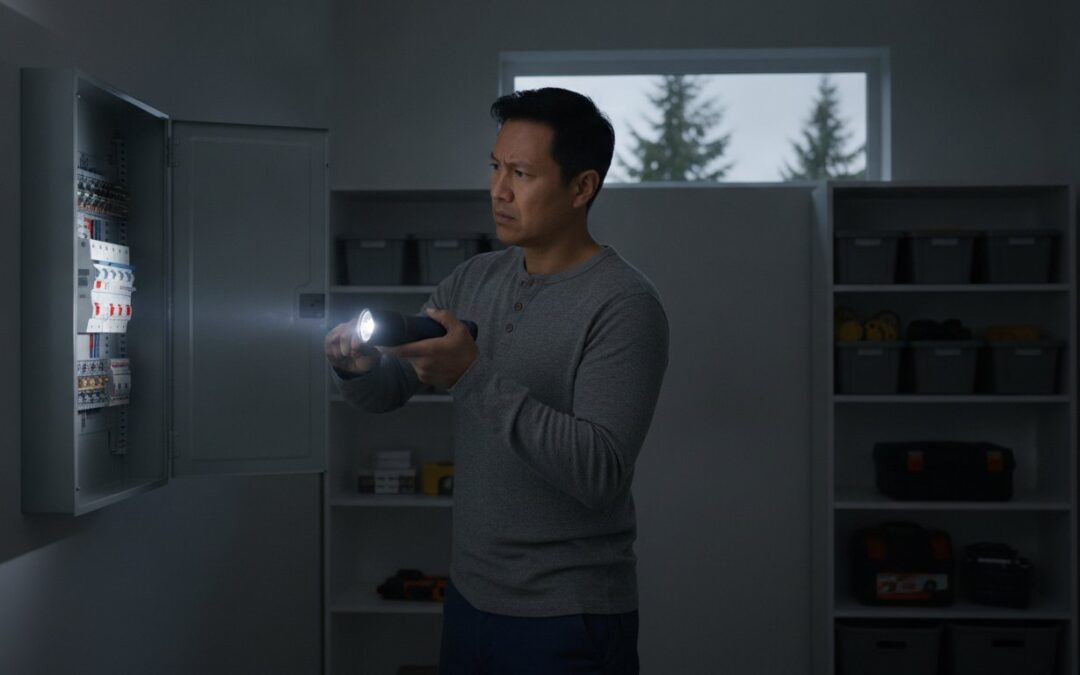
You’re finally settled into your home office for a productive morning when the power cuts out for the third time this week. When a circuit breaker keeps tripping Seattle homeowners often feel stuck between a simple reset and a major repair. It’s frustrating to wonder if your morning toast or your laptop charger is the culprit. You might even feel a nagging worry that those flickering lights are a warning sign of a deeper fire risk hidden behind your lath and plaster walls.
At Reinhart Electric & Service, Inc., we’ve helped our neighbors navigate these electrical hurdles since 1952. We understand that a tripping breaker is actually a safety feature doing its job, but it shouldn’t be a constant part of your life. This guide will help you discover why your circuit breaker keeps flipping. You’ll learn how to identify if you’re dealing with a simple overloaded circuit or if your 1950s-era panel requires a professional upgrade to meet modern 2026 safety standards. We’ll walk through the troubleshooting steps to help you restore reliable power and gain the peace of mind that comes with a safe, efficient home.
Key Takeaways
- Identify the three most common electrical faults, including simple circuit overloads and dangerous short circuits, to understand why your power keeps cutting out.
- Discover why a circuit breaker keeps tripping Seattle homes, especially those with older wiring or outdoor outlets exposed to our unique Pacific Northwest moisture.
- Follow a safe, step-by-step troubleshooting checklist to rule out appliance failure and identify which circuit is causing the problem.
- Learn to recognize the critical warning signs that suggest your home’s original electrical panel is outdated and potentially unsafe for modern high-demand electronics.
- Find out how professional diagnostic services and panel upgrades can eliminate recurring interruptions and ensure your home’s electrical system meets 2026 safety standards.
Understanding Why Your Circuit Breaker Trips
Your electrical panel serves as the central brain of your home’s power system. It manages every light, appliance, and charger you use daily. Think of the circuit breaker as a safety gatekeeper. Its primary job is to monitor current levels and protect your wiring from overheating. When your circuit breaker keeps tripping Seattle homes often face more than just a minor inconvenience; they face a potential safety hazard that requires attention. It stops fires before they start.
To understand the technical history and evolution of these devices, you can explore the details of What is a circuit breaker? as it relates to modern home safety. These devices are designed to fail safely. By monitoring the flow of electricity, the breaker ensures your home’s wiring doesn’t reach dangerous temperatures that could ignite surrounding building materials.
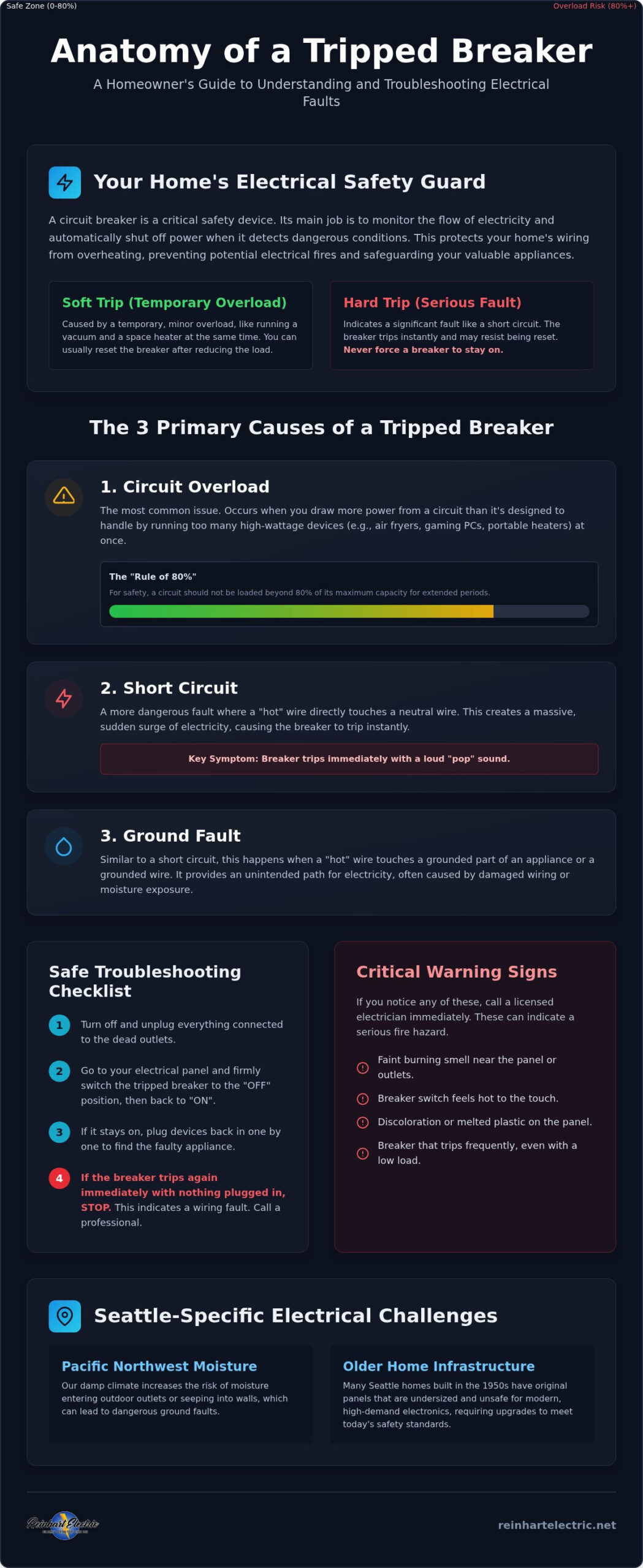
Homeowners often encounter two types of trips. A “soft” trip usually happens due to a temporary overload, like running a space heater and a vacuum on the same line. You can usually reset these after reducing the electrical load. A “hard” trip is more serious. This occurs when there’s a significant fault, such as a short circuit, that causes the breaker to snap back immediately after you try to reset it. You should never force a breaker to stay in the “on” position if it resists.
The Safety Mechanism Explained
Inside each breaker, bi-metal strips and electromagnets work together to detect trouble. The strips react to slow, steady heat buildup from overloads. The electromagnets respond to sudden, massive surges like short circuits. A tripped breaker is a safety intervention that halts electricity when it exceeds safe levels. This quick action protects your expensive televisions, computers, and kitchen appliances from permanent damage while keeping your family safe from electrical fires.
Common Signs of a Tripped Breaker
Identifying a trip isn’t always obvious at first glance. Sometimes the switch doesn’t move all the way to the “off” position. Watch for these specific indicators in your panel:
- The handle is stuck in the middle position rather than being clearly on or off.
- A specific room or “zone” loses power while the rest of the house remains lit.
- The breaker switch feels physically hot to the touch.
- You notice a faint burning smell or brown discoloration on the plastic near the switch.
If you see physical damage or smell smoke, contact a professional for a diagnostic immediately. These signs are urgent warnings that your home’s electrical integrity is at risk. Ignoring a recurring trip can lead to melted insulation or even a structural fire. Since 1952, we’ve seen how proactive maintenance prevents these costly emergencies.
The Three Primary Causes of Breaker Trips
When your circuit breaker keeps tripping Seattle homeowners often assume the breaker itself is failing. In reality, the device is usually responding to a specific electrical event. These events generally fall into three categories: overloads, short circuits, or ground faults. Identifying which one is affecting your home is the first step toward a permanent solution and a safer living environment.
Every circuit has a limit to how much electricity it can carry safely. When you exceed that limit, the system shuts down to prevent heat from building up inside your walls. While it is tempting to simply flip the switch back on, understanding the physics behind the trip can prevent long term damage to your home’s infrastructure.
Identifying a Circuit Overload
This is the most common culprit in residential settings. An overload happens when you ask a single circuit to do more than it was designed for. Modern life relies on high wattage appliances like air fryers, high end gaming PCs, and portable heaters. Many older Seattle homes were wired in an era when a single circuit might power an entire floor. If your lights dim when the vacuum starts, you’re likely exceeding the “Rule of 80%.” This rule suggests you should never load a circuit to more than 80 percent of its rated capacity for extended periods. Continuing to push these limits can lead to serious home wiring hazards that compromise your safety.
Short Circuits and Ground Faults
A short circuit is more aggressive than a standard overload. It occurs when a “hot” wire touches a neutral wire. This creates a sudden, massive surge of current that forces the breaker to trip instantly. If you reset a breaker and it snaps back immediately with a loud “pop,” you likely have a short circuit. These are major fire hazards that usually stem from damaged appliance cords or loose connections within an outlet box.
A ground fault is similar but occurs when electricity escapes its intended path to find a direct route to the ground. This often happens in damp areas like kitchens, bathrooms, or garages. This is why modern building codes require GFCI (Ground Fault Circuit Interrupter) outlets. These outlets act as secondary safety switches to protect you from electrical shock. If you find yourself constantly resetting these safety devices, a professional electrical troubleshooting session can help identify the hidden moisture or wiring issues at play.
Finally, arc faults involve sparking between loose connections or damaged wires. These sparks generate intense heat without necessarily pulling enough current to trigger a standard breaker. Modern AFCI breakers are designed to catch these specific risks. If your home still uses technology from the 1950s, it may be unable to detect these dangerous arcs.
Homeowner’s Troubleshooting Checklist: What to Do First
If you’re dealing with a sudden blackout in your kitchen or home office, don’t panic. Most of the time, the solution is simple. When a circuit breaker keeps tripping Seattle homeowners can follow a few basic steps to safely restore power and identify the source of the trouble. Before you call for service, try this methodical approach to isolate the problem.
- Step 1: Unplug all devices. Disconnect everything on the affected circuit. This helps you rule out a faulty appliance or a simple overload before you even touch the electrical panel.
- Step 2: Locate the panel. Open your breaker box and look for a switch that isn’t aligned with the others. It will usually be resting in a “middle” position. Some modern breakers also display a small orange or red flag to signal they have tripped.
- Step 3: Perform a full reset. You must push the switch firmly to the “Off” position until you hear a distinct click. Only then should you flip it back to “On.” If you try to flip it directly from the middle to “On,” the mechanism won’t engage.
- Step 4: Test the circuit. Plug your devices back in one at a time. If the power cuts out the moment you plug in a specific lamp or laptop charger, you’ve found your culprit.
When to Stop and Call an Electrician
Electrical work carries inherent risks. While these basic steps are generally safe, you should stop immediately if you encounter dangerous warning signs. Review these Electrical Safety Tips to stay informed about potential hazards. Call a professional if the breaker trips again with nothing plugged in, or if you notice sparks, smoke, or a metallic “ozone” smell near the box. If the panel door feels hot to the touch, leave the breaker off and seek expert help right away. These are signs of a serious fault that a simple reset won’t fix.
Mapping Your Home’s Circuits
Troubleshooting is much easier when your panel is clearly labeled. If your breakers aren’t marked, take the time to create an accurate circuit map. This prevents future overloads by showing you exactly which outlets share a single line. It’s especially helpful in older homes where wiring patterns can be unpredictable. For more detailed guidance on maintaining your system, check out our Homeowner’s Troubleshooting & Safety Checklist. Proper labeling is a small investment of time that provides long term peace of mind and safety for your family.
Seattle-Specific Electrical Challenges: Rain and Older Panels
Seattle’s unique environment and historic housing stock create specific electrical hurdles that you won’t find in newer, drier climates. When a circuit breaker keeps tripping Seattle residents often discover that the culprit is either the relentless Pacific Northwest moisture or an electrical system that simply hasn’t kept pace with modern technology. Understanding these local factors is key to maintaining a safe and functional home.
Winter storms in King County put immense pressure on residential grids. Between heavy winds and falling branches, power fluctuations are common. However, if your breakers snap during every storm, it’s usually a sign of an underlying vulnerability. Since 1952, we’ve seen how the combination of aging equipment and our damp environment can lead to recurring power interruptions that compromise your peace of mind.
Moisture and Outdoor GFCI Trips
Our rainy season isn’t just a challenge for your commute; it’s a constant test for your outdoor wiring. Humidity in crawlspaces, basements, or garages often causes “nuisance tripping” in GFCI devices. These safety outlets are designed to detect tiny leaks of electricity, and even a small amount of moisture can trigger them. Weatherproof covers are essential for any outlet exposed to the elements. If you suspect an outdoor circuit is wet, it’s vital to let the area dry completely before attempting a reset. Moisture creates a conductive path that can lead to a ground fault, which is why your breaker shuts down to protect you.
The Limitations of Aging Electrical Panels
Many homes in Renton, Kent, and the surrounding Seattle neighborhoods were built in the 1950s. During that era, a 60-amp or 100-amp service was more than enough for a few lights and a radio. Today, those same panels are expected to power high speed internet routers, high end kitchen appliances, and even EV chargers. This often leads to panel fatigue, which you might notice as a faint humming sound or flickering lights when the refrigerator cycles on.
Specific brands like Zinsco and Federal Pacific Electric (FPE) are particularly common in older Seattle homes. We’ve found that these panels have a high rate of failure because their breakers can lock up and refuse to trip during an overload. This creates a severe fire risk. If your home still uses one of these legacy systems, you should prioritize a professional evaluation. You can learn more about modern solutions in our 2026 Guide to Electrical Panel Upgrades.
If your breakers are struggling to keep up with your modern lifestyle, it’s time for a professional electrical panel diagnostic to ensure your family’s safety.
Long-Term Solutions with Reinhart Electric & Service, Inc.
When a circuit breaker keeps tripping Seattle residents often realize that simple resets aren’t a permanent fix. While the troubleshooting steps we discussed earlier can help identify a faulty appliance, they won’t resolve underlying wiring fatigue or a panel that has reached the end of its useful life. At Reinhart Electric & Service, Inc., we provide professional diagnostic services that go deep into your home’s electrical infrastructure to find the root cause of recurring trips. We use specialized equipment to test circuit integrity and ensure your system is safe for your family.
Why Choose Reinhart Electric & Service, Inc.?
We’ve served the local community since 1952. As a family-owned and operated business, we prioritize honesty and quality above all else. Our team understands the unique electrical needs of homes in Renton, Kent, and Auburn, from historic mid-century builds to modern new construction. We don’t believe in high pressure sales; we believe in providing the steady, expert guidance you need to keep your home running smoothly. Because electrical issues don’t follow a nine-to-five schedule, our 24/7 emergency service is always available to help when you need it most.
Next Steps for a Safer Home
Scheduling a professional inspection is the most effective way to eliminate the frustration of power interruptions. When a circuit breaker keeps tripping Seattle homeowners can rely on our methodical approach to find a lasting solution. During a troubleshooting visit, our licensed technicians will map your circuits, check for loose connections, and provide a clear, transparent plan for any necessary updates. We respect your time and your property, ensuring every job is handled with precision. You can take the first step toward a more reliable electrical system today. Contact Reinhart Electric & Service, Inc. for Professional Troubleshooting to speak with a knowledgeable expert about your home’s needs.
Restoring Peace of Mind to Your Seattle Home
A tripping breaker isn’t just a nuisance; it’s a vital safety signal that your home’s electrical system is under stress. Throughout this guide, we’ve explored how Seattle’s damp climate and aging mid-century panels can lead to power interruptions. When a circuit breaker keeps tripping Seattle homeowners need a solution that goes beyond a temporary reset to address the root cause of the fault. Taking proactive steps now ensures your wiring remains safe for years to come.
Reinhart Electric & Service, Inc. has spent over seven decades helping neighbors in Kent, Renton, and the surrounding areas maintain safe, efficient homes. Since 1952, our family-owned business has provided the local expertise required to modernize older systems while offering 24/7 emergency service for immediate peace of mind. Our fully licensed and insured technicians are ready to perform a comprehensive audit of your wiring and panel to identify potential hazards. Schedule Your Professional Electrical Diagnostic Today and let us provide the steady, expert hand your home deserves. We look forward to helping you restore reliable, worry-free power to your household.
Common Questions About Tripping Breakers
Why does my breaker trip only when I use the microwave and the toaster?
Using a microwave and toaster simultaneously causes a circuit overload because both appliances draw significant amperage. Most kitchen circuits in older Seattle homes are rated for 15 or 20 amps. If these two devices run on the same line, they easily exceed that limit. To solve this, you can move one appliance to a different outlet or have an electrician install a dedicated circuit for your high-wattage kitchen tools.
Is a tripping circuit breaker a fire hazard?
A tripping breaker is a safety feature, but the underlying cause can certainly be a fire hazard. If the trip is caused by a short circuit or loose wiring, the resulting sparks and heat can ignite building materials. When a circuit breaker keeps tripping Seattle homeowners should take it as a warning. Ignoring the problem allows heat to build up within your walls, potentially leading to a dangerous electrical fire.
How do I know if my circuit breaker is bad or just doing its job?
A breaker is usually doing its job if it trips when you overload the circuit with too many appliances. You can tell a breaker is bad if it trips with no load attached or if the switch feels loose and won’t stay in the “on” position. Since we’ve served the area since 1952, we often see older breakers that have simply worn out and require a professional replacement to maintain safety.
What does it mean if a breaker trips immediately after I reset it?
An immediate trip after a reset usually indicates a short circuit or a ground fault. This is more serious than a standard overload because it means electricity is flowing through an unintended path. When a circuit breaker keeps tripping Seattle residents should leave the switch in the “off” position. Attempting to force a reset against a short circuit can damage your panel or lead to an immediate electrical fault.
Can a bad appliance cause a whole circuit to trip?
Yes, a single faulty appliance can cause an entire circuit to trip instantly. If an appliance has an internal short or a damaged power cord, it will draw a massive surge of current the moment it is turned on. You can identify the problem by unplugging everything on the circuit and resetting the breaker. If it stays on until you plug in a specific device, that appliance is likely the source of the fault.
How much does it cost to replace a single circuit breaker in Seattle?
Replacing a single circuit breaker involves the cost of the component and professional labor for a safe installation. Prices in the Renton and Kent areas depend on whether you need a standard breaker or a specialized AFCI or GFCI model required by modern codes. While the part itself is modest, hiring a licensed technician ensures the connection is secure and your panel remains compliant with 2026 Washington state electrical standards.
Why do my lights flicker right before the breaker flips?
Flickering lights often indicate a loose wire or a significant voltage drop on a specific circuit. When a high-draw appliance like a vacuum or refrigerator kicks on, it pulls a sudden burst of energy that can cause lights to dim. If this happens right before a trip, it means the circuit is at its absolute limit. This is a common issue in older homes throughout Covington and Maple Valley that need updated wiring.