
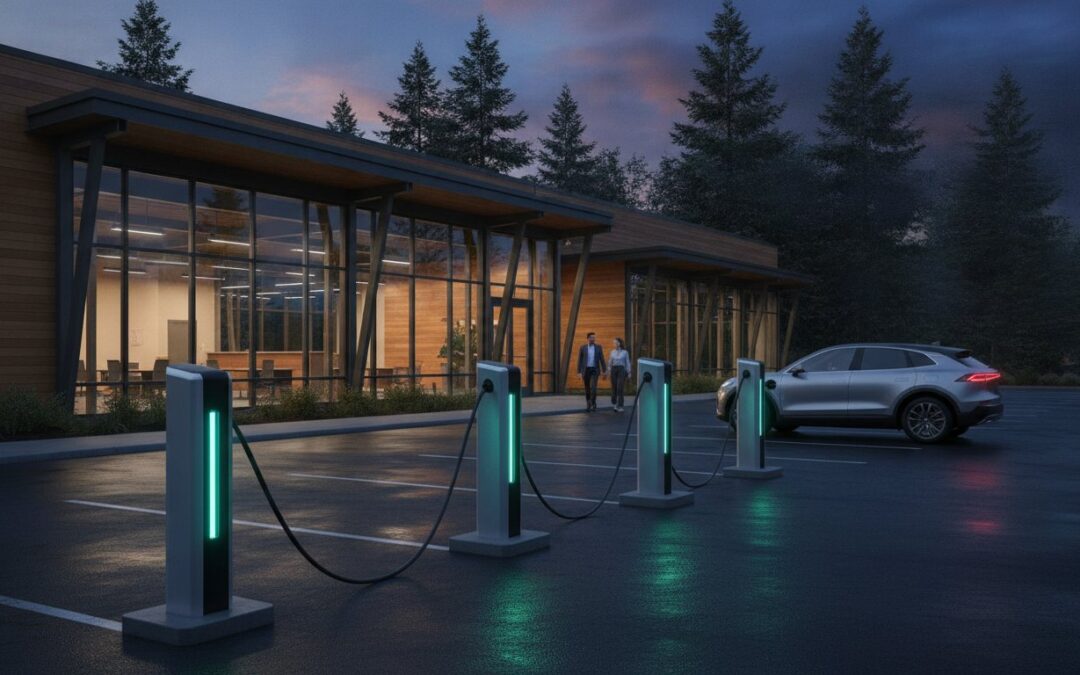
In 2024, more than one in four new vehicles registered in the Seattle City Light service area was electric or a plug-in hybrid. This surge in adoption means that a commercial EV charging station installation Seattle project is quickly becoming a requirement for any competitive property. You shouldn’t have to face the complexities of modernizing your infrastructure alone, especially when dealing with the unique electrical demands of older King County buildings.
We understand the stress of managing high upfront costs and the technical hurdles of Seattle Department of Construction & Inspections (SDCI) permits. You want a solution that protects your property’s safety while attracting high-value tenants who expect reliable charging. This guide provides a clear, professional roadmap for 2026. We’ll show you how to assess your building’s electrical load, navigate local codes, and maximize Seattle City Light incentives to ensure a smooth, turnkey installation that provides long-term peace of mind.
Key Takeaways
- Learn why EV charging is now essential for attracting high-value tenants and meeting Washington’s 2026 green building mandates.
- Discover how to evaluate your building’s electrical capacity to ensure a safe commercial EV charging station installation Seattle without overloading your current system.
- Compare the benefits of Level 2 and DC Fast Charging to determine which hardware best serves your property’s specific traffic patterns and budget.
- Get a step-by-step roadmap for securing Seattle City Light rebates and navigating the SDCI permit process to maximize your investment.
- Understand why local expertise and a safety-first approach are critical for maintaining complex high-voltage infrastructure in older King County buildings.
The Business Case for Commercial EV Charging in Seattle
Seattle property owners are facing a new reality in 2026. Investing in a commercial EV charging station installation Seattle project is no longer just a “green” initiative; it’s a strategic move to protect your asset’s value. As electric vehicle adoption continues to climb, buildings without infrastructure risk becoming obsolete. Modernizing your electrical system today creates a foundation for long-term growth and immediate financial benefits. You’re not just adding a plug; you’re future-proofing your investment.
Tenant Expectations and Employee Retention
In King County, EV charging has transitioned from a high-end luxury to a standard expectation. For multi-family housing developments and HOAs in communities like Burien and Des Moines, providing onsite charging is now a primary factor in tenant retention. High-value residents often won’t even consider a lease if they can’t charge their vehicles at home. This demand extends to the workplace as well. Gen Z and Millennial employees prioritize eco-friendly employers. Offering reliable charging stations helps companies attract top talent who are committed to sustainable living. It shows a commitment to the community that goes beyond the bottom line. It’s a simple way to build trust with your residents and staff.
Regulatory Compliance and Future-Proofing
Washington State is leading the nation with strict environmental goals. The Clean Buildings Performance Standard requires commercial properties to hit specific energy targets. By integrating EV infrastructure now, you align with these mandates before they become mandatory and potentially more expensive. Early adoption prevents the “emergency retrofit” scenario where you’re forced to upgrade under tight deadlines. With the planned phase-out of internal combustion engine sales, your property must be ready to support a fleet that is entirely electric. Proactive planning ensures your electrical panel and site layout are optimized for expansion. A successful commercial EV charging station installation Seattle plan ensures you stay ahead of the curve while maintaining safety and code compliance.
Evaluating Electrical Infrastructure: Capacity and Load Management
Many Seattle commercial buildings date back to the mid-20th century. These structures were designed for a different era of energy consumption, long before the massive power draw of electric vehicles was a factor. Today, adding high-voltage chargers requires a careful look at your current capacity. Electrical load management is the process of balancing EV demand with existing building power needs. Without it, you risk overwhelming your system during peak hours or causing frequent equipment failures. It’s about working smarter with the power you already have while identifying where you truly need more.
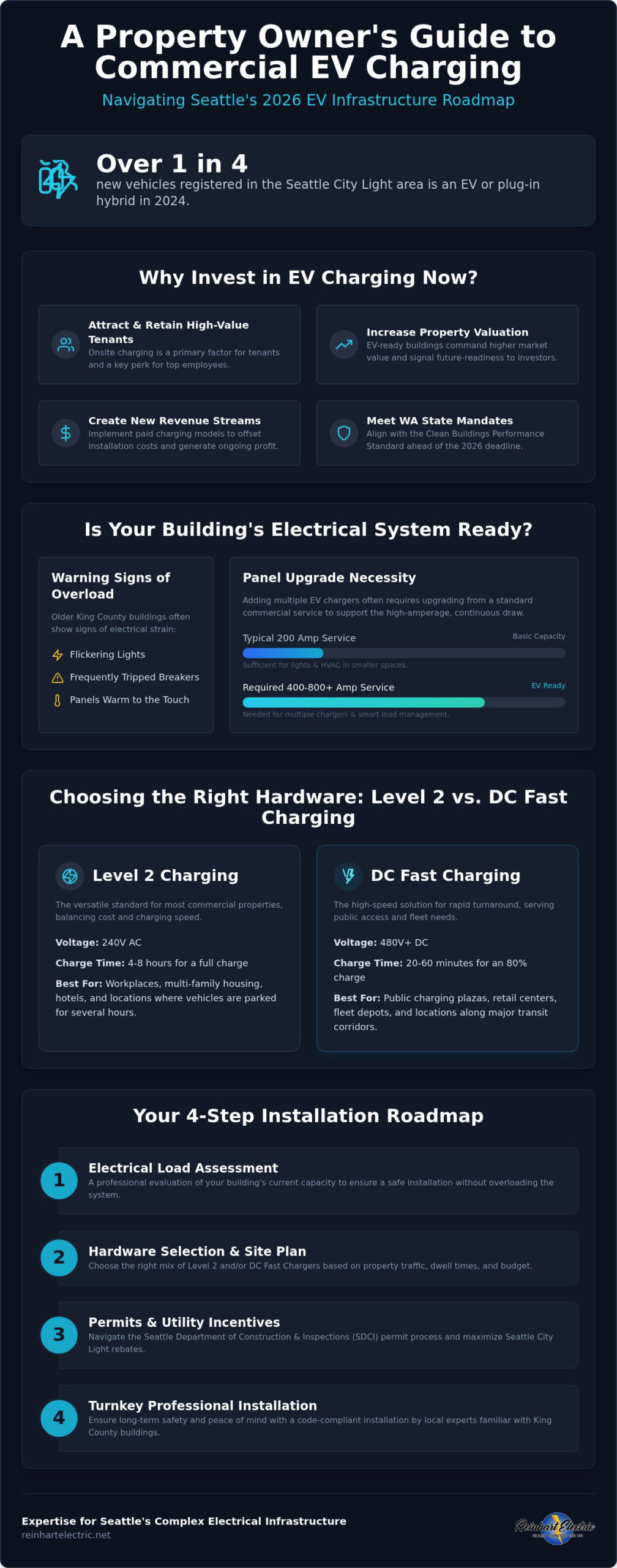
A typical 200 Amp service is often sufficient for basic lighting and HVAC in smaller retail spaces. However, once you introduce multiple charging ports, you likely need to move toward a 400 Amp or 800 Amp service. Smart charging software plays a vital role in this transition. It monitors the building’s total draw and throttles the chargers when the HVAC or elevator systems are working hardest. This prevents expensive peak-demand surcharges from your utility provider. A successful commercial EV charging station installation Seattle project begins with this technical foundation to ensure long-term stability.
The Necessity of Commercial Panel Upgrades
You might notice clear signs that your current infrastructure is struggling to keep up. These include flickering lights, frequently tripped breakers, or panels that feel warm to the touch. In older facilities in Renton or Kent, legacy systems weren’t built for continuous high-amperage draws. Overloading these systems creates significant safety risks, including electrical fires. A professional electrical panel upgrade King County ensures your building meets current safety codes while supporting your new chargers. We specialize in handling these complex transitions for mid-century properties that newer startups might avoid. Our team ensures every connection is secure and every circuit is balanced for safety.
Dynamic Load Balancing Solutions
Selecting the appropriate hardware is a defining moment in your commercial EV charging station installation Seattle project. The choice isn’t just about speed; it’s about aligning your infrastructure with how people actually use your property. While the chargers themselves are the most visible part of the project, the electrical engineering behind them determines your building’s safety and long-term operating costs. Level 2 and DC Fast Charging serve distinct needs and place very different demands on the local power grid.
You must weigh the initial investment against the expected turnover of your parking spaces. A slow charge is perfect for some, while others need to be back on the road in minutes. We help property managers look past the hardware specs to understand the real-world grid impact. Our goal is to ensure you have a reliable system that doesn’t cause unexpected strain on your legacy electrical components.
Level 2: The Practical Choice for Most Seattle Businesses
Level 2 charging typically utilizes 240V power, which is similar to what a commercial oven or large HVAC unit requires. It’s the gold standard for locations where vehicles stay parked for several hours at a time. If you manage an apartment complex in West Seattle or an office building downtown, this is usually your most efficient option. It provides plenty of range for an eight-hour workday or an overnight stay without requiring a massive overhaul of your building’s main service.
Installation for Level 2 units is generally more straightforward and less invasive than high-voltage alternatives. These chargers are compatible with almost every electric vehicle on the road today. Because they draw power more gradually, they often help you avoid the expensive “demand charges” that utilities apply to high-draw accounts. It’s a dependable way to provide a necessary amenity while keeping your electrical environment safe and stable.
DC Fast Charging for High-Turnover Locations
DC Fast Charging (DCFC) is engineered for rapid turnover. These systems are ideal for retail hubs in Tukwila or transit corridors in Auburn where customers spend less than an hour on-site. Unlike Level 2, DCFC requires 480V three-phase power and often necessitates specialized transformers. The technical requirements are much higher, and older panels frequently need significant modifications to handle the load safely. It’s a complex task that requires a steady, experienced hand to execute correctly.
Maintenance for these units is more involved due to the sophisticated cooling systems and high-voltage components. You’ll also need to plan for higher utility costs, as these chargers pull a significant amount of electricity in a very short window. For fleet depots or busy shopping centers, the investment is often justified by the convenience it offers. We focus on the heavy-duty electrical work required for these installations, ensuring your high-voltage infrastructure is robust enough to handle the stress of rapid charging day after day.
Navigating Seattle Permits and Utility Incentive Programs
Success in a commercial EV charging station installation Seattle project depends on a methodical approach to paperwork and planning. You don’t want to start digging before you’ve secured your financial incentives. The process requires coordination between your electrical contractor, the local utility, and the city’s building department. Following a structured roadmap ensures you don’t leave money on the table or run into code compliance issues during final inspection.
- Step 1: Conduct a professional site assessment and load calculation to determine your building’s current capacity.
- Step 2: Apply for Seattle City Light or Puget Sound Energy (PSE) rebate pre-approval before purchasing hardware.
- Step 3: Secure SDCI electrical permits and zoning approvals to ensure the installation meets city standards.
- Step 4: Execute the installation with a licensed electrician Renton WA who understands King County’s specific high-voltage requirements.
- Step 5: Pass the final inspection and submit your documentation for incentive fund disbursement.
Local Utility Rebates: Seattle City Light and PSE
As of September 2026, Seattle City Light offers robust incentives for public charging. Level 2 chargers meeting the 6.6 kW minimum can qualify for 50% of costs up to $2,500 per project. This amount doubles for projects located in overburdened communities. If you’re installing fast chargers, the incentives are even more significant, reaching up to $50,000 for 150 kW units. These programs are designed to lower the barrier for businesses in Kent, Auburn, and South King County. Make-ready incentives are also available to cover the “behind-the-meter” costs like wiring and panel upgrades, which often represent the bulk of the expense.
Federal and State Tax Credits
The regulatory landscape has changed recently. The federal Section 30C tax credit is no longer available for property placed in service after June 30, 2026. This makes local utility programs and Washington State sales tax exemptions even more critical for your budget. Washington continues to offer sales and use tax exemptions for EV infrastructure components to encourage adoption. Stacking local utility rebates with Washington state sales tax exemptions can cover up to 50% of project costs. If you need help navigating these technical requirements, hiring an electrician Renton WA ensures your project meets the strict safety and documentation standards required for these funds.
Scaling Your EV Infrastructure with Reinhart Electric
When you’re ready to scale your infrastructure, you need a partner who understands the long-term commitment required for high-voltage systems. National startups often focus on rapid deployment, but they may lack the local roots to support your system for the next decade. We take a “safety-first” approach to every commercial EV charging station installation Seattle project. This ensures your equipment is integrated seamlessly with your building’s existing electrical heart. Our turnkey process handles everything from the initial site assessment to the final city inspection. We want you to feel confident that your investment is protected and your tenants are safe.
Reliability is the most important feature of any charging port. A broken charger is often worse than no charger at all because it frustrates your residents and employees. We offer comprehensive maintenance plans designed to ensure 99% uptime for your equipment. Our team is available for 24/7 responsiveness because we know that commercial properties don’t just operate during standard business hours. You deserve the peace of mind that comes from knowing a steady, expert hand is always looking after your facility’s electrical health.
70+ Years of Local Seattle Expertise
Our history in the Pacific Northwest stretches back to 1952. Serving the community for over seven decades has given us a deep understanding of the unique electrical quirks found in King County’s older commercial buildings. We don’t just follow current codes; we understand the engineering history behind the infrastructure. This local expertise allows us to provide transparent pricing without the hidden “surprises” that less experienced contractors might miss. We treat every client like a neighbor, offering honest advice and methodical technical work that stands the test of time. It’s a level of stability that national firms simply can’t match.
Ready to Power Your Property?
Every successful installation begins with a professional safety audit. We examine your current panel, evaluate your grounding systems, and ensure your building can handle the increased load without risk. If you’re managing a facility in Renton, Seattle, or the surrounding areas, we’re ready to help you navigate this transition. Scheduling a commercial site visit is the most effective way to get an accurate, data-driven roadmap for your property. It allows us to identify potential challenges before they become expensive problems. Contact Reinhart Electric today for your commercial EV charging consultation. We’ll help you build a reliable, future-proof charging network that serves your business and your community for years to come.
Powering the Future of Your Seattle Business
Modernizing your property with electric vehicle infrastructure is a significant step toward increasing asset value and ensuring tenant satisfaction. By now, you understand that a successful commercial EV charging station installation Seattle project requires more than just picking hardware. It involves a methodical look at your building’s electrical load, navigating complex SDCI permits, and maximizing available utility incentives to protect your bottom line. Whether you choose Level 2 ports for multi-family housing or DC Fast Charging for high-turnover retail sites, the foundation of your system must be built on safety and local code compliance.
Reinhart Electric has been a steady partner for local businesses since 1952. As specialists in King County and Pierce County electrical codes, we bring decades of experience to every project. We are fully licensed, bonded, and insured in Washington State, providing the transparency and dependability your property deserves. Don’t leave your infrastructure to chance with national firms that don’t know our local grid. Take the first step toward a safer, more sustainable facility today. Schedule Your Commercial EV Infrastructure Assessment and let our family-owned team guide you through a seamless installation process. We look forward to helping your business grow.
Frequently Asked Questions
How much does a commercial EV charging station installation cost in Seattle?
Typical industry costs for a single-port Level 2 commercial unit range between $3,000 and $12,000 as of August 2026. DC fast charger installations often require a larger investment, typically between $80,000 and $250,000 depending on power output and site conditions. These figures reflect hardware and basic labor. Every property in Renton or Tukwila has unique infrastructure needs, so a professional site assessment is necessary to determine the specific requirements for your building’s electrical capacity.
Does Seattle City Light offer rebates for EV charger installation?
Yes, Seattle City Light provides significant incentives for commercial projects as of September 2026. For Level 2 chargers, you can receive 50% of costs up to $2,500 per project. This amount reaches 100% up to $5,000 in overburdened communities. Fast charger incentives are even higher, offering up to $125,000 for units with battery storage. These rebates are essential for managing the initial investment of your commercial EV charging station installation Seattle project.
How long does the permitting process take for commercial EV chargers in King County?
The timeline for securing permits through the Seattle Department of Construction & Inspections (SDCI) or local offices in Kent and Auburn varies by project complexity. Generally, you should plan for several weeks to a few months for full approval. This includes the initial electrical permit and any necessary zoning reviews. Working with a contractor who understands King County codes helps streamline this process. We ensure all documentation is accurate to avoid unnecessary delays during the city’s review.
Can my older commercial building handle Level 2 charging stations?
Many mid-century commercial buildings require electrical panel upgrades to safely support modern charging demand. While Level 2 chargers are less taxing than fast chargers, they still require a steady, high-amperage draw. We evaluate your building’s current service, such as a 200 Amp or 400 Amp panel, to see if it can handle the additional load. If capacity is limited, we often implement smart load management software to balance power usage without a full utility service change.
What is the difference between networked and non-networked commercial chargers?
Networked chargers connect to the internet, allowing you to manage usage, process payments, and monitor station health remotely. They’re ideal for office buildings or retail centers that want to charge fees or limit access. Non-networked chargers are simpler “plug and play” devices without data connectivity. While non-networked units have lower upfront costs, they lack the sophisticated load-balancing features and reporting tools that many Seattle property managers require for 2026 compliance and revenue tracking.
Do I need a separate meter for my commercial EV charging stations?
While a separate meter isn’t always mandatory, many utility incentive programs and “Make-Ready” grants require them. A dedicated meter allows you to track EV energy consumption separately from your building’s main HVAC and lighting systems. This transparency is helpful for billing tenants or claiming specific tax credits. It also simplifies load calculations for your commercial EV charging station installation Seattle project. We can help you determine if your specific site layout in Des Moines or Burien benefits from a secondary meter.
How many charging ports should I install for my Seattle office building?
As of May 2026, Washington state building codes require new commercial construction to designate at least 10% of total spaces with wiring for EV charging. An additional 20% of spaces must be charger-ready. For existing buildings, we recommend surveying your tenants or employees to gauge current demand. Starting with two to four ports is a common strategy for smaller offices, while larger complexes in Tukwila often install banks of eight or more to meet growing demand.
What maintenance is required for commercial EV charging stations?
Routine maintenance ensures your chargers maintain 99% uptime and remain safe for public use. This includes regular inspections of charging cables for wear, cleaning connector ports, and verifying that the mounting hardware is secure. For networked systems, periodic software updates are necessary to maintain security and payment processing functionality. We provide comprehensive maintenance plans for businesses in Renton and Kent to catch small issues before they lead to expensive equipment downtime or safety hazards.