
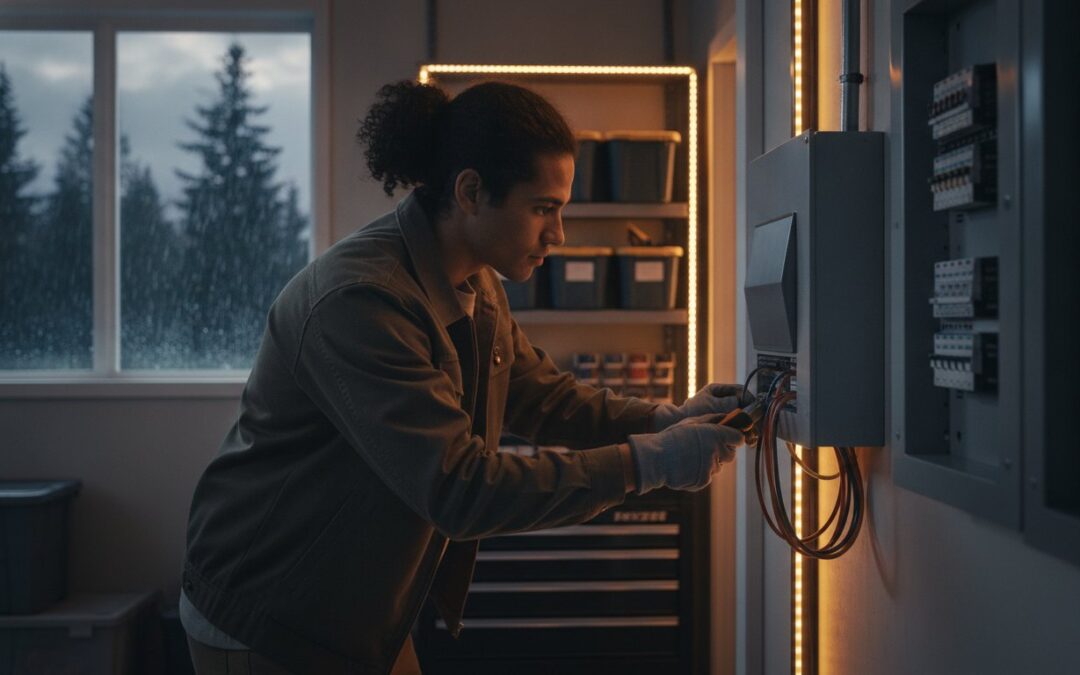
Imagine it’s a Tuesday night in November and the typical PNW windstorm has just knocked out power across your neighborhood. You have a portable generator ready in the garage, but you’re hesitant to hook it up because of the very real danger of backfeeding power into the lines. It’s a common worry for Seattle homeowners who want to protect utility workers while keeping their own lights on. You might also be staring at an older electrical panel, wondering if it can even handle a modern upgrade without a massive overhaul. Understanding the cost to install generator transfer switch Seattle systems requires looking at more than just a sticker price; it’s about investing in the safety of your family and your community.
We agree that navigating electrical codes and equipment options can feel overwhelming when you just want peace of mind. That’s why we’ve put together this honest guide to help you understand exactly what goes into a professional installation. You’ll get a clear breakdown of the hardware differences between interlock kits and full transfer switches, along with the specific local requirements for 2026. We’ll preview the permit process and technical considerations for older homes so you can make an informed decision before the next storm hits. By the end of this article, you’ll have a roadmap for a code-compliant backup power setup that keeps your home running smoothly.
Key Takeaways
- Learn why a transfer switch is the only code-compliant way to connect your generator and prevent dangerous backfeeding during a power outage.
- Understand the market factors that influence the cost to install generator transfer switch Seattle systems, including the balance between hardware quality and professional labor.
- Compare full transfer switches with budget-friendly interlock kits to determine which safety device fits your home’s electrical panel and power needs.
- Navigate Seattle-specific requirements, including necessary permits and considerations for the older electrical panels common in our local neighborhoods.
- Discover how a safety-first approach from a local expert ensures your backup system is ready for the next Pacific Northwest windstorm.
The Real Value of a Generator Transfer Switch in Seattle
Living in the Pacific Northwest means preparing for the inevitable. Our region’s frequent windstorms and heavy seasonal rains often lead to multi-day outages that leave entire neighborhoods in the dark. While many homeowners keep a portable generator in the garage, the way you connect it to your home’s electrical system determines whether you’re being safe or taking a massive risk. A transfer switch acts as a dedicated, permanent bridge between your generator and your home’s electrical panel. If you are researching What is a Transfer Switch?, you’ll find it is essentially a device that ensures your home cannot be powered by the utility grid and the generator at the same time. This isolation is the only legal and safe method to use a backup power system.
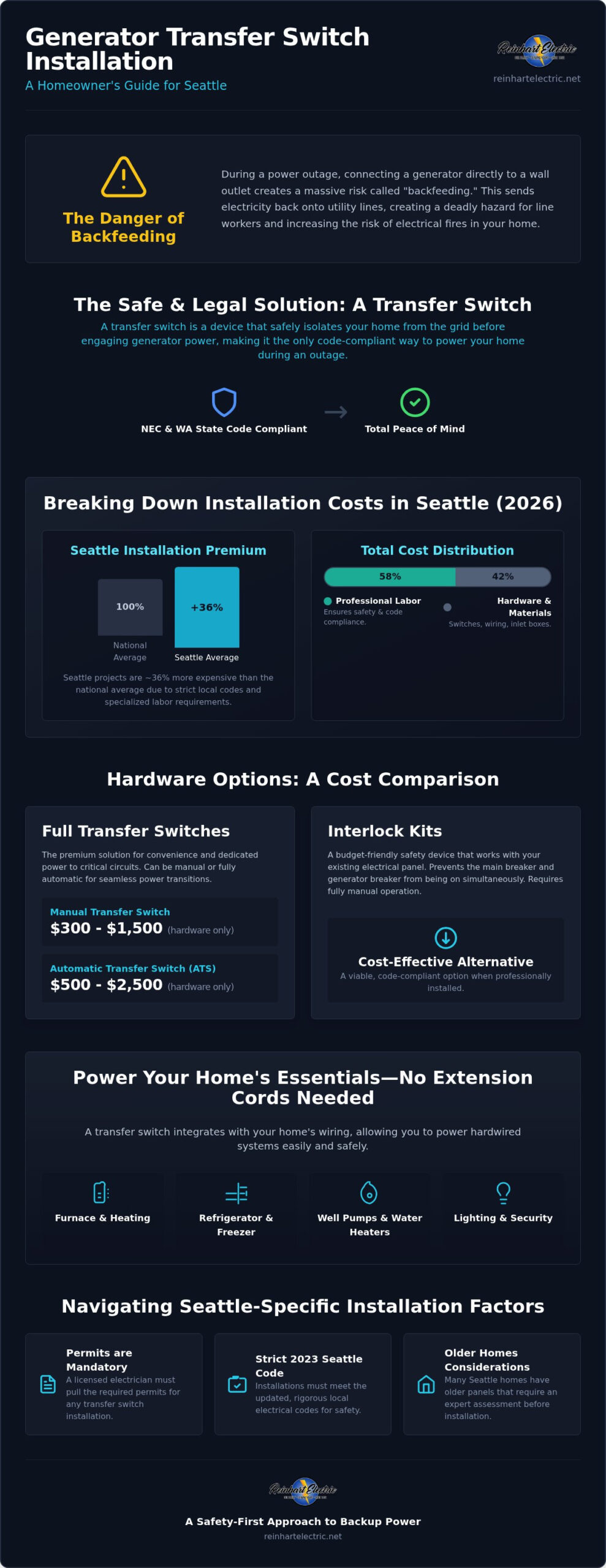
One of the biggest hazards we encounter is “backfeeding.” This happens when someone tries to connect a generator directly to a standard wall outlet using a “suicide cord” or other illegal bridge cables. This dangerous practice sends electricity back out into the neighborhood power lines. It can be deadly for utility workers trying to restore power and can cause electrical fires in your own home. A professional installation eliminates this anxiety, protecting both your family and your community neighbors.
The Legal Requirement: NEC and Washington State Codes
Safety isn’t just a suggestion; it’s the law. The National Electrical Code (NEC) and Washington State regulations mandate that any permanent connection to a backup power source must include a method to prevent the accidental interconnection of power sources. When evaluating the cost to install generator transfer switch Seattle homeowners often prioritize safety and compliance. Professional installation is usually required for insurance purposes. If an unpermitted or non-code-compliant setup causes a fire, your insurance provider might deny the claim. We focus on electrical code updates and safety compliance to ensure your system meets every local standard.
Convenience Factors: No More Extension Cords
Beyond safety, there’s the matter of simple convenience during a stressful storm. Without a transfer switch, you’re forced to run a web of extension cords through cracked windows or doors to power individual lamps. This doesn’t help with hardwired essentials that keep your home livable. A transfer switch allows you to power these critical systems through your existing wiring:
- Furnace and heating systems
- Well pumps and water heaters
- Kitchen refrigerators and freezers
- Hardwired lighting and security systems
By using a single-cable connection to a power inlet box, you can get your home up and running in minutes. It makes the process much easier for family members who might not be comfortable handling complex electrical setups during an emergency. Planning for the cost to install generator transfer switch Seattle installations ensures your home is ready before the rain begins.
Breaking Down the Installation Costs in 2026
Seattle homeowners often find that local electrical projects carry a premium price tag. Market data from 2026 indicates that generator installations in our city are roughly 36 percent more expensive than the national average. This price difference isn’t just a matter of geography; it reflects the specialized expertise required to meet the strict 2023 Seattle Electrical Code. When you evaluate the cost to install generator transfer switch Seattle homeowners should expect a split where labor accounts for about 58 percent of the total investment. Professional expertise is the bulk of the cost because it ensures your system is wired correctly to handle heavy loads during a multi-day outage.
Material Costs: From Manual to Automatic
The type of hardware you choose is the first major variable in your budget. Manual transfer switches are the reliable, cost-effective choice for those using portable generators. Market estimates for these hardware units typically range between $300 and $1,500. If you prefer a seamless transition during a blackout, an automatic transfer switch (ATS) for a standby generator is the premium solution. These units often cost between $500 and $2,500 for the hardware alone. We always recommend using high-quality copper wiring and weather-rated inlet boxes, as these components are vital for long-term reliability in our damp climate.
Labor and Expertise in the Seattle Market
Labor rates in King County reflect the high demand for licensed, journey-level electricians. Local research shows that electricians in the area charge approximately $54 per hour. A standard installation usually takes between 4 and 8 hours to complete safely. This time includes more than just mounting a box; a seasoned professional will perform a full diagnostic check of your existing panel first. Labor costs for a basic switch installation often fall between $200 and $500, though complex jobs requiring extensive wiring or panel modifications can reach $1,500. These factors are why the total cost to install generator transfer switch Seattle projects can vary significantly between homes.
Several factors can drive these numbers higher than the initial estimate. If your generator inlet needs to be placed far from your main panel, the price of copper and conduit will increase. Trenching through a yard or upgrading an older panel to meet current safety standards also adds to the total. Choosing the cheapest quote can be a costly mistake if the contractor skips permits or uses sub-standard components. For a safe and reliable setup, it’s best to work with a team that understands electrical panel upgrades and service changes in older local homes. Peace of mind comes from knowing the job was done right the first time.
Transfer Switches vs. Interlock Kits: A Cost Comparison
Many homeowners believe a dedicated transfer switch is their only code-compliant option. In reality, there’s a second, budget-friendly path known as a generator interlock or lockout kit. This mechanical safety device is a sliding plate installed on your existing electrical panel. It creates a physical barrier that prevents the main utility breaker and the generator breaker from being on simultaneously. This simple hardware addition satisfies safety codes and protects utility workers from backfeeding.
Choosing between these two involves more than just looking at the initial cost to install generator transfer switch Seattle projects. A dedicated transfer switch requires a separate sub-panel and individual circuit wiring. An interlock kit uses your existing panel, which significantly reduces the labor time and material needs. The right choice often depends on your generator’s size and how much load management you’re willing to do during a storm. It’s about finding the balance between your budget and your desire for convenience.
When to Choose a Dedicated Transfer Switch
A dedicated transfer switch is ideal if you have a smaller generator and want to power 6 to 10 critical circuits. You won’t have to worry about accidentally overloading your system because only the pre-selected circuits, like your furnace or fridge, receive power. The clear labels on the switch make it easy for anyone in the family to restore power without technical confusion. It provides a structured, worry-free experience during the dark PNW winters.
The Interlock Kit Advantage
Interlock kits are the most flexible and space-saving choice for many local families. They are perfect for crowded electrical panels in Renton or Kent homes where there isn’t room for a bulky sub-panel. With an interlock, you can choose which breakers to flip on based on your immediate needs. You might run the well pump for an hour, then switch that power to the kitchen. This versatility, combined with lower hardware costs, makes it a compelling alternative for homeowners who want professional safety without the price of a full switch system. It allows you to utilize the full capacity of your generator across any circuit in the house.
Seattle-Specific Installation Factors: Permits and Older Homes
Seattle’s unique geography and aging infrastructure mean that a “standard” installation rarely exists. When calculating the cost to install generator transfer switch Seattle projects, you have to account for the specific requirements of local utilities like Seattle City Light and Puget Sound Energy (PSE). These organizations have strict guidelines regarding equipment placement and grid isolation. Following the 2023 Seattle Electrical Code is not just a suggestion; it’s a requirement to ensure your system doesn’t endanger the neighborhood grid during a repair.
One factor that often surprises homeowners is the physical layout of their property. If your electrical panel is in the basement but your generator must sit 50 feet away on a side yard, the extra conduit and heavy-gauge copper wire will impact your final bill. These local variables are why generic online estimates often fall short of reality for King County residents. We take the time to map out your lot to find the most efficient and safe path for your wiring.
Modernizing Older Panels for Backup Power
Many homes in neighborhoods like Burien or Des Moines still rely on 1950s-era electrical panels. In these cases, a panel upgrade often becomes a prerequisite for a transfer switch. Older panels may lack the physical space for a new generator breaker or might have outdated grounding that doesn’t meet modern safety standards. We often find recalled breakers or corroded bus bars that must be addressed before adding the load of a backup power system. A code-compliance inspection ensures your home’s electrical foundation is strong enough to support your new equipment.
Local Permits and Inspections
You might see online forums suggesting that permits are optional for residential work, but this is a dangerous myth. In Seattle, the base fee for an electrical permit is $371.35, plus a Washington State surcharge and a 5 percent technology fee. While the typical processing time for these permits can range from 8 to 16 weeks, a permitted job is the only way to protect your home’s insurance standing. If an unpermitted installation leads to a fire, your provider may refuse to cover the damages. We handle the entire permitting process for you, ensuring the inspector sees proper grounding and a clear separation of power sources.
Doing things the right way preserves your home’s resale value and gives you total peace of mind during the next storm. If you’re concerned about whether your older system can handle the upgrade, contact us for a professional safety assessment to get a clear picture of your home’s needs.
Why Experience Matters: The Reinhart Electric Difference
Since 1952, we’ve seen how Pacific Northwest weather can test a home’s resilience. Choosing a partner to handle your backup power isn’t just about finding the lowest number on a spreadsheet. It’s about finding a team that prioritizes the safety of your family and the integrity of your electrical system. When you look at the cost to install generator transfer switch Seattle systems, you’re investing in the peace of mind that comes from over seven decades of local expertise. We believe in transparent, neighborly communication. You won’t find high-pressure sales tactics here, only honest advice based on what your specific home requires to stay safe and functional.
Our “Safety-First” philosophy means we don’t just install hardware; we protect families. We understand that a backup power system is only as good as its weakest connection. That’s why we perform meticulous diagnostic checks before any wires are moved. We want to ensure that your setup is ready to perform when the grid goes down, not just on the day of installation. This commitment to reliability is why our clients have trusted us for generations to keep their lights on during the darkest winter months.
A Legacy of Trust in King County
Our 70 year history in the region means we understand the unique electrical quirks of homes across South King County and Pierce County. Whether you live in Auburn, Kent, or Tukwila, our electricians are part of your community. We aren’t a faceless corporation; we’re a family-owned business that treats every task with the same level of care. This local roots approach allows us to navigate the specific permit requirements and panel challenges discussed earlier with ease. We know the neighborhoods because we live in them too. Our electricians take pride in providing the kind of service they would want for their own neighbors.
Getting Started: Your Custom Quote
Every home has a different layout and power need. We don’t believe in one-size-fits-all solutions. Our process begins with a thorough evaluation of your current panel and your generator’s capacity. We then provide a tailored plan that explains the cost to install generator transfer switch Seattle installations for your specific property. Working with a professional generator transfer switch installer ensures that your system remains 24/7 reliable. We take care of the technical details so you don’t have to worry about code compliance or safety risks. Contact us today to schedule your safety assessment and get a clear, honest quote for your home backup power solution. Let’s make sure you’re ready before the next storm hits.
Secure Your Home’s Power Before the Next Storm
Investing in a professional backup power setup is about more than just hardware; it’s about the safety of your family and the long-term health of your home’s electrical system. We’ve explored how proper equipment prevents dangerous backfeeding and why local permits are essential for insurance compliance. Whether you choose a dedicated transfer switch for its simplicity or an interlock kit for its flexibility, the right choice depends on your specific household needs. Understanding the cost to install generator transfer switch Seattle installations helps you plan effectively before the wind season arrives.
As a family-owned and operated business since 1952, Reinhart Electric has spent over 70 years serving Seattle, Renton, and South King County. We take pride in being a steady hand you can trust, offering 24/7 emergency service when you need it most. Our team is ready to provide the honest, expert advice you deserve for your home’s security. Get a Professional Quote for Your Generator Installation today and enjoy the peace of mind that comes from a job done right. You don’t have to face the next outage in the dark.
Frequently Asked Questions
How much does a generator transfer switch cost to install in Seattle?
The total cost depends on your equipment choices and home layout, but Seattle prices are typically 36 percent higher than the national average. Labor accounts for roughly 58 percent of the project total. A manual switch is the most affordable hardware option, while automatic switches for standby units represent a higher investment. Factors like panel distance and amperage requirements will influence your specific quote for the cost to install generator transfer switch Seattle systems.
Do I need a permit to install a transfer switch in King County?
Yes, an electrical permit is required for any new wiring installation or alteration in Seattle and King County. The Seattle Department of Construction and Inspections (SDCI) charges a base fee of $371.35 plus local surcharges. Obtaining a permit ensures your installation meets the 2023 Seattle Electrical Code. This documentation protects your home’s insurance coverage and resale value while verifying that the setup is safe for utility workers.
Is an interlock kit cheaper than a transfer switch?
An interlock kit is typically the most budget-friendly way to safely connect a generator to your home. It uses a mechanical sliding plate on your existing panel rather than requiring a separate sub-panel. This reduces both hardware costs and labor time. While it requires you to manually manage which breakers are active, it provides the same level of backfeeding protection as a more expensive dedicated transfer switch.
Can I install a generator transfer switch myself?
While homeowners who occupy their property are legally allowed to perform their own electrical work, it is not recommended for complex tasks like transfer switches. You must still obtain a permit and pass a city inspection. Mistakenly wiring a panel can lead to electrical fires or dangerous backfeeding. Most local residents prefer hiring a licensed contractor to ensure the system is code-compliant and safe for their family.
How long does the installation process usually take?
A standard professional installation typically takes between 4 and 8 hours to complete safely. This timeframe includes the initial safety inspection of your electrical panel, mounting the hardware, and performing a full load test with your generator. More complex jobs, such as those requiring trenching or panel modernization in older homes in Burien or Des Moines, may take longer. We strive to complete most residential projects within a single day.
Will a transfer switch work with my portable generator?
Yes, manual transfer switches and interlock kits are specifically designed to work with portable generators. You connect the generator to an exterior power inlet box using a heavy-duty cord. Once the generator is running, you flip the switch to isolate your home from the grid. This setup is perfect for powering essential circuits like your furnace, refrigerator, and lights during a typical Pacific Northwest windstorm.
Does a transfer switch protect my appliances from power surges?
A transfer switch’s primary job is to safely isolate your home from the utility grid, not to provide surge protection. While it prevents surges from the grid when you are disconnected, it doesn’t protect against internal spikes or surges that occur when power is restored. For complete protection, we recommend adding whole house surge protection to your panel. This ensures your sensitive electronics remain safe from voltage fluctuations year-round.
What happens if I connect my generator without a transfer switch?
Connecting a generator without a transfer switch often leads to dangerous backfeeding, which sends electricity back into the neighborhood power lines. This creates a deadly hazard for utility crews working to restore power. Additionally, it can damage your generator or cause an electrical fire if the utility power suddenly returns while your generator is running. Using a code-compliant switch is the only legal and safe way to power your home.