
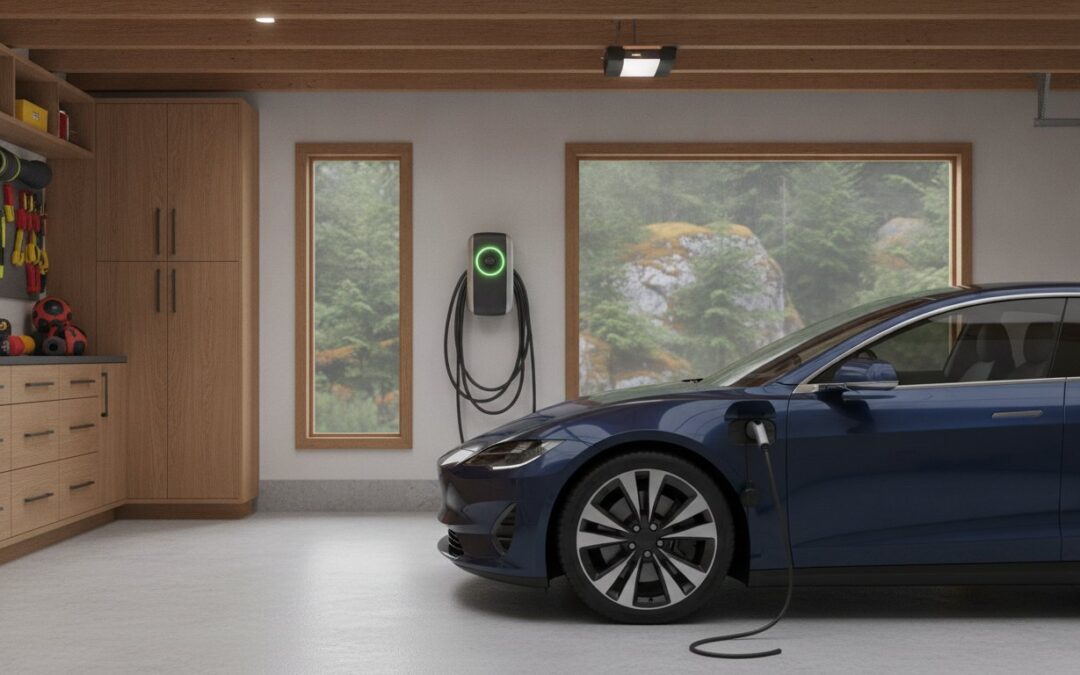
Home charging offers a 98% reliability rate compared to just 75% for public stations, but plug-in success depends entirely on what’s happening behind your garage walls. It’s completely normal to feel overwhelmed by the technical gap between Level 1 and Level 2 speeds or to worry if your older electrical panel can handle the extra load without a risk of fire. You want a home electric vehicle charging station that’s fast and dependable, not a source of stress.
We’ve seen how King County’s unique housing stock handles modern tech since 1952, and we’re here to help you get it right the first time. This master electrician’s checklist provides a clear path to choosing the right hardware while ensuring your home meets the strict 2026 NEC safety standards. You’ll learn how to evaluate your current panel capacity, understand the shift to the NACS connector standard, and secure local utility rebates from PSE or Seattle City Light before the June 30 federal tax credit deadline expires.
Key Takeaways
- Identify the critical differences between Level 1 and Level 2 charging speeds. You will see why 240-volt power is the gold standard for getting a full charge overnight.
- Evaluate your home’s electrical capacity to see if a panel upgrade is necessary. This is vital for older homes in the Seattle area that may still run on 100-amp service.
- Choose the right features for your home electric vehicle charging station. We compare hardwired versus plug-in models to help you find the safest and most efficient setup for your garage.
- Navigate the latest local incentives from Puget Sound Energy and Seattle City Light. Learn how to stack these rebates with federal credits before they expire in June 2026.
- Use our master electrician’s checklist to prepare your parking area. This guide covers everything from measuring cable reach to selecting the best mounting location for safety.
Understanding Home Electric Vehicle Charging Station Levels
Choosing the right setup for your home electric vehicle charging station starts with understanding the power delivery levels available in 2026. Most new EV owners start with Level 1 charging because it uses a standard 120-volt household outlet. While convenient, it only adds about 3 to 5 miles of range per hour. This speed is often insufficient for modern EVs with 300-plus mile batteries. Level 2 charging is the preferred standard for Seattle homeowners. It operates on 240-volt power, similar to your electric dryer or oven. This upgrade boosts your charging speed to 25 or 40 miles per hour, allowing for a full battery every morning.
You might wonder about Level 3, or DC Fast Charging. These are the massive units you see at rest stops or commercial hubs. They require industrial-grade voltage that most residential grids in Renton or Kent simply cannot support. For a residential EV charging station, Level 2 is the peak of performance. Data shows that 95% of home charging occurs between 11 PM and 7 AM. We call this the “Overnight Rule.” If your equipment cannot replenish your daily commute in those eight hours, you will eventually face range anxiety. Level 2 ensures you wake up with a full tank regardless of your previous day’s travel.
Level 1 vs. Level 2: Which fits your lifestyle?
Evaluate your daily driving habits carefully. If you drive less than 30 miles a day, a standard outlet might get you by. However, modern long-range batteries require more power to stay healthy and efficient. Relying on a standard outlet for continuous high-draw power can lead to overheating in older Seattle wiring systems. The cost-to-benefit ratio of a Level 2 upgrade is high. It provides the peace of mind that your car is always ready for an unexpected long trip.
The Role of the EVSE (Electric Vehicle Supply Equipment)
Technically, the “charger” is a component inside your car. The unit on your wall is actually Electric Vehicle Supply Equipment, or EVSE. It acts as a smart safety gate. It communicates with your car to ensure the battery does not overheat and shuts off power once the charge is complete. By 2026, many vehicles require higher amperage than older models. Choosing a robust EVSE ensures your home is ready for these higher power demands without tripping breakers or damaging your electrical panel.
Evaluating Your Home’s Electrical Capacity: Is Your Panel Ready?
Most homeowners focus on the sleek design of their new home electric vehicle charging station, but the real work happens inside your gray metal service box. Your electrical panel is the heart of your home’s power system. If you live in a Seattle-area home built between the 1950s and 1970s, your system was likely designed for a fraction of today’s electrical needs. Back then, a 100-amp service was plenty for a few lights and a refrigerator. Today, adding a high-draw EV circuit to that same panel can push it to the breaking point.
A professional load calculation is the only way to know if your home is truly ready. This process measures the total demand of your existing appliances, like your electric dryer, range, and air conditioner, against your total service capacity. According to the EPA’s guide to home EV charging, understanding these power requirements is a critical first step before any installation. If your panel is already near its limit, adding a 40-amp or 50-amp charger could lead to flickering lights or breakers that feel warm to the touch. These are clear warning signs that your system is overloaded and potentially unsafe.
Signs You Need an Electrical Panel Upgrade
Physical space is often the first hurdle. If your panel is completely full of breakers, there’s no room for the dedicated double-pole breaker required for a Level 2 home electric vehicle charging station. Beyond space, safety is the primary concern. If you see the names Federal Pacific or Zinsco on your panel, these are known fire hazards that should be replaced regardless of your EV plans. Frequent breaker trips when you run multiple appliances simultaneously are another clear signal that your current system is struggling. If you’re unsure about your current setup, a professional electrical panel evaluation can provide the clarity you need.
The Benefits of a 200-Amp Service Change
Upgrading to a 200-amp service does more than just power your car. It future-proofs your home for the next generation of technology, including heat pumps and electric ranges. In the tech-heavy King County real estate market, a modern electrical system significantly increases home resale value. Most importantly, it provides peace of mind. Modern panels feature advanced circuit protection that reduces the risk of electrical fires. This ensures your family stays safe while your vehicle charges quietly in the garage overnight.
Choosing the Right Home EV Charging Unit Features
Selecting the hardware for your home electric vehicle charging station involves more than just picking a brand that matches your car. In 2026, the equipment you choose must balance charging speed with long-term durability, especially given our unique Pacific Northwest climate. You’ll primarily choose between a hardwired unit and a plug-in model that uses a NEMA 14-50 outlet. While both provide Level 2 speeds, the technical differences impact your daily reliability and safety. Beyond the connection type, you should look for a unit with a 25-foot cable. This length has become the industry standard because it provides the flexibility to reach your vehicle’s charging port regardless of how you park in your garage or driveway.
Weatherproofing is another critical factor for homeowners in King County. If you plan to install your charger outdoors, the enclosure rating is vital. A NEMA 3R rating is standard for outdoor use, providing protection against rain and sleet. However, many experts recommend a NEMA 4 rating for the Seattle area. These units are airtight and offer superior protection against wind-blown dust and heavy splashing water, ensuring your investment survives our wet winters. Before you buy, it’s also worth checking Seattle-area EV incentives to see if specific models qualify for additional local rebates or utility programs. If you also own or manage a business property, exploring commercial EV charger installation Seattle options can help you extend charging access to employees and customers as well.
Hardwired vs. Plug-In Installations
Hardwired installations are the gold standard for safety and performance. By connecting the unit directly to your home’s electrical system, you can access higher amperage, often up to 48A or even 80A. This results in significantly faster charging compared to the 40A limit of most plug-in models. Hardwiring also eliminates the “plug-in” point of failure, which can sometimes overheat under heavy, continuous loads. While plug-in units offer portability, the 2026 National Electrical Code now emphasizes professional, hardwired setups for their superior fire safety and weather resistance.
Smart Features That Save You Money
Modern chargers come with Wi-Fi connectivity that does more than just show you pretty graphs on your phone. These “smart” features allow you to integrate with “Time-of-Use” (TOU) programs offered by utilities in Kent and Renton. By scheduling your home electric vehicle charging station to run only during off-peak hours, you can significantly lower your monthly energy bill. Some units also offer load sharing. This technology allows you to charge two electric vehicles on a single circuit by intelligently splitting the power, which can save you from the high cost of a second major circuit installation.
The Ultimate Pre-Installation Checklist for Homeowners
You have selected your hardware and evaluated your power capacity. Now it is time to map out the physical logistics of your home electric vehicle charging station. Proper planning prevents common headaches like cords that don’t quite reach the port or Wi-Fi features that won’t connect because of a thick garage wall. Before your electrician arrives, walking through these five steps will ensure a smooth and efficient installation process.
- Step 1: Locate your panel and measure. Find your electrical service panel and measure the distance to your intended parking spot. Every foot of conduit and heavy-gauge wire adds to the project complexity.
- Step 2: Choose your mounting spot. Decide if the unit will live inside the garage or on an exterior wall. If you park in a driveway, consider a pedestal mount or a wall location that minimizes cord travel.
- Step 3: Test your Wi-Fi signal. Take your smartphone to the exact spot where the charger will hang. If you don’t have at least two bars of signal, your smart scheduling and rebate-tracking features may not function correctly.
- Step 4: Verify the vehicle port location. Different EVs have ports in different places. A Tesla port is at the rear driver’s side, while a Nissan Leaf is at the front. Ensure your chosen spot works for how you prefer to pull into your space.
- Step 5: Document your current load. Make a list of your major electric appliances like your water heater, dryer, and AC unit. Having this ready helps your electrician finalize the safety calculations quickly.
Placement Logistics: Garage vs. Driveway
In many older Seattle neighborhoods, garage space is tight or non-existent. If you are mounting your unit outdoors, safety and accessibility are paramount. You must manage cord trip hazards to maintain a clear walking path. Use a dedicated holster to keep the heavy-duty cable off the ground when it’s not in use. For driveway installs, we also recommend choosing a unit with a locking mechanism or installing it in a discreet location to discourage tampering or theft. Proper clearance is essential. These cables are thick and less flexible in the cold, so avoid tight corners or narrow passages.
Permitting and Local Code Compliance
Installing a 240-volt circuit requires a permit from Washington State Labor & Industries (L&I) or your local building department. This isn’t just a bureaucratic hurdle; it’s a vital safety record. Unpermitted electrical work can lead to denied home insurance claims if a fire occurs. It also creates significant issues when you try to sell your home in the future. We believe in doing things the right way to protect your family and your investment. Our team at Reinhart Electric & Service, Inc. handles all the necessary paperwork and inspections for King County municipalities, so you can rest easy knowing your system is fully compliant. Ready to get started? Schedule your professional EV charger installation with our experienced team today.
Professional Installation and Seattle-Area Incentives
Professional installation is the final, most critical step in preparing your home for an electric future. As of the 2026 National Electrical Code update, all hardwired home electric vehicle charging station setups must be completed by a qualified person, which local jurisdictions define as a licensed electrician. This requirement ensures that your system includes the mandatory 5mA Class A GFCI protection for safety. Beyond legal compliance, professional work protects your vehicle’s warranty. Many manufacturers require proof of certified installation to cover battery or charging port issues. Cutting corners with a DIY setup can lead to expensive repairs or even dangerous electrical fires that your insurance may not cover.
Our team understands the specific challenges of King County’s housing stock. Since 1952, we’ve helped neighbors in Renton and Kent navigate the transition from mid-century wiring to modern technology. We don’t just hang a box on the wall. We perform a comprehensive safety audit to ensure your home electric vehicle charging station operates without straining your existing circuits. This methodical approach has defined our family-owned business for over 70 years, giving you the peace of mind that your car will charge safely every night.
Local Utility Rebates in King and Pierce County
You can significantly reduce your out-of-pocket costs by taking advantage of local utility programs. Puget Sound Energy (PSE) currently offers a $300 rebate for residential customers who install an eligible Level 2 charger. If you meet certain income qualifications, that support can increase to $600 for the unit and up to $2,000 for the installation itself. Seattle City Light customers can access incentives through the “Lighting To Go” program, while multi-family property owners may qualify for even larger grants. We recommend stacking these local savings with the Federal 30C tax credit. This federal incentive covers 30% of your hardware and installation costs, up to $1,000, but you must act quickly. This credit is scheduled to expire on June 30, 2026.
The Reinhart Electric & Service, Inc. Difference
We treat every task with the same level of care, whether we’re performing a simple repair or a full service change. Our process is built on transparency and dependability. We provide project-based pricing with no hidden fees, so you know exactly what to expect before we begin. For our neighbors in Renton, Kent, and Auburn, we offer support to address any concerns long after the initial installation is complete. We believe in building long-term relationships through honest work and technical superiority. When you choose a local expert who knows the regional grid, you’re investing in the safety and longevity of your home.
Ready Your Home for the Electric Road Ahead
Preparing for an EV is a significant milestone for your property. You now understand the technical balance between selecting the right hardware and ensuring your home’s infrastructure is ready for the extra load. By following this 2026 guide, you’ve gained the clarity needed to avoid common pitfalls like overloaded panels or unpermitted wiring. A home electric vehicle charging station is a long-term investment in your home’s value and your daily convenience.
At Reinhart Electric & Service, Inc., we’ve been family-owned and operated since 1952. Our licensed, bonded, and insured master electricians have spent decades serving our neighbors in Renton, Kent, and the Greater Seattle area. We’re ready to help you navigate the final steps of your installation with transparency and expert care. Your new vehicle deserves a safe, reliable place to refuel. Schedule your EV home readiness audit with Reinhart Electric & Service, Inc. today!
Frequently Asked Questions
Can I install a home electric vehicle charging station myself?
No, you shouldn’t attempt a DIY installation for a hardwired home electric vehicle charging station. The 2026 National Electrical Code requires a qualified professional to handle these high-voltage setups to ensure safety. Licensed electricians ensure your system meets the new 5mA Class A GFCI protection standards. Professional work also preserves your vehicle’s warranty and ensures your home insurance remains valid in the event of an electrical issue.
How much does it typically cost to install a Level 2 charger in Seattle?
The total investment for your home electric vehicle charging station varies based on several local factors. Hardware for Level 2 units typically ranges from $300 to $900 in 2026. Your final installation cost depends on the distance between your electrical panel and the parking spot. If your older Seattle-area home requires a service change or panel upgrade to handle the load, those technical requirements will influence the total project scope.
Will adding an EV charger significantly increase my monthly electric bill?
You’ll see an increase in your kilowatt-hour usage, but it’s usually much less than the cost of gasoline. Most Seattle-area drivers find that charging overnight during off-peak hours is the most economical choice. By utilizing “Time-of-Use” programs from Puget Sound Energy or Seattle City Light, you can take advantage of lower rates. This helps keep your monthly utility bill manageable while ensuring your car is ready every morning.
Do I need to upgrade my electrical panel to 200 amps for an EV?
A 200-amp upgrade isn’t always mandatory, but it’s a common requirement for older King County homes. A master electrician must perform a load calculation to see if your current 100-amp panel can safely handle a 40-amp or 50-amp charger alongside your dryer and AC. If your panel is already at capacity, an upgrade ensures your home remains safe and future-proofed for other electric appliances like heat pumps.
What is the difference between a hardwired charger and a plug-in unit?
Hardwired chargers connect directly into your home’s electrical system, while plug-in units use a heavy-duty NEMA 14-50 outlet. Hardwiring is often the safer choice for long-term use because it eliminates a potential point of failure at the outlet. It also allows for higher charging speeds, often reaching up to 48 amps. Plug-in units offer more portability if you plan to move the charger to a different home or location.
Are there any tax credits available for EV charger installation in 2026?
Yes, significant incentives are still available through the first half of the year. The federal 30C tax credit offers up to 30% of the cost for hardware and installation, capped at $1,000, for properties in qualifying areas. This credit is currently set to expire on June 30, 2026. You can often combine this with local rebates from PSE or Seattle City Light to further reduce your total out-of-pocket expenses.
How long does the actual installation process take?
A standard installation typically takes four to six hours to complete. Our team works efficiently to minimize any disruption to your day while ensuring every connection is secure and meets local codes. If your project requires a full electrical panel upgrade or a long conduit run through crawlspaces or attics, the process might take a full day. We always provide a clear timeline before we start the work.
Can I charge my Tesla with a non-Tesla home charging station?
Yes, you can charge a Tesla using a non-Tesla station with the correct adapter. By 2026, the North American Charging Standard (NACS) has become the dominant connector for most new electric vehicles in the U.S. Many third-party home chargers now come equipped with NACS plugs natively. If your charger uses a different standard like CCS, you can simply use the J1772 adapter that typically comes with your Tesla vehicle.