
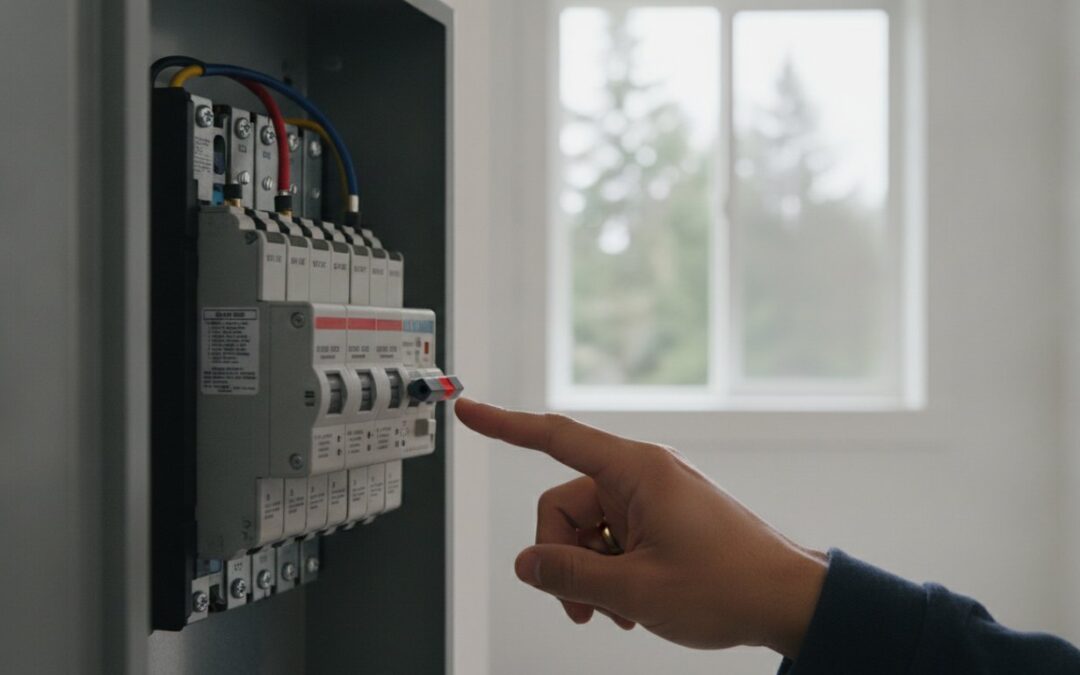
You’ve just sat down to relax after a long day when the lights flicker and the power cuts out again. You trudge to the garage, flip the switch, and think the problem is solved, only to have it happen again ten minutes later. It is incredibly frustrating when your circuit breaker keeps tripping, but that repetitive click is actually your home’s way of protecting you from a potential fire hazard. With the median age of homes now reaching 44 years, many older electrical systems are simply struggling to keep up with the demands of modern appliances and technology.
We know how unsettling it feels to lose power to your kitchen or home office without warning, and the anxiety about hidden electrical dangers is completely valid. This guide will help you identify exactly why your system is struggling and show you how to safely troubleshoot the issue. You will learn the difference between a simple overloaded circuit and a more serious ground fault. We will also help you determine if you need a minor repair or if a professional panel upgrade is the best way to ensure your home stays safe and powered for the long term.
Key Takeaways
- Understand that a tripping breaker is a deliberate safety feature designed to prevent electrical fires by cutting power before wires overheat.
- Identify the common reasons why your circuit breaker keeps tripping, ranging from simple circuit overloads to more hazardous short circuits.
- Follow a safe, methodical troubleshooting process to isolate faulty devices and determine if the issue is a specific appliance or your home’s wiring.
- Recognize when a recurring trip is a sign of an aging electrical panel, which typically requires a professional assessment after 25 to 30 years of service.
- Learn how advanced diagnostic tools like thermal imaging can find hidden “hot spots” in your walls that standard visual inspections might miss.
Why Your Circuit Breaker Keeps Tripping: Understanding Your Home’s Safety Guard
Think of your home’s electrical system as a busy highway. If too many cars try to merge at once, or if a collision occurs, the traffic has to stop to prevent a larger disaster. This is exactly how your electrical panel operates. When a circuit breaker keeps tripping, it isn’t trying to be a nuisance. It is acting as a deliberate “weak link” in your wiring. What is a circuit breaker? Essentially, it is an automatic safety switch designed to fail safely before your wires get hot enough to ignite a fire.
The breaker has a two-fold responsibility. It monitors for overloads, which happen when you plug in too many high-draw appliances and create gradual, dangerous heat. It also guards against short circuits, which are sudden, massive surges of electricity. Since 1952, our team has helped Renton families understand that a tripping breaker is a feature, not a bug. It is the first line of defense between a minor electrical glitch and a house fire.
A common mistake homeowners make is entering the “Reset Loop.” This happens when you repeatedly flip a breaker back on without investigating why it turned off. If the circuit breaker keeps tripping, it has detected a legitimate hazard. Forcing it to reset multiple times can damage the internal mechanism or lead to a catastrophic failure. It is vital to distinguish between a simple nuisance trip and a genuine safety emergency before you touch that panel again.
The Anatomy of a Trip: What Happens Inside the Panel
Inside the breaker, two different mechanisms work to keep you safe. A bimetallic strip handles overloads by bending as it heats up, eventually triggering the switch. An electromagnet handles short circuits by pulling the internal contacts apart instantly during a surge. When a trip occurs, the handle usually lands in a “middle” position. If you try to reset it and the handle feels “spongy” or refuses to stay in the “On” position, the internal safety lock is engaged because the problem hasn’t been fixed.
Safety First: When to Stop Troubleshooting and Call a Pro
Not every electrical issue is a DIY project. You should stop troubleshooting immediately if you notice red flags like a faint burning smell, buzzing or popping sounds, or charred marks on the breaker itself. A “hot” breaker handle is a particularly serious sign, as it often points to a loose connection on the bus bar. If the breaker trips immediately upon reset every single time, it indicates a critical fault. In these cases, professional troubleshooting is the only way to ensure your home remains a safe environment for your family.
The Four Main Culprits Behind a Tripping Breaker
If your circuit breaker keeps tripping, the cause usually falls into one of four categories. Understanding how circuit breakers work helps you visualize these spikes in current and why your panel reacts the way it does. Most issues are related to how we use power, but some point to deeper safety concerns within your walls.
- Circuit Overload: This is the most common reason for a trip. It happens when you demand more electricity than a specific circuit is rated to handle. Think of it like a pipe trying to carry too much water; eventually, the system shuts down to prevent the “pipe” from bursting.
- Short Circuit: A more serious issue occurring when a “hot” wire touches a “neutral” wire. This creates a sudden, massive drop in resistance and a violent spike in current. It often results in a loud pop or a visible spark at the outlet.
- Ground Fault: This is a specific type of short circuit where the electricity touches the ground wire or a grounded part of the system, such as a metal box. These are particularly dangerous in areas where water is present.
- Arc Fault: These are caused by loose connections or damaged wires that allow electricity to “jump” or arc across a gap. This creates intense heat that can ignite surrounding insulation without necessarily drawing enough current to trip a standard breaker.
Identifying which of these is happening is the first step toward a permanent fix. If you find that your power cuts out every time you use a specific appliance, you are likely dealing with an overload. However, if the circuit breaker keeps tripping immediately after a reset with nothing plugged in, you probably have a short circuit or a ground fault that requires a professional electrical repair and troubleshooting visit to locate.
Modern Loads on Old Wiring: EV Chargers and Home Offices
Many homes in our community were built when a “heavy load” was just a refrigerator and a few light bulbs. Today, installing a Level 2 EV charger on an older 100-amp service can push a panel to its absolute limit. High-end gaming PCs and laser printers in a home office can also draw significant power, often on the same circuit as bedroom lights. Daisy-chaining power strips to accommodate these gadgets is a recipe for a constant circuit overload and a potential fire hazard. Homeowners in the area dealing with these modern demands should consider an electrical panel upgrade in Kent, WA to ensure their system can safely handle today’s high-draw appliances and technology.
Ground Faults and GFCI Safety
In wet environments like Des Moines or Burien, moisture is a frequent culprit for ground faults. A typical regional rainstorm can easily trigger a trip if an outdoor outlet has a degraded seal. The 2023 National Electrical Code now requires GFCI protection for all outdoor outlets rated 60 amperes or less to prevent accidental shocks. Regularly testing the “Reset” and “Test” buttons on your GFCI outlets ensures they are ready to cut power the moment moisture creates a dangerous path for electricity.
Safe Troubleshooting: How to Identify the Problem Step-by-Step
When your circuit breaker keeps tripping, your first instinct might be to just flip it back on and hope for the best. However, a methodical approach is the only way to ensure you aren’t ignoring a serious fire hazard. At Reinhart Electric & Service, Inc., we recommend a calm, step-by-step diagnostic process to help you regain power safely. This system helps you determine if you have a simple equipment issue or a deeper wiring problem that requires a professional touch.
- Step 1: Identify the Affected Area. Go to your electrical panel and look for the breaker handle that isn’t aligned with the others. It will usually be in a “middle” or “neutral” position. Take a moment to note which rooms or specific outlets have lost power.
- Step 2: Clear the Circuit. Walk through those dead rooms and unplug every single device. Don’t forget to turn off every light switch on that specific line. This ensures the circuit is “clean” before you attempt a reset.
- Step 3: Perform a Full Reset. Breakers don’t just flip back to “ON.” You must firmly push the handle to the “OFF” position until you hear or feel a distinct click. Only then should you flip it back to “ON.”
- Step 4: Conduct a Stress Test. Gradually reintroduce your electronics one by one. Start with the lights, then move to smaller devices. Watch and listen carefully as you plug each item back in to see what triggers the next trip.
If the circuit breaker keeps tripping even when absolutely nothing is plugged in and all lights are off, you can stop right there. This is a clear indicator of a fault within the breaker itself or the permanent wiring inside your walls. In these cases, continuing to reset the breaker can lead to significant damage to your panel’s bus bar.
Isolating the “Killer” Appliance
Sometimes the problem isn’t your home; it’s what you’re plugging into it. If the breaker only trips when a specific device starts up, you’ve found your culprit. High-draw items like old space heaters or aging refrigerator compressors are common offenders. We also see many issues with cheap LED drivers or power adapters that “leak” current. If your breaker holds until the moment you turn on the vacuum or the toaster, that device likely has an internal short or is simply too much for that circuit to handle.
Visual Inspection Tips for Homeowners
While you are walking through the rooms, keep an eye out for physical red flags. Look for discolored outlet faceplates, which often appear brown or melted. Check your appliance cords for frayed insulation or melted prongs. If an outlet feels “loose” and the plug wiggles easily, it can create a poor connection that leads to internal heat. An Arc Fault is a dangerous spark that can occur behind walls without tripping a standard breaker. If you see any signs of scorching or smell a faint metallic “ozone” scent, leave the breaker off and give us a call. For homes in Auburn built between the 1950s and 1980s, these warning signs often indicate the need for faulty wiring repair in Auburn by a licensed professional who understands local code requirements.
When a Reset Isn’t Enough: Signs of Aging Panels and Code Issues
Sometimes, your troubleshooting steps don’t reveal a faulty appliance or a clear overload. If your circuit breaker keeps tripping despite a light load, the problem is likely the hardware itself. Most standard circuit breakers have a reliable lifespan of about 25 to 30 years. After this point, the internal components can fatigue and lose their ability to function correctly. This is a common reality for many homeowners in our area, as nearly half of owner-occupied homes in the US were built before 1980.
We often see the “Weak Spring” syndrome in these older systems. The internal mechanism loses its tension and becomes hypersensitive. This causes the breaker to flip even when you aren’t exceeding the amperage limit. Since Reinhart Electric & Service, Inc. started serving the community in 1952, we’ve seen how the housing stock in Renton and Kent has evolved. A panel installed in the mid-century simply wasn’t built for the 2026 electrical demands of a modern family. Adding new circuits in Auburn or Maple Valley today often requires upgrading to AFCI or GFCI breakers to meet current safety codes, which older panels might not accommodate.
Dangerous Legacy Panels in South King County
Certain brands like Federal Pacific (FPE) and Zinsco are notorious in the South King County area. These panels have a high failure rate; they often fail to trip during an actual surge, which creates a massive fire hazard. We also find “Split-Bus” panels in many 1960s and 70s homes in Burien and Tukwila. These lack a single main disconnect, making them non-compliant with modern safety standards. Replacing these legacy systems often improves your insurance eligibility and provides significant peace of mind for your family. If your Auburn home still has one of these outdated systems, a qualified contractor specializing in faulty wiring repair in Auburn, WA can assess your panel and bring it up to current 2026 NEC standards.
Expanding Capacity for the Future
Modern electric living requires more than the 100-amp service that was standard in older homes. Upgrading to a 200-amp service provides the headroom needed for an EV charger installation or whole-house surge protection. It also allows for the seamless integration of a generator transfer switch, ensuring your home in Des Moines or Covington stays functional during a storm. If your circuit breaker keeps tripping and your panel is over three decades old, it is time for a professional electrical panel upgrade in Kent, WA or a service change to ensure your home remains safe.
Professional Troubleshooting: The Reinhart Electric & Service, Inc. Difference
If your circuit breaker keeps tripping, you’ve likely tried the basic reset steps. While those steps help identify obvious appliance issues, a professional diagnostic digs deeper to find the root cause. We don’t believe in guesswork when it comes to your family’s safety. Our team at Reinhart Electric & Service, Inc. approaches every call with a methodical, service-first attitude that prioritizes transparency and long-term reliability.
We utilize advanced diagnostic equipment to identify problems that aren’t visible to the naked eye. While we previously discussed visual signs like scorched outlets, our technicians use thermal imaging to find “hot spots” buried inside your walls. These temperature spikes often point to loose connections or damaged insulation that could lead to a fire. Our deep roots in neighborhoods across Renton, Kent, and Auburn give us a unique understanding of the local electrical quirks found in homes throughout our community.
Why DIY Electrical is Never Worth the Risk
Taking the cover off an electrical panel is a task best left to professionals. The risk of an arc flash or accidental electrocution is high, even if you think the main power is off. Beyond the physical danger, improper DIY fixes can lead to significant financial headaches. An unpermitted or incorrect repair can void your home insurance policy if an electrical fire occurs. Choosing a signature safety audit from Reinhart Electric & Service, Inc. ensures your system is compliant and your coverage remains intact.
Schedule Your Diagnostic Visit Today
You deserve a power system that you don’t have to think about. When you book a visit, we arrive on time and provide a clear, jargon-free explanation of our findings. We’ll show you exactly why your circuit breaker keeps tripping and offer a range of solutions, from a simple repair to a full panel modernization. Get your circuit breaker fixed by the Renton experts at Reinhart Electric & Service, Inc. and rest easy knowing your home is in steady, capable hands.
Secure Your Home’s Electrical Future
A home that stays powered is a home that stays safe. You now know that when your circuit breaker keeps tripping, it’s actually doing its job by preventing heat from building up in your walls. By following a methodical troubleshooting process and recognizing the signs of an aging panel, you can take control of your electrical system’s health. Whether you’re dealing with a simple equipment overload or an outdated panel that can no longer handle modern technology, addressing the root cause is the only way to ensure long-term peace of mind.
Reinhart Electric & Service, Inc. has served the Renton community with integrity since 1952. Our licensed, bonded, and insured experts specialize in navigating the unique challenges of King County’s older housing stock. We provide 24/7 emergency electrical repairs and troubleshooting to keep your family protected at any hour. Don’t guess with your home’s safety-Schedule a professional electrical diagnostic with Reinhart Electric & Service, Inc. today. We are here to provide the steady, honest guidance you need to keep your lights on and your home secure.
Frequently Asked Questions
Why does my circuit breaker trip even when nothing is plugged in?
If your breaker trips with no load, you likely have a short circuit or a ground fault within your home’s permanent wiring. It could also mean the breaker itself has failed internally. Since there’s no appliance to unplug, this usually points to a wire that has come loose or insulation that has been damaged. It’s best to leave the breaker off and call for a professional diagnostic to prevent a potential fire.
Is it dangerous if a circuit breaker trips once?
A single trip isn’t always an emergency; it’s often proof that the safety mechanism is working correctly. It likely detected a brief overload or a minor surge. However, you should still investigate what was running at the time. If the circuit breaker keeps tripping or you notice a burning smell, that one-time event was actually a warning sign of a much larger electrical hazard.
How many times can I reset a circuit breaker before it breaks?
There isn’t a specific number of resets, but every trip causes mechanical wear and internal heat. Repeatedly forcing a reset against a fault can damage the breaker’s internal spring or the panel’s bus bar. If a breaker won’t stay reset on the first or second try, stop immediately. Continual resetting can lead to a catastrophic failure that requires a much more expensive panel repair.
Can a bad light bulb cause a circuit breaker to trip?
Yes, a failing light bulb can cause a trip if the filament breaks in a way that creates a momentary short circuit. This is especially common with older incandescent bulbs. When the bulb “blows,” it can draw a sudden spike of current that exceeds the breaker’s limit. If your power cuts out the moment you flip a light switch, try replacing the bulb before assuming there’s a deeper wiring issue.
How much does it cost to replace a single circuit breaker in Renton?
The cost to replace a single breaker depends on the type of breaker your panel requires and the complexity of the installation. Standard breakers are generally more affordable than specialized AFCI or GFCI models required by modern safety codes. While prices for parts and labor vary across King County, we recommend getting a professional assessment to ensure the replacement is performed safely and up to current standards.
What is the difference between a fuse and a circuit breaker?
A fuse is a one-time safety device that melts to stop electricity, while a breaker is a resettable switch. Fuses were standard in homes built before the 1960s but are less common today. While both protect your home from overloads, breakers are more convenient for modern living. If you still have a fuse box, it’s often a sign that your electrical system is overdue for a modernization.
Why does my breaker trip only when the AC or microwave turns on?
These appliances require a high “inrush current” to start their motors or magnetrons. If your circuit breaker keeps tripping when they kick in, the circuit is likely already near its maximum capacity. This is a common issue in older Renton homes where the kitchen or HVAC system shares a line with other outlets. Moving these high-draw appliances to a dedicated circuit is usually the most reliable fix.
Can a heavy rainstorm in Seattle cause my breakers to trip?
Yes, moisture is a frequent cause of ground faults in the Pacific Northwest. Heavy rain can seep into outdoor outlets, light fixtures, or underground wiring that isn’t perfectly sealed. When water creates a path between a hot wire and the ground, the GFCI or breaker will trip instantly to prevent a shock. Ensure all your outdoor covers are weatherproof and in good condition to avoid these weather-related outages.