
What if the vintage charm of your Seattle home is the very thing preventing you from getting a modern insurance policy? For many homeowners in King County, the discovery of century-old electrical systems isn’t just a historical curiosity; it’s a sudden barrier to safety and financial security. If you’ve received a notice from your insurer or realized you can’t plug in a new EV charger, you know the stress. A professional knob and tube wiring replacement Seattle project is no longer just a renovation. It’s a necessity for staying compliant with 2026 electrical codes and keeping your home protected.
We understand that the thought of opening up your lath and plaster walls feels overwhelming. It’s frustrating to feel like your home is falling behind the times while your power needs only grow. This guide will show you how to modernize your electrical system to meet the latest 2026 National Electrical Code requirements without losing your peace of mind. We’ll walk through the current costs in the Seattle market, explain how to navigate insurance demands, and show you how to qualify for state rebates like the HEAR program. By the end, you’ll have a clear roadmap to a safer, more efficient home that’s ready for the future.
Key Takeaways
- Learn why aging insulation and improper DIY additions make vintage wiring a major fire risk in 2026.
- Discover how a professional knob and tube wiring replacement Seattle project can lower insurance premiums and prevent policy cancellations.
- Understand the step-by-step process of auditing your system and navigating the latest King County permitting requirements.
- Find out why upgrading to a 200-amp panel during your rewire is the smartest way to prepare for EV chargers and heat pumps.
- See why local experience is vital when working behind the delicate lath and plaster walls of Seattle’s historic districts.
Understanding Knob and Tube Wiring in Seattle Homes
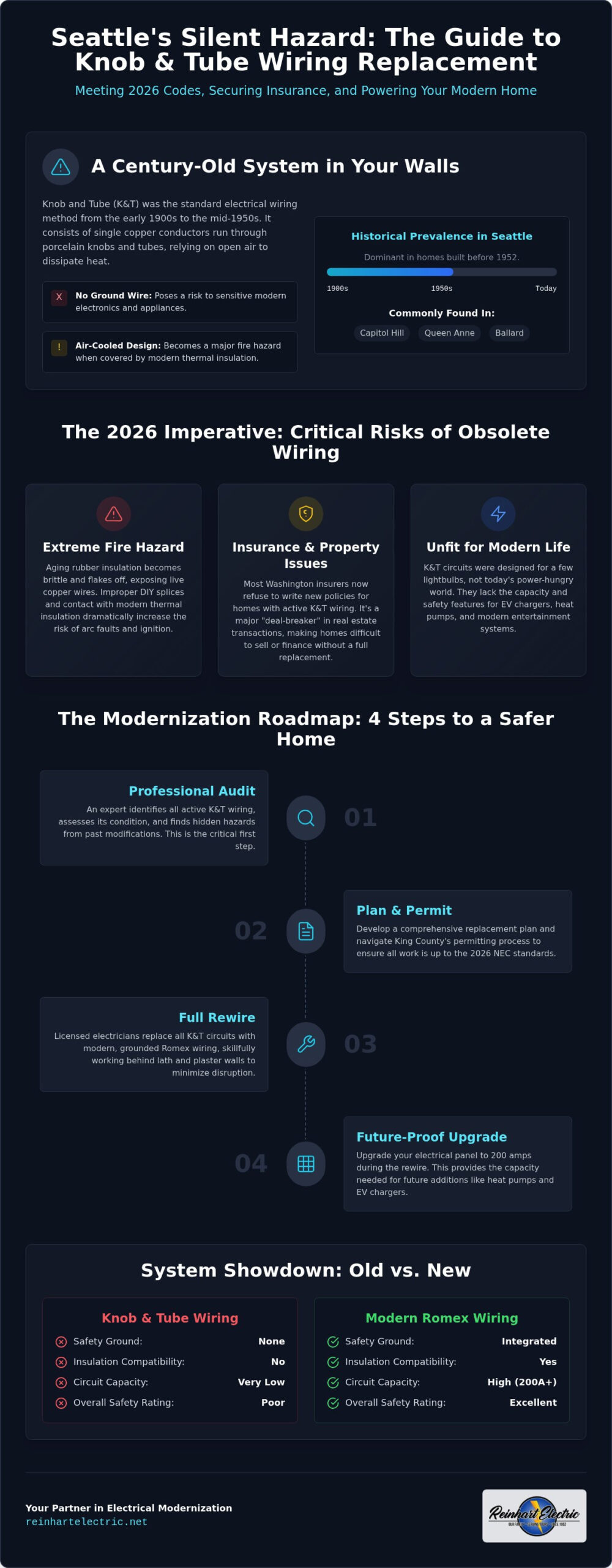
Seattle’s history is etched into its architecture. During the city’s rapid expansion in the early 1900s, builders relied on the standard of the time. Between 1900 and 1910, the city’s population nearly tripled, fueling the development of our most iconic residential districts. This system consists of single-conductor copper wires running through ceramic tubes and supported by porcelain knobs. If you are researching What is knob and tube wiring? you will find it was the gold standard until the mid-1950s. Many homeowners now face the reality of a knob and tube wiring replacement Seattle project as these systems reach the end of their safe lifespan.
You can often identify these systems by looking in your attic or crawlspace. Look for white porcelain cylinders (knobs) nailed to the sides of joists. You might also see thick ceramic sleeves (tubes) where wires pass through wooden beams. Unlike modern plastic-sheathed cables, these wires run separately and lack a protective outer jacket. If you see wires disappearing into a wall through a ceramic tube, you’ve found the signature of a vintage system. It served the city well for decades, but it was designed for a world with only a few light bulbs per room.
The Anatomy of a Vintage Electrical System
Porcelain insulators were designed for a specific job: heat dissipation. These ceramic components kept the hot wires away from combustible wooden framing. Open air space acted as the primary insulator, allowing heat to dissipate naturally before it could damage the surrounding structure. However, the biggest drawback is the lack of a grounding wire. This absence makes the system risky for sensitive modern electronics and power-hungry appliances. It simply wasn’t built for the digital age.
Seattle Neighborhoods Most Affected
Walk through Capitol Hill, Queen Anne, or Ballard, and you’ll see the legacy of this era. These neighborhoods grew fastest when knob and tube was king. These homes often feature lath and plaster walls, which are beautiful but make electrical access difficult. As Seattle entered the 1950s, builders transitioned to “rag wire,” an early version of modern cable. This shift occurred because the post-war boom brought an explosion of new household appliances that required more power than old circuits could handle safely. If your home was built before 1952, a knob and tube wiring replacement Seattle audit is essential to see how much of the original system remains hidden. Understanding what’s behind your walls is the first step toward a safer home.
The Risks: Why Replacement is a Priority in 2026
The biggest threat to a vintage home isn’t the original design, but how time and human interference have changed it. Over the last century, the rubberized cloth insulation on these wires has faced constant environmental stress. In Seattle attics, decades of seasonal temperature shifts turn this once-flexible coating into a brittle, flaky dust. When the bare copper is exposed, the risk of an arc flash or fire increases significantly. Many homeowners only discover this when they go to install a new light fixture and find the wiring literally crumbling in their hands.
Modified systems present an even greater danger. In the decades before modern safety standards, it was common for DIY-minded owners to splice new outlets or light switches into existing knob and tube circuits. These “taped” connections often fail because the old wires were never designed to handle the load of modern electronics. If you suspect your home has these patchwork fixes, a professional electrical safety audit can identify hidden hazards before they become emergencies. It’s a simple step that provides a clear picture of what’s happening behind your walls.
The Fire Hazard of Thermal Insulation
Modern energy efficiency upgrades often clash with vintage electrical systems. When homeowners blow fiberglass or cellulose insulation into their attics, they inadvertently create a fire trap. Knob and tube wiring relies on open air space to stay cool. Burying these wires in thermal insulation prevents heat from escaping, which can lead to the “hot joint” phenomenon. This occurs when connections overheat to the point of ignition. While modern Romex is designed to be surrounded by insulation, K&T failure rates are substantially higher when the system is smothered and unable to breathe.
Insurance and Real Estate Implications
In the 2026 Seattle real estate market, active knob and tube is a deal-breaker. Most major Washington state insurance carriers now refuse to issue new policies for homes with this wiring. Some may offer a 30-day grace period to complete a knob and tube wiring replacement Seattle project, but many simply deny coverage outright. This makes it nearly impossible for buyers to secure a mortgage. Without insurance, the sale cannot move forward.
Beyond just passing an inspection, replacing these circuits is a financial investment. Insurance companies often require a signed certificate of replacement from a licensed electrician to maintain or lower your premiums. By modernizing your home, you eliminate the threat of electrical shock in wet areas like kitchens and bathrooms, where the lack of a grounding wire is most dangerous. A full knob and tube wiring replacement Seattle ensures your home meets modern standards while protecting your family and your equity.
The Replacement Process: What to Expect
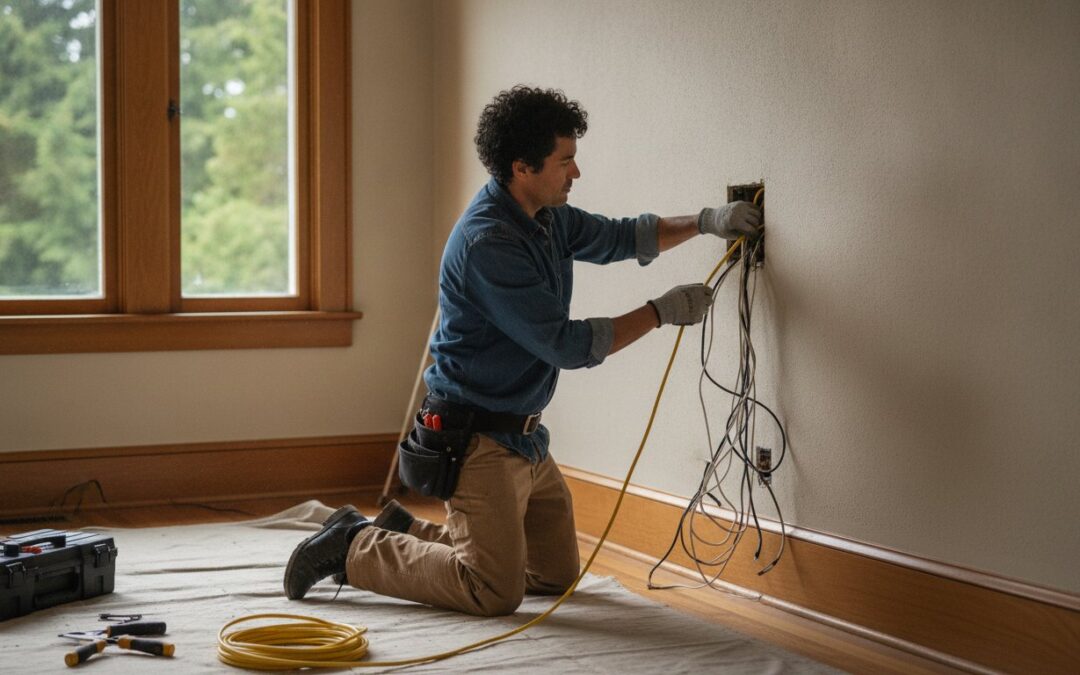
Many homeowners worry that a full rewire means gutting their beautiful historic home. This isn’t the case. A professional knob and tube wiring replacement Seattle project follows a methodical, non-invasive path. We treat your home with the respect it deserves, using techniques honed over decades of working with local architecture. The process is surgical, not destructive. We focus on modernizing your infrastructure while preserving the character of your lath and plaster walls.
The work begins with a comprehensive safety audit. We map every circuit to identify which parts of the system are still active and which have been abandoned over the years. Once the layout is clear, we handle the permitting process with the City of Seattle or King County. In 2026, local regulations require specific documentation for knob and tube removal to ensure the project meets the latest fire safety codes. This permit is your proof of compliance, which is essential when you present the final certification to your insurance provider.
Our experts use a specialized “fishing” technique to run new cables. By using flexible rods and existing wall cavities, we pull new wires from the attic or crawlspace to each outlet and switch. This approach avoids the massive demolition often associated with remodeling. It’s a precise way to bring your home into the 21st century without a heavy-duty construction mess.
Upgrading to Modern Romex Wiring
We replace outdated copper with modern Romex, which is a non-metallic sheathed cable that includes a dedicated grounding wire. This standard is required for safety in 2026, especially in high-draw areas like kitchens and laundry rooms where appliances need stable power. While a partial rewire only replaces accessible sections of the system, a full rewire removes every inch of vintage wire to ensure your entire home is grounded and protected from arc faults.
Minimizing Disruption in Historic Homes
We use your home’s attic and crawlspace as the primary “highways” for new wiring. This strategy keeps most of the work out of your living areas. While we may need to make small, localized holes to access specific points, these are typically the size of a light switch and are easily patched. For a typical Seattle bungalow, a full knob and tube wiring replacement Seattle project usually takes between 5 and 10 days to complete. We work efficiently to restore your power and your peace of mind as quickly as possible.
Modernizing Your Home Beyond the Wires
Replacing outdated wiring is about more than just removing a fire hazard. It is a vital opportunity to bring your home’s infrastructure into the modern era. Most vintage Seattle homes were built when the average household used very little electricity. Today, with high-definition televisions, multiple computers, and smart appliances, the demand is significantly higher. A full knob and tube wiring replacement Seattle project usually goes hand-in-hand with an electrical panel upgrade. If your home still operates on a 60-amp or 100-amp service, you will likely need to move to a 200-amp panel to handle these loads safely.
Modern panels also allow for the installation of whole-house surge protection. This technology acts as a shield for your expensive electronics, preventing damage from external power spikes that are common during Pacific Northwest storms. Smart home integration is another major reason to rewire. Most modern smart switches and dimmers require a neutral wire to function. Knob and tube systems often lack this essential third wire at the switch box. Installing modern Romex ensures your home is ready for automated lighting, advanced climate control, and other digital upgrades.
EV Chargers and High-Load Appliances
You cannot safely run a Level 2 EV charger on an old knob and tube circuit. These chargers pull a significant amount of continuous power that would quickly overheat vintage wires and potentially lead to a fire. When we perform a knob and tube wiring replacement Seattle, we look ahead to your future needs. This includes installing dedicated branch circuits for kitchen remodels, electric heat pumps, and electric vehicle charging stations. We focus on providing your system with the capacity it needs to handle high-load devices without tripping breakers or stressing your infrastructure.
GFCI and AFCI Safety Upgrades
Electrical safety technology has advanced tremendously since the mid-century era. During a rewire, we install Arc Fault Circuit Interrupters (AFCI). These specialized breakers detect dangerous electrical arcs that could cause a fire and shut down the circuit instantly. Under the 2026 National Electrical Code, AFCI protection is now required for most residential rooms. We also install Ground Fault Circuit Interrupters (GFCI) in wet areas like kitchens, bathrooms, and laundry rooms. These devices prevent electrical shock by cutting power immediately if they detect a current leak. This level of comprehensive protection is simply not possible with a vintage setup.
If you are ready to prepare your home for the next generation of technology, schedule an EV charger readiness consultation with our team today. We can help you plan a system that is safe, efficient, and fully compliant with modern standards.
Choosing a Seattle Electrician for Your Rewire
Selecting the right professional to handle your home’s electrical “nervous system” is a decision that impacts your safety for decades. In a city filled with historic architecture, you need an expert who understands the unique challenges of Pacific Northwest construction. A general contractor might not have the specialized tools or patience required for working behind delicate 100-year-old walls. When you look for a team to handle your knob and tube wiring replacement Seattle, prioritize local experience and a proven track record in King County.
Reinhart Electric has been a steady presence in the community since 1952. We were working on these systems when they were still the industry standard, which gives us a unique perspective on how to modernize them safely. Our 70 plus years of history serves as proof that we understand exactly what is behind your lath and plaster. We believe in a neighborly approach that focuses on transparency and long-term reliability rather than high-pressure sales or low-ball bids that lead to hidden costs later.
Before hiring anyone, verify that they carry the proper licenses and meet King County insurance requirements. This protects you from liability and ensures the work is performed to the highest professional standards. A trustworthy electrician will be happy to provide this documentation along with clear, upfront pricing that reflects the true scope of the project.
Questions to Ask Your Rewiring Contractor
You should feel fully supported throughout the entire process. Start by asking if the contractor handles the entire permitting and inspection process with the City of Seattle. This is vital for ensuring your home meets 2026 codes. You should also ask specifically how they handle wall access. An experienced specialist uses the “fishing” technique to minimize damage to your historic interiors. Finally, ensure they can provide a formal certificate of completion. You will need this document to satisfy your insurance provider and maintain your coverage.
The Reinhart Electric Difference
We treat every home as if it were our own. As a family-owned business, we apply traditional values like honesty and hard work to every technical task. We also provide 24/7 availability for emergency electrical needs, giving you a calm and steady hand to rely on at any hour. Our goal is to reduce your anxiety by providing dependable, expert service that stands the test of time. We don’t just pull wires; we build relationships based on trust and safety.
Ready to secure your home’s future? Schedule your knob and tube safety audit with Reinhart Electric today. We’ll provide the clear, expert guidance you need to complete your knob and tube wiring replacement Seattle project with total confidence.
Secure Your Home’s Legacy and Safety
Your vintage Seattle home is more than just a building; it’s a piece of history that deserves the highest level of protection. Modernizing your electrical system is the most effective way to eliminate fire hazards and ensure you stay fully covered by your insurance provider. By investing in a knob and tube wiring replacement Seattle project, you aren’t just meeting 2026 safety codes. You’re also preparing your home for modern power demands, from smart technology to electric vehicle charging.
Reinhart Electric has been a trusted partner for King County homeowners since 1952. Our A+ rated team brings decades of specialized experience to every project, ensuring your historic walls are treated with respect. We also provide 24/7 emergency service so you’re never left without support. Don’t let outdated wiring compromise your peace of mind or your property value.
Contact Reinhart Electric for a Professional Wiring Inspection and take the first step toward a safer home today. We’re ready to provide the honest, neighborly guidance you need to move forward with confidence.
Frequently Asked Questions
Is knob and tube wiring illegal in Seattle?
No, knob and tube wiring isn’t illegal to have in your Seattle home, but it’s prohibited for new construction. The Seattle Electrical Code specifically regulates how these existing systems are maintained. You can’t add new outlets to these circuits or cover them with thermal insulation. While the city doesn’t force removal, most homeowners choose replacement to meet modern safety standards and satisfy current insurance requirements.
Can I just replace the visible knob and tube wiring in my attic?
You can replace visible sections, but this is rarely recommended as a standalone solution. Hidden wiring behind lath and plaster walls often remains active and poses the same risks as the wires in your attic. A partial replacement might satisfy a specific safety concern, but most insurance carriers require a full knob and tube wiring replacement Seattle project to issue or maintain a policy for your property.
How much does it cost to replace knob and tube wiring in a 2,000 sq ft home?
Costs for a full rewire vary significantly based on your home’s layout and accessibility. Factors like the number of stories, the presence of lath and plaster, and the condition of your crawlspace all impact the final investment. Because every historic home in the South King County area is unique, we recommend a professional on-site audit to provide an accurate estimate tailored to your specific infrastructure and power needs.
Will insurance companies cover a house with knob and tube wiring in 2026?
Most major insurance carriers in Washington state won’t issue new policies for homes with active knob and tube systems in 2026. Some companies might offer a temporary 30-day window to complete a replacement after closing. If you do find a specialty carrier willing to provide coverage, you should expect significantly higher premiums compared to a home with modern, grounded Romex wiring.
How long does a full home rewiring take?
A typical project for a Seattle-area bungalow usually takes between 5 and 10 business days. Larger or more complex multi-story homes may require additional time. We work methodically to map circuits and pull new wires through existing cavities, which helps us stay on schedule while minimizing the impact on your daily routine. We’ll provide a clear timeline before any work begins in your Renton or Kent home.
Can I stay in my house during the knob and tube replacement process?
Yes, you can typically stay in your home throughout the process. Our team works circuit by circuit to ensure you have power in essential areas at the end of each day. We take great care to protect your belongings and maintain a clean workspace. While there’ll be some noise and activity, we strive to make the transition as smooth and stress-free as possible for your family.
Does replacing the wiring increase my Seattle home’s value?
Yes, a professional knob and tube wiring replacement Seattle project adds significant value by making your home insurable and market-ready. In a competitive real estate market like Tukwila or Des Moines, buyers are often wary of outdated electrical systems. Providing a certificate of completion proves the home meets 2026 safety codes, which can speed up a sale and justify a higher asking price for your property.
What is the difference between knob and tube and aluminum wiring?
These are two different types of outdated systems. Knob and tube uses copper wires supported by porcelain insulators and was common until the 1950s. Aluminum wiring was used primarily in the late 1960s and early 1970s as a cheaper alternative to copper. Both systems pose unique fire risks when they age or are modified improperly, and both typically require professional remediation to meet modern safety standards.