
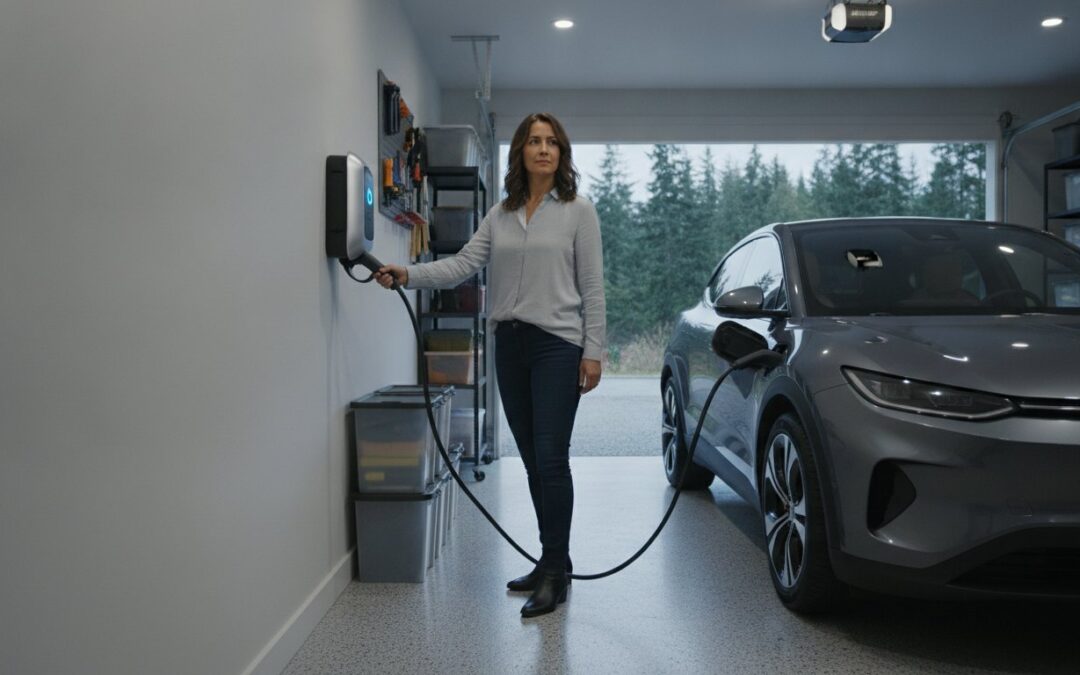
Is your standard wall outlet actually the biggest bottleneck in your morning routine? Many new EV owners in Kent quickly discover that “trickle charging” from a regular socket rarely provides enough range for a full day of driving. It is a common frustration, and the fear of overloading an older electrical panel can make the transition to electric feel more complicated than it needs to be. Establishing a proper electric car charger home setup is about more than just speed; it is about ensuring your home remains a safe and reliable environment for your family.
We believe that upgrading your home should be a transparent and stress-free process. This guide provides a clear roadmap for your installation, from understanding the latest smart charging regulations to choosing a Level 2 station that fits your lifestyle. You will learn how to move beyond the limitations of a standard outlet and gain the confidence that your new charging system is installed to the highest professional standards. We are here to help you master your home power ecosystem with the steady hand of an expert who values safety and local reliability above all else.
Key Takeaways
- Understand the speed differences between Level 1 and Level 2 charging to choose the right power level for your daily commute.
- Learn why a 200-amp electrical panel is the modern standard for a safe and efficient electric car charger home setup.
- Compare the long-term benefits of hardwired charging stations against the flexibility of NEMA 14-50 plug-in models.
- Discover how whole-house surge protection safeguards your electric vehicle’s sensitive battery and onboard computer from power spikes.
- Ensure your installation meets Washington State L&I requirements to protect your property value and maintain your homeowner’s insurance coverage.
Understanding Your Charging Options: Level 1 vs. Level 2
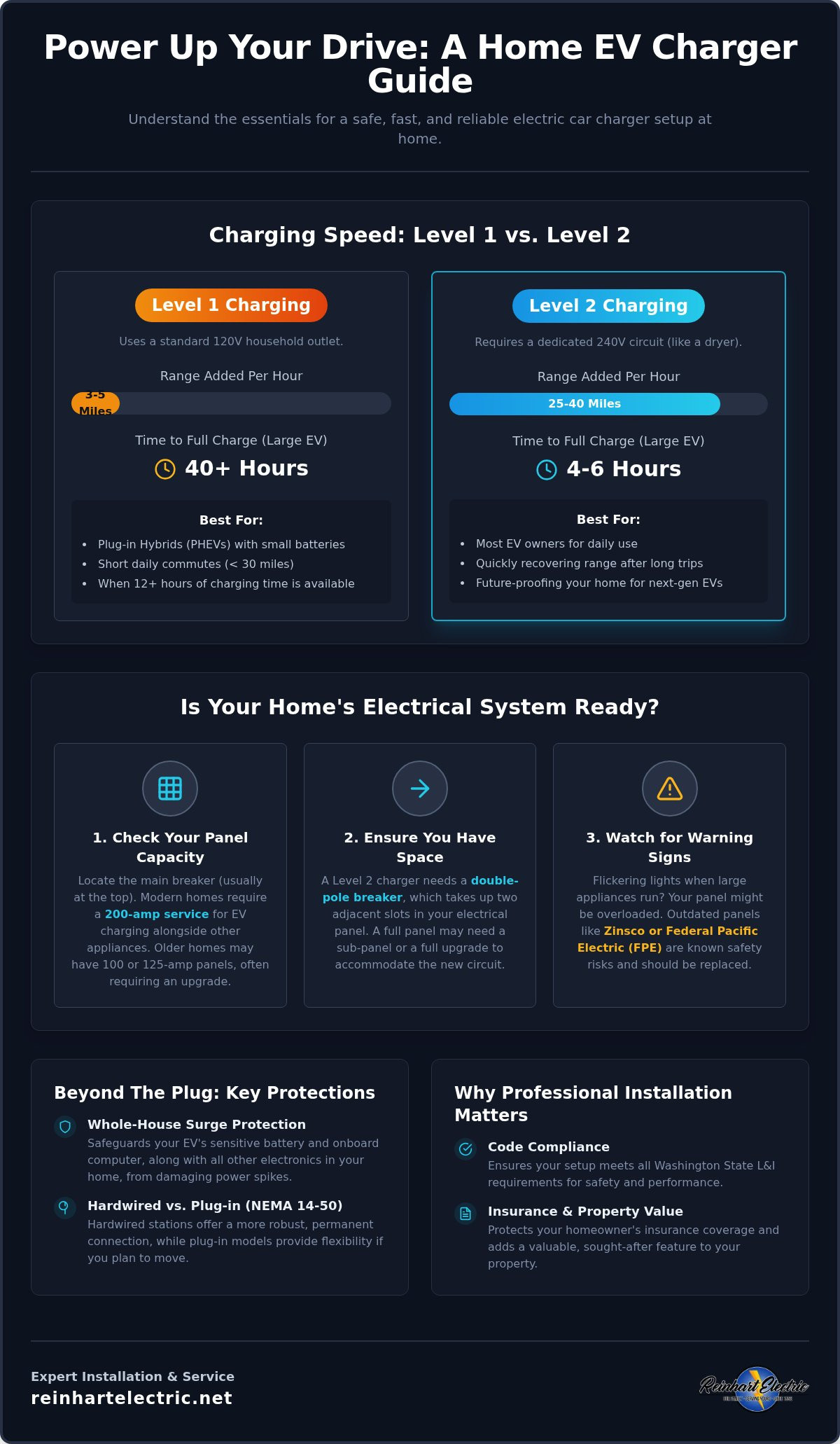
Planning your electric car charger home setup begins with a simple choice between two primary power levels. Most electric vehicles come with a basic Level 1 cord set that plugs into a standard 120-volt household outlet. While this is convenient, it is the slowest way to add range. Level 2 charging uses 240-volt power, which is the same type of heavy-duty circuit your clothes dryer or electric oven requires. Because Level 2 stations deliver significantly more electricity, they are the preferred choice for most homeowners who want to start every morning with a full battery.
Think of the difference in terms of water delivery. Level 1 charging is like a slow drip from a garden hose; it eventually fills the bucket, but it takes a long time. Level 2 is more like a firehose. By providing a much higher volume of electricity in a shorter window, it ensures your car is ready to go when you are. While a Level 1 connection might only add 3 to 5 miles of range per hour, a professionally installed electric vehicle charging station running on Level 2 can add 25 to 40 miles of range in that same hour.
When is Level 1 Charging Enough?
Level 1 charging isn’t obsolete, but it serves a very specific niche. It is often a practical solution for drivers of plug-in hybrids (PHEVs) because these vehicles have much smaller batteries that can reach 100% capacity overnight. If your daily commute is under 30 miles and you have 12 or more hours of “dwell time” where the car stays parked, the standard outlet might suffice. However, Level 1 is less efficient than Level 2. More energy is lost to heat during the long charging process, which can lead to slightly higher utility costs over time without the benefit of speed.
The Case for Level 2 Home Charging
As we look toward 2026 EV models, many of which now boast ranges of 300 miles or more, Level 1 charging simply cannot keep up. Attempting to charge a large-battery SUV from empty using a standard outlet could take over 40 hours. A Level 2 electric car charger home setup solves this by “topping off” even the largest batteries in just 4 to 6 hours. This speed provides a massive safety net; if you return home from a long trip with a low battery, you can still head back out for an evening errand with confidence. Before committing to any hardware, reviewing a comprehensive home electric vehicle charging station checklist for 2026 can help you evaluate your panel capacity, connector standards, and available utility rebates before a single wire is run.
- Safety and Reliability: Dedicated Level 2 circuits reduce the strain on your home’s general-purpose outlets.
- Smart Scheduling: Most Level 2 stations allow you to schedule charging for middle-of-the-night off-peak rates.
- Property Value: A dedicated charging station is a sought-after feature for modern homebuyers, making it a sound long-term investment for your Kent property.
Investing in a Level 2 station is about more than just convenience. It is about future-proofing your home and ensuring your electrical system is handled by professionals who understand the demands of modern transportation. Homeowners across King County can learn exactly what this upgrade involves by reviewing our complete guide to EV charger installation in Seattle for Level 2 home charging. Business owners looking to extend this same infrastructure to their employees and customers can also explore our guide to commercial EV charger installation in Seattle for a full overview of workplace and parking lot charging solutions.
Evaluating Your Home’s Electrical Infrastructure
Before you commit to a specific charging station, you must look at the heart of your home’s electrical system. A successful electric car charger home setup depends entirely on your electrical panel’s ability to handle a sustained, high-amperage load. While many modern homes are built with 200-amp service, many older residences in Kent, Auburn, and Renton still operate on 100-amp or 125-amp systems. Adding a high-draw appliance like an EV charger to an already crowded 100-amp panel can lead to frequent tripped breakers or, in worse cases, electrical fires.
You can identify your current capacity by looking at the largest breaker in your panel, usually located at the very top or bottom. This “main breaker” should have a number stamped on the handle, such as 100, 150, or 200. Beyond the total amperage, you also need physical room in the box. A Level 2 charger requires a “double-pole” breaker, which takes up two adjacent slots in your panel. If your panel is full, you might need a professional electrical panel upgrade from Reinhart Electric & Service, Inc. to create the necessary space and power capacity safely.
Signs Your Older Home Needs a Panel Upgrade
If your home was built before the 1970s, your panel might be more than just undersized; it could be a safety liability. We often encounter Zinsco or Federal Pacific Electric (FPE) panels in older neighborhoods throughout Burien and Des Moines. These specific brands are known for failing to trip during an overload, which is a significant risk when installing an EV circuit. Watch for warning signs like flickering lights when your microwave runs or breakers that feel warm to the touch. A professional load calculation is the best way to determine if your home can support the additional demand of a vehicle without compromising your safety.
Wiring and Conduit Requirements
The physical path from your panel to the garage or driveway also dictates the complexity of your installation. Distance matters because long wire runs can lead to “voltage drop,” reducing charging efficiency. According to the home EV charging guide from the EPA, using the correct wire gauge is essential for safety. For a standard 40-amp or 50-amp charger, we typically use 6 AWG or 8 AWG copper wire. Thicker wire (6 AWG) is often preferred for an electric car charger home setup to handle the heat generated by hours of continuous electricity flow.
Living in the Pacific Northwest means our outdoor installations must withstand constant moisture. If your charger is mounted on an exterior wall or a pedestal, we use weather-rated conduit and sealed fittings to prevent corrosion. Every connection point must be tightened to specific torque settings to ensure a solid, spark-free connection that lasts for decades. Taking these methodical steps now prevents costly repairs and ensures your home remains a safe haven for your family.
Step-by-Step Guide to Your Electric Car Charger Home Setup
Transforming your garage into a personal fueling station requires a systematic approach. A successful electric car charger home setup isn’t just about mounting a box on the wall; it is about creating a dedicated power path that can run for hours without overheating. Following a methodical process ensures your system meets local safety codes and provides the fastest possible charge for your vehicle. We recommend a five-step sequence to get your home ready for the electric transition.
The first step is deciding how the unit connects to your home. You must choose between a hardwired station or a NEMA 14-50 plug-in model. Once you’ve selected your hardware, the second step involves securing the necessary electrical permits from your local municipality. As noted in the EPA guide to home EV charging, professional installation and proper permitting are vital for safety and insurance compliance. The final three steps involve running the dedicated circuit from your main panel, mounting the charging unit, and commissioning the software to ensure it communicates correctly with your vehicle’s onboard computer.
Hardwired vs. Plug-In: Which is Better?
Hardwiring is often the gold standard for a permanent electric car charger home setup. By connecting the unit directly to your home’s wiring, you eliminate the plug and outlet, which are common points of failure and heat buildup. Hardwiring also unlocks higher amperage levels. While plug-in models are typically capped at 40 amps, a hardwired station can support 48 amps or even 80 amps on a 100-amp circuit. This results in significantly faster charging times. However, plug-in models offer the benefit of portability; if the unit fails or you move houses, you can simply unplug it and take it with you.
Choosing the Right Location for the Station
Placement is about more than just aesthetics. You should consider the location of your vehicle’s charging port, as cable lengths usually range from 18 to 25 feet. Avoid stretching the cable across walking paths where it becomes a trip hazard. We recommend mounting the station between 36 and 48 inches from the floor to keep it accessible while protecting it from accidental bumps by a car door. Finally, check your garage’s WiFi signal strength. Most modern “smart” chargers require a stable internet connection to handle software updates and schedule charging during off-peak utility hours. If your signal is weak, a simple mesh extender can ensure your charger stays connected and efficient.
Beyond the Plug: Safety, Surge Protection, and Smart Features
Your new vehicle is likely the most advanced computer you own. While previous sections covered the physical installation steps, protecting the sensitive logic boards and high-voltage batteries inside your car is a separate priority. An electric car charger home setup isn’t complete until you’ve addressed the risk of electrical transients. These power spikes don’t just come from lightning; they often originate from the utility grid during routine switching operations. To safeguard your investment, we recommend a secondary layer of defense at your main panel.
Installing Whole House Surge Protection from Reinhart Electric & Service, Inc. provides a robust barrier that standard chargers simply cannot offer. While your charger has internal fuses, they are often designed to protect the station itself, not necessarily the vehicle’s battery management system. A panel-mounted protector catches surges at the source. This methodical approach ensures that every appliance in your home, including your new EV, stays safe from unpredictable grid behavior.
Why Surge Protection is Mandatory for EV Owners
Think of surge protection as an insurance policy for your car’s battery. External grid surges can bypass a standard charger and reach the vehicle’s delicate onboard electronics. Unlike a simple power strip, a professional surge device is integrated into your breaker box. This setup is particularly important in older neighborhoods in Covington or Maple Valley where the local grid might experience more frequent fluctuations. It’s a one-time addition that prevents the catastrophic failure of your car’s most expensive components.
Maximizing Efficiency with Smart Setup
Modern chargers offer advanced smart features that help you manage your “fuel” costs directly from your phone. Many utilities in the Kent area utilize Time-of-Use (TOU) programs. You can program your electric car charger home setup to start late at night when rates are at their lowest. You can also monitor your exact energy usage in real-time. This transparency allows you to see exactly how much you’re saving compared to gasoline.
For homes with limited electrical capacity, load shedding technology is a game-changer. It automatically shares power between the car and the house, slowing the charge if you turn on a heavy appliance. This ensures your system remains efficient without risking a total shutdown. Additionally, smart chargers allow for “pre-conditioning,” which warms your car while it’s still plugged in. This saves your battery range for your commute rather than wasting it on heating the cabin in your driveway.
Navigating Local Regulations and Professional Installation
Every proper electric car charger home setup must conclude with official certification. In Washington State, the Department of Labor & Industries (L&I) mandates that any new electrical circuit, especially one dedicated to a high-voltage EV charger, undergoes a professional inspection. This isn’t just a suggestion; it is a legal requirement designed to protect your property and your neighborhood. Attempting a DIY installation might seem like a way to save money, but it often leads to significant legal and financial risks. If an unpermitted installation causes a fire, your homeowners insurance provider may deny the claim entirely. Additionally, many vehicle manufacturers require proof of professional installation to honor their battery and onboard computer warranties.
Finding a local electrical contractor who understands the specific codes of the Renton and Kent areas is essential. A qualified expert doesn’t just pull wires; they ensure every connection meets modern safety standards. They’ll verify that your grounding system is sufficient and that your panel can handle the continuous load without overheating. This methodical approach is the only way to guarantee that your home remains a safe environment for your family while providing the fast, reliable charging you expect from a Level 2 station.
Permitting and Inspections in King County
Dealing with local building departments in cities like Kent, Auburn, and Des Moines can be a slow and confusing process for the uninitiated. A “Correction Notice” is a common sight for homeowners who try to handle the work themselves. These notices are often issued for small but critical code violations, such as incorrect wire torque settings or using the wrong type of weatherproofing for outdoor conduit. When you work with a licensed contractor, we manage all the paperwork and scheduling on your behalf. We know the local inspectors and understand exactly what they look for during a walk-through. This ensures your system passes on the first visit, avoiding the frustration of multiple inspection dates and extra fees. If you also manage a business property and need to extend charging access to employees or customers, our guide to commercial EV charger installation for Seattle businesses walks through the permitting process, NEC standards, and utility rebates available for workplace charging projects.
Trusting a Multi-Generational Expert
Choosing the right electrical partner is about finding someone who knows the specific quirks of local infrastructure. Since 1952, Reinhart Electric & Service, Inc. has served neighborhoods from Burien to Maple Valley, bringing a stable and neighborly approach to every project. We’ve seen how local electrical standards have evolved over the last 70 years, and we apply that deep knowledge to every electric car charger home setup we perform. We treat a small charger install with the same professional precision as a full-scale commercial service change.
Our “service-above-all” mentality means we prioritize your safety and peace of mind over a quick sale. We offer transparent pricing and the steady hand of an expert who is genuinely invested in the well-being of the local community. You deserve a partner who remains easy to talk to and provides 24/7 reliability for your new electrical system. Get your professional home EV setup started with Reinhart Electric & Service, Inc. and experience the difference that seven decades of local expertise makes for your home.
Ready to Power Your Future?
Transitioning to an electric vehicle is a major step toward a more convenient and efficient lifestyle. By moving from a slow standard outlet to a dedicated Level 2 station, you ensure your car is always ready for the day ahead. A professional electric car charger home setup is about more than just speed; it is about the peace of mind that comes with a safe, code-compliant installation. Whether you’re upgrading an older panel or adding whole-house surge protection, these improvements increase your property value and protect your vehicle’s sensitive technology.
Since 1952, our family-owned business has specialized in the electrical modernization of homes across King County. We are fully licensed, bonded, and insured in Washington State, bringing over seven decades of local expertise to every project. You don’t have to navigate the complexities of load calculations and city permits alone. Our team is here to provide the steady, reliable hand you need for a successful installation. Schedule Your EV Home Charging Consultation with Reinhart Electric today. We look forward to helping you power your new journey with confidence and safety.
Frequently Asked Questions
Do I need a 200-amp panel to install an electric car charger?
A 200-amp panel is the modern standard for safety, but it isn’t always strictly required if your current load calculation allows for the extra demand. Many older homes in Kent operate on 100-amp or 125-amp service. Adding a high-draw EV circuit to these smaller systems can lead to frequent overloads. We perform a detailed load calculation to determine if your existing infrastructure can support the new vehicle safely or if an upgrade is necessary.
How much does it typically cost to set up an EV charger at home in Seattle?
Costs for an electric car charger home setup vary depending on several factors unique to your property. The distance from your electrical panel to the charging location and the need for a panel upgrade are the primary drivers of the total investment. Local permitting fees in King County also influence the final cost. We provide transparent, itemized quotes after a site evaluation to ensure you understand the specific technical requirements for your home.
Can I install a Level 2 charger myself if I have an existing 240V outlet?
No, you shouldn’t attempt a DIY installation even if an outlet already exists. Washington State Labor & Industries (L&I) regulations require a licensed electrician to perform the work and secure a permit. Using an existing 240V outlet, like a dryer plug, is often dangerous because EV chargers pull a continuous high-amperage load for many hours. Standard outlets aren’t always rated to handle that level of heat for long durations without failing. For a full overview of what professional EV charger installation in Seattle involves, including how to navigate local codes and choose the right equipment, our complete homeowner’s guide covers every step of the process.
Will charging my electric car at home significantly increase my electricity bill?
Your bill will increase, but the cost is typically much lower than buying gasoline for a traditional vehicle. Most drivers see a modest rise in their monthly utility statement that is offset by the savings at the pump. You can minimize this impact by using smart charging features to schedule your sessions during off-peak hours. Many local utilities offer lower rates between midnight and early morning, allowing you to “fill up” for a fraction of the cost.
What is the difference between a hardwired charger and a plug-in charger?
A hardwired charger is connected directly to your home’s electrical system, while a plug-in model uses a heavy-duty NEMA 14-50 outlet. Hardwired units are generally more reliable for long-term use and can support higher charging speeds, sometimes reaching 48 amps or more. Plug-in models offer the flexibility to take the unit with you if you move, but they introduce an extra point of potential heat buildup at the wall outlet.
How long does the actual installation process take for a professional electrician?
A typical professional installation takes between two and four hours to complete. This timeline assumes your electrical panel has sufficient capacity and the wiring run from the panel to the garage is straightforward. If your project requires a panel upgrade or extensive conduit work for an outdoor pedestal, the process will take longer. We aim to minimize disruption to your day while ensuring every connection is tested and verified for safety.
Are there any local rebates available for EV charger installation in King County?
Yes, several local utility providers in King County offer rebates or incentives for installing smart Level 2 chargers. As of 2026, programs through Seattle City Light and Puget Sound Energy often provide credits for customers who install qualifying equipment. These programs change frequently based on budget availability. It is best to check your specific provider’s website for the most current enrollment windows and eligibility requirements before starting your project. Our 2026 home electric vehicle charging station checklist also outlines how to identify and secure local utility rebates before your installation begins.
Is it safe to charge my electric car outside in the Seattle rain?
Yes, it is perfectly safe to charge your vehicle in the rain. Modern charging stations and vehicle ports are designed with multiple layers of safety and are weather-rated for outdoor use in the Pacific Northwest. The electrical connection only becomes “live” once the car and the charger have successfully communicated and established a secure, watertight seal. This technology ensures you can charge safely in any weather condition without risk of shock.