
Did you know that arcing faults are responsible for starting more than 28,000 home fires every year in the United States? It’s a sobering statistic, especially for those of us living in older King County homes with aging electrical systems. You likely want the peace of mind that comes with a safe house, but the technical jargon of modern building codes can feel overwhelming. If you’re looking into AFCI breaker installation in Seattle, you’re already taking a vital step toward protecting your property and your family from hidden electrical hazards.
We understand that modern safety requirements can be confusing. You might be frustrated by breakers that trip for no apparent reason or worried about the upcoming 2026 National Electrical Code changes. This guide explains exactly how AFCI breakers work to prevent fires and ensures your home remains fully compliant with local safety standards. We’ll walk you through the differences between AFCI and GFCI protection, offer solutions for nuisance tripping, and help you prepare for the latest electrical inspections. By the end, you’ll have a clear path to a more reliable and fire-safe home.
Key Takeaways
- Discover how AFCI technology proactively detects dangerous electrical arcs to prevent residential fires before they start.
- Learn why AFCI breaker installation Seattle is becoming a mandatory standard for new construction and significant home additions under the latest codes.
- Clearly distinguish between AFCI and GFCI protection so you can properly secure your home against both fire hazards and electrical shocks.
- Solve the mystery of “nuisance tripping” by understanding the diagnostic process used to separate appliance issues from wiring faults.
- Gain peace of mind by understanding how a professional panel safety audit ensures your home meets modern standards for long-term reliability.
What is an AFCI Breaker? Understanding Arc Fault Protection
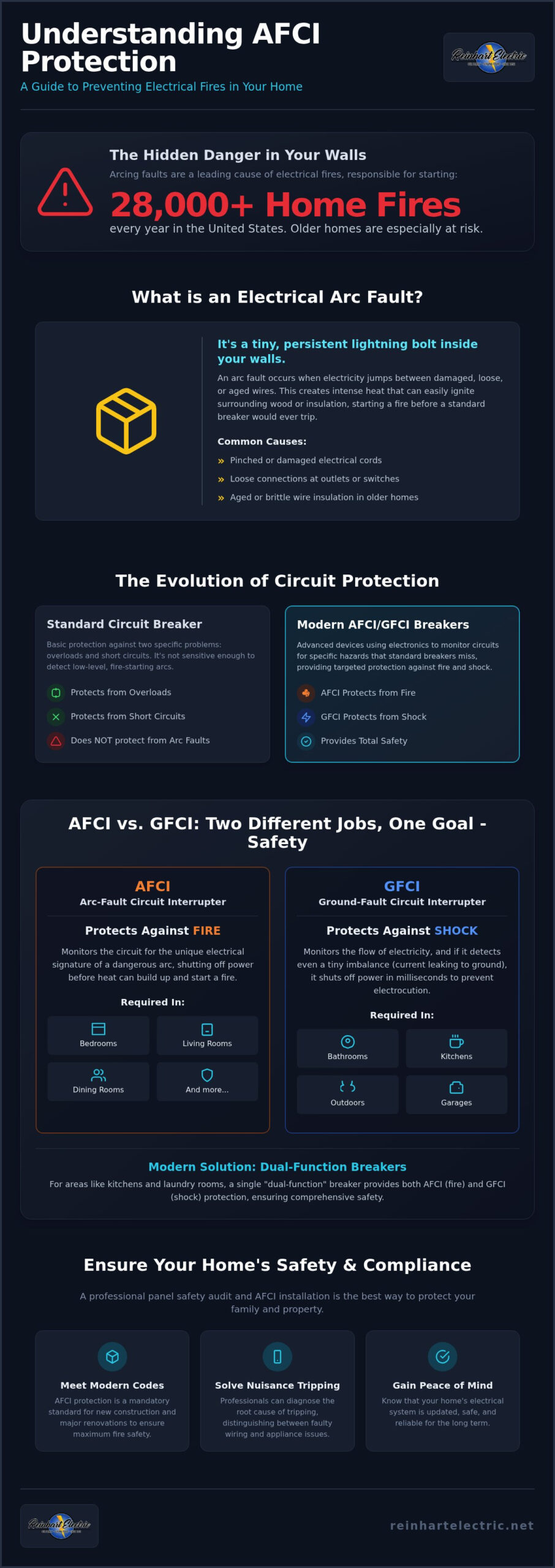
Home electrical safety has evolved significantly since we began serving King County in 1952. While most homeowners are familiar with the breakers in their service panel, many don’t realize that traditional equipment has a specific safety gap. An Arc-Fault Circuit Interrupter (AFCI) is a sophisticated device designed to detect dangerous electrical arcs that standard breakers are unable to see. These arcs are a primary cause of residential fires, responsible for thousands of property losses every year. By constantly monitoring the circuit, an AFCI identifies the distinct signature of a hazardous arc and cuts power before a fire starts.
The Science of an Arc Fault
An arc fault happens when electricity unintentionally jumps from one conductor to another through damaged or compromised insulation. It’s essentially a small, persistent lightning bolt occurring inside your walls. This event generates extreme heat that can quickly ignite wooden studs or nearby insulation. Common causes include wires pinched by heavy furniture, loose terminal connections, or wire insulation that has become brittle with age. For a clear definition, an arc fault is a high-power discharge of electricity between conductors that creates enough heat to ignite surrounding materials.
AFCI vs. Standard Circuit Breakers
Standard breakers are built to handle two specific problems: short circuits and overloads. They trip when they detect a massive, sudden surge of power or when you’ve plugged too many devices into a single outlet. They protect your home’s wiring from melting, but they often ignore the low-level, intermittent arcing that causes fires. Standard breakers simply aren’t sensitive enough to catch these smaller hazards.
AFCIs provide a much higher level of precision. They use internal electronics to analyze the waveform of the electricity. This allows them to distinguish between the “good” arcs, like those created by a vacuum motor, and “bad” arcs caused by a frayed lamp cord. If you’re scheduling an AFCI breaker installation Seattle code requirements are only part of the story; the real benefit is the fire protection provided to your home. Our city’s many historic homes are particularly vulnerable to these issues. Decades-old wiring is more likely to have developed the cracks and loose points where arc faults thrive. When homeowners consider AFCI breaker installation Seattle experts often point to the dramatic reduction in fire risk. Adding AFCI protection isn’t just a code requirement; it’s a critical safety upgrade for any older electrical system.
AFCI vs. GFCI: Which Protection Does Your Home Need?
Many homeowners find themselves confused by the alphabet soup of electrical safety. While AFCI and GFCI breakers might look similar in your service panel, they perform two very different, yet equally vital, jobs. Understanding the difference between these two devices is the first step toward true fire safety and code compliance in your home. While one is designed to save your life from an immediate shock, the other is designed to save your property from a slow-burning fire.
When to Use a GFCI
Ground Fault Circuit Interrupters (GFCI) are your primary defense against electrocution. They’re required in any area where electricity might come into contact with water. This includes bathrooms, kitchens, garages, and all outdoor outlets. A GFCI works by monitoring the balance of electrical current. If it detects even a tiny amount of current leaking to the ground, such as through a person’s body in a wet environment, it shuts off power instantly. Our team at Reinhart Electric & Service, Inc. frequently performs safety checks for families in Covington and Kent to ensure these critical shock-prevention devices are installed exactly where they’re needed most.
When to Use an AFCI
While GFCIs watch for current leakage, Arc Fault Circuit Interrupters (AFCI) watch for heat-generating sparks. Modern codes now require these for nearly all living areas, including bedrooms, dining rooms, and hallways. This is because these spaces are where “hidden” wiring issues often occur behind drywall or under flooring. If you’re planning an AFCI breaker installation Seattle codes prioritize these rooms to prevent fires caused by damaged cords or aging wire insulation. These breakers also work beautifully alongside whole-house surge protection, creating a comprehensive safety net for both your home’s structure and your sensitive electronics.
In many modern Seattle homes, you’ll actually see “dual-function” breakers. These are the modern solution for areas like kitchens and laundry rooms where the code requires both shock and fire protection. Instead of installing two different devices, a single dual-function breaker provides the one-two punch of AFCI and GFCI safety in one unit. This keeps your panel organized and ensures you’re meeting the latest standards with the most efficient technology available. If you’re unsure which protection your home currently has, our team can perform a methodical safety audit to identify any gaps in your coverage. Reinhart Electric & Service, Inc. has helped King County residents stay safe since 1952, and we’re ready to help you navigate these important electrical code updates and safety compliance upgrades with transparency and care.
Seattle Electrical Code: When is AFCI Installation Mandatory?
Seattle homeowners often assume that modern safety rules only apply to brand-new houses. While the National Electrical Code (NEC) sets the baseline for the country, the Seattle Electrical Code includes specific local amendments that can trigger an upgrade during a simple remodel. If you’re planning a significant addition or even just moving a few outlets, you’ll likely need an AFCI breaker installation Seattle inspectors will verify. One specific regulation to watch is the “6-foot rule.” If you extend or move a branch circuit more than 6 feet, the entire circuit must be brought up to modern AFCI standards. This ensures that any modified wiring is protected by the latest fire-prevention technology.
For property owners in King County, these updates are more than just a legal hurdle; they’re a vital shield against liability. Installing AFCI protection in rental units demonstrates a proactive commitment to tenant safety. It significantly reduces the risk of electrical fires caused by tenant-owned appliances or aging infrastructure within the walls. We’ve seen how these small upgrades provide immense peace of mind for landlords who want to protect both their residents and their investment.
Retrofitting AFCI in Older Seattle Homes
Older neighborhoods in Burien and Des Moines are filled with charming homes built in the 1940s and 50s. These houses often feature “shared neutrals” or legacy grounding systems that weren’t designed for today’s sensitive electronics. Installing an AFCI breaker on these old circuits can lead to immediate tripping if the wiring isn’t properly separated. We often find that a full panel upgrade is the most methodical time to address these issues. It allows us to clean up the legacy wiring and ensure your home’s foundation is ready for modern safety devices. This approach prevents the headache of constant troubleshooting later on.
Passing Your Seattle Electrical Inspection
A failed inspection can stall a home renovation for weeks. Most AFCI-related failures happen because of improper wiring in junction boxes or using the wrong type of breaker for the specific panel brand. Hiring a licensed contractor ensures that the work is permit-ready from the start. At Reinhart Electric & Service, Inc., we handle the entire permitting process for our clients. We coordinate with city officials and ensure every wire meets the exact letter of the local code. Our team takes pride in getting it right the first time, so you can enjoy your updated space without any lingering safety concerns.
Solving Nuisance Tripping: Why Professional Installation Matters
The most frequent frustration homeowners experience after an electrical upgrade is a breaker that shuts off during normal daily activities. This is commonly known as “nuisance tripping.” It happens when the advanced electronics inside the breaker misinterpret a harmless electrical signature as a dangerous arc. While it’s tempting to blame the technology, these events are often a sign that the system is doing exactly what it was designed to do: protecting your home from a potential fire.
Proper AFCI breaker installation Seattle requires a methodical approach to ensure your safety devices work in harmony with your appliances. When a trip occurs, we follow a specific diagnostic process to determine if the issue is a “Bad Appliance,” “Bad Wiring,” or a “Bad Breaker.” Modern AFCI units are significantly more sophisticated than the first-generation models released in the early 2000s. They use digital signal processing to filter out the background noise of your home’s electrical system, which drastically reduces false alarms compared to older versions.
Common Causes of AFCI Nuisance Trips
Many “nuisance” trips are actually caused by external factors that mimic the signature of a dangerous arc. Older vacuum cleaners and power tools are frequent culprits. The carbon brushes inside their motors naturally create tiny sparks during operation, which can confuse a sensitive breaker. Other common issues include:
- Cheap LED dimmers that produce electrical “noise” on the circuit.
- Incompatible electronics or poorly shielded power supplies.
- Poorly terminated wires inside outlet boxes.
This last point is particularly important. A loose wire under a screw terminal can create a real, heat-generating arc. In these cases, the breaker isn’t being a nuisance; it’s preventing a disaster. Our team uses specialized testers to find these hidden faults that standard tools might miss.
Steps to Troubleshooting a Tripping AFCI
If your breaker keeps cutting power, you don’t have to feel helpless. Follow these simple steps to narrow down the cause before calling for help:
- Step 1: Unplug every single device on the affected circuit and attempt to reset the breaker at the panel.
- Step 2: Plug your appliances back in one by one. If the breaker trips immediately after plugging in a specific item, you’ve likely found a “Bad Appliance” issue.
- Step 3: If the breaker trips with nothing plugged in, the fault is likely hidden within your walls or the panel itself.
When basic troubleshooting doesn’t solve the problem, it’s time for a professional look. We’ve spent decades helping King County families maintain reliable power without the headache of constant interruptions. If you’re struggling with a stubborn circuit, contact Reinhart Electric & Service, Inc. for expert electrical repairs and troubleshooting to get your home back in balance.
Professional AFCI Installation with Reinhart Electric
Since 1952, our family-owned business has been a steady hand for homeowners across King County. We’ve seen electrical standards change over the decades, but our commitment to local safety has never wavered. When you choose us for AFCI breaker installation Seattle families receive more than just a component swap. You get a methodical safety audit from a team that treats your home with the same care as our own. We believe in transparent communication, which means we’ll always take the time to explain the “why” behind every safety recommendation we make for your property.
Whether you’re in Renton, Auburn, or Maple Valley, our experts are trained to handle the unique challenges of Pacific Northwest housing. We don’t just follow the minimum requirements; we aim for a higher standard of reliability. Our goal is to ensure your power stays on and your home stays protected, regardless of the age of your electrical system. This neighborly approach has made us a trusted partner for generations of Seattle area residents who value honesty and hard work.
What to Expect During Your Installation
Our process begins with a comprehensive panel inspection. We don’t just install new breakers and leave. We examine the overall health of your service panel to identify any signs of heat damage, corrosion, or loose connections. This proactive approach helps us catch potential issues before they become expensive emergencies. It’s about providing long-term stability for your home’s infrastructure.
Next, we test each circuit for pre-existing faults. Modern AFCI technology is highly sensitive, so we want to ensure your existing wiring won’t cause immediate nuisance trips after the upgrade. We verify that every connection is secure and that the circuit is fully ready for its new safety device. Finally, we provide clear, professional labeling for your updated electrical panel. A well-organized panel is a safer panel, and we want you to feel confident navigating your home’s electrical system at any time.
Schedule Your Safety Audit Today
Electrical safety isn’t something to leave to chance. You don’t have to wait for a flickering light or a strange smell of smoke to take action. A proactive safety compliance check can identify aging components and bring your home up to the latest fire-protection standards before a problem arises. We’re here to be your long-term partner in maintaining a secure and dependable living environment for your family.
Our team is ready to help you navigate the complexities of modern codes with the steady hand of a seasoned expert. Take the first step toward a fire-safe home and Book your Seattle AFCI installation with Reinhart Electric today. We’ll provide the professional authority and warm, neighborly service you need to protect what matters most.
Securing Your Seattle Home for the Future
Ensuring your electrical system is up to date is one of the most effective ways to protect your family and your property. We’ve explored how arc fault protection serves as a critical shield against residential fires, especially in our region’s beautiful historic homes. By understanding the difference between AFCI and GFCI devices and staying ahead of the Seattle Electrical Code, you’re building a foundation of safety that lasts for generations. Professional AFCI breaker installation Seattle homeowners trust means you can enjoy modern protection without the headache of constant power interruptions.
Our team has been family-owned since 1952, and we take pride in being a licensed, bonded, and insured partner for our neighbors. Whether you need a scheduled safety audit or 24/7 emergency troubleshooting, we’re here to provide the peace of mind you deserve. Don’t wait for a small wiring issue to become a major hazard. Protect your home with professional AFCI installation. Contact Reinhart Electric today! We look forward to helping you maintain a safe, reliable, and code-compliant home for years to come.
Frequently Asked Questions
Do I have to install AFCI breakers in my existing Seattle home?
You generally don’t need to retrofit your entire home unless you’re starting a significant renovation. Under the Seattle Electrical Code, the requirement for AFCI breaker installation Seattle usually triggers when you extend or move a branch circuit more than 6 feet. If you’re simply maintaining your existing system, you aren’t forced to upgrade. However, many local homeowners choose to install them anyway for the added fire safety benefits they provide to older wiring systems.
Why does my AFCI breaker trip when I turn on my vacuum?
This is often a case of “nuisance tripping” where the breaker misidentifies the internal sparks of a vacuum motor as a dangerous arc. Older vacuums use carbon brushes that naturally create tiny arcs during operation. While modern AFCI units are better at filtering these out, older appliances can still cause interruptions. If your breaker trips every time you plug in a specific device, the appliance itself might be the issue rather than the breaker.
How much does it cost to replace a standard breaker with an AFCI breaker?
The total investment for an upgrade depends on several factors, including your current panel brand and the number of circuits being protected. While the retail hardware cost for a single-pole AFCI breaker typically ranges from $35 to $65, the labor for professional installation varies based on the complexity of your wiring. We recommend a full safety audit to determine exactly how many circuits require protection to ensure your home meets modern standards without unnecessary expenses.
Can I install an AFCI breaker myself?
While some homeowners attempt their own electrical work, we strongly recommend professional installation for safety and code compliance. Working inside a live service panel is dangerous and requires specific technical knowledge to avoid serious injury. Additionally, Seattle requires permits for most electrical modifications. A licensed contractor ensures the work is done correctly the first time and handles all the necessary paperwork to ensure your home passes a city inspection without any delays.
What is the difference between an AFCI and a GFCI?
The primary difference is the type of hazard they prevent. A GFCI (Ground Fault Circuit Interrupter) is designed to protect people from electric shock, especially in wet areas like bathrooms or kitchens. An AFCI (Arc Fault Circuit Interrupter) is designed to protect the structure of your home from fires by detecting heat-generating sparks behind the walls. Both are essential components of a modern safety system, and many rooms now require dual-function protection for both hazards.
Will an AFCI breaker prevent all electrical fires?
No safety device can prevent every possible fire, but AFCIs are highly effective at stopping the most common cause: arc faults. These breakers specifically target low-level arcing that standard breakers often ignore. While they won’t stop fires caused by external factors like candles or cooking, they provide a vital layer of defense for the hidden wiring inside your walls. Combining AFCI protection with whole house surge protection creates a much safer environment for your family.
How long do AFCI breakers usually last?
Most AFCI breakers are designed to last between 30 and 40 years, which is similar to the lifespan of a standard circuit breaker. However, because they contain sensitive electronic components, they can occasionally fail sooner due to power surges or extreme heat. It’s a good habit to use the “test” button on the breaker once a month. If the breaker doesn’t trip during the test, it’s time to call a professional for a replacement.
What rooms in my Seattle home are required to have AFCI protection?
Current codes require AFCI protection in nearly every living area of a dwelling. This includes bedrooms, dining rooms, living rooms, hallways, and closets. In Seattle, new construction or significant additions must also include protection for kitchens and laundry areas. Because requirements can change with each new code cycle, we stay up to date on the latest local amendments to ensure your AFCI breaker installation Seattle project meets every legal standard for your specific neighborhood.