
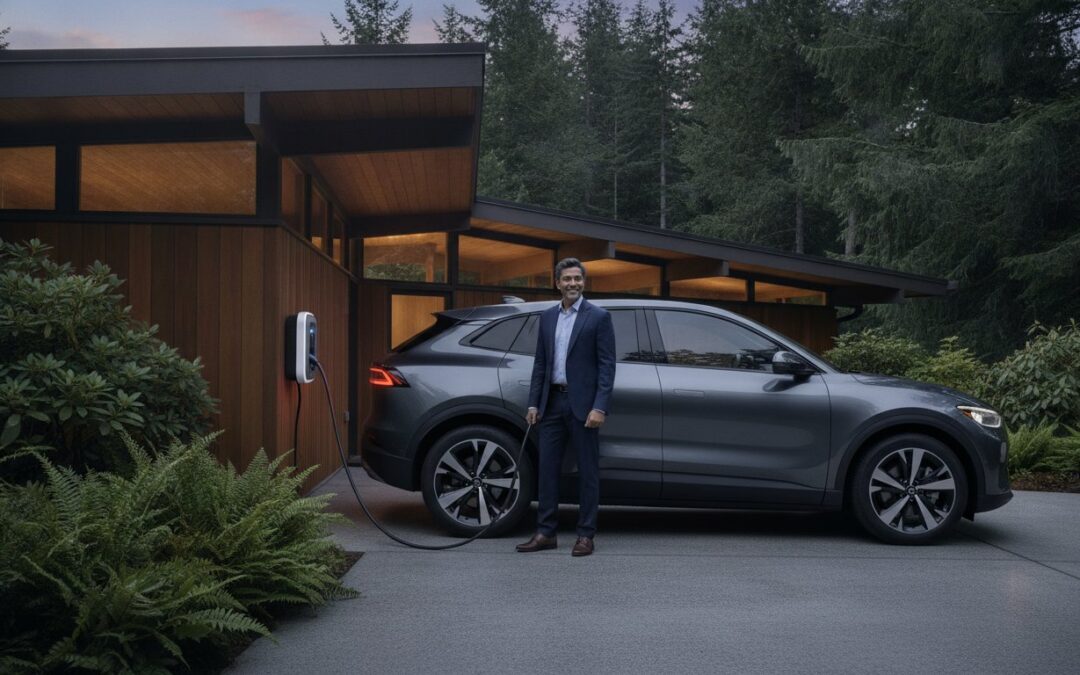
Is your mid-century Seattle home ready to function as a high-speed fueling station every single night? It’s a question more neighbors are asking as electric vehicles become the standard on King County roads. Most people realize that plugging into a standard wall outlet is painfully slow, but the leap to a professional Level 2 system often feels daunting. You might worry about the specific electrical requirements for home EV charger setups or fear that your older panel simply can’t handle the increased load. That anxiety is completely normal. No homeowner wants to risk a safety hazard or get hit with unexpected permit costs.
We believe that your peace of mind is just as important as your car’s battery life. Since 1952, we’ve helped local families navigate evolving technology with steady, honest advice. This guide will help you master the technical specifications and safety standards needed to prepare your home for fast, reliable charging. We’ll break down the hardware you need, explain the 2026 King County permitting process, and help you determine if a panel upgrade is truly necessary for your property. You’ll gain the clarity needed to ensure your home remains a safe haven while powering your future.
Key Takeaways
- Understand why moving from a standard 120V outlet to a 240V Level 2 system is the industry standard for efficient home charging.
- Learn how to assess your current panel capacity and determine if your electrical requirements for home EV charger installations necessitate a service upgrade.
- Discover the critical differences between hardwired and plug-in connections and why copper wiring is the safer choice for long-term reliability.
- Get a clear breakdown of King County permitting and Washington State inspection standards to ensure your installation is fully code-compliant.
- Follow a simple two-step process to locate your main breaker and measure the distance to your charger for a more accurate installation estimate.
Understanding the Tiers: Level 1 vs. Level 2 Electrical Needs
Choosing how to power your vehicle starts with understanding the different tiers of electric vehicle supply equipment (EVSE). With more than one in four new vehicles in the Seattle area now being electric or plug-in hybrids, the strain on home grids is becoming a common conversation. Understanding the specific electrical requirements for home EV charger setups is the first step toward a safe installation. Most new owners begin with the cord that came in the trunk, but this Level 1 setup rarely meets the demands of a daily King County commute.
The 120V Level 1 Limitation
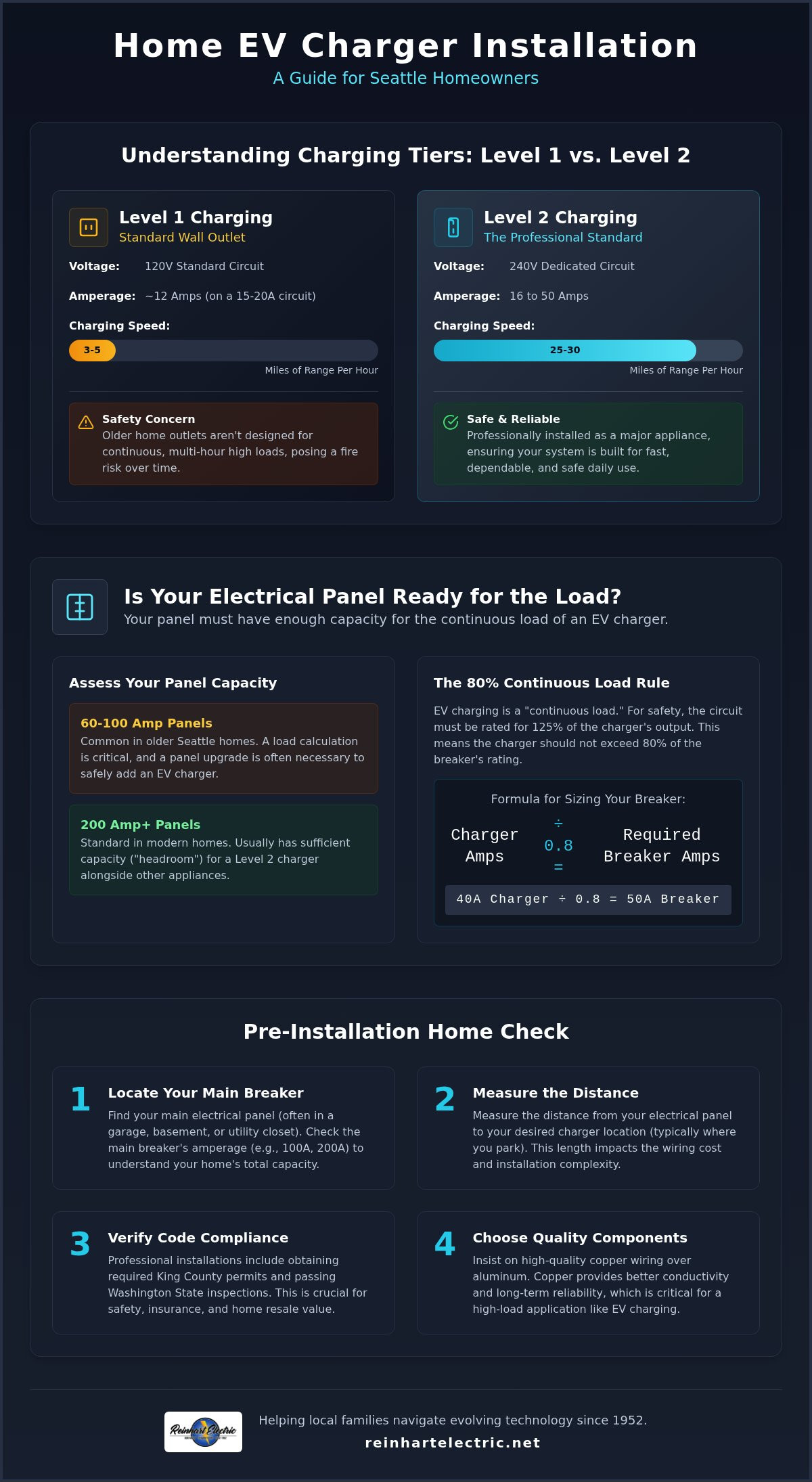
Level 1 charging uses a standard 120-volt household outlet. It typically draws about 12 amps on a 15-amp or 20-amp dedicated circuit. While this setup requires no special installation, it’s often called trickle charging for a reason. You’ll only gain about 3 to 5 miles of range for every hour the car is plugged in. For a homeowner in Renton commuting to Seattle, a 12-hour overnight charge might only provide 40 to 60 miles of range. This doesn’t leave much room for errands or unexpected trips.
Safety is a primary concern with this method. Standard outlets in older Seattle homes weren’t designed to handle a continuous, high-amperage draw for 12 or 14 hours straight. This constant load can cause heat to build up in the outlet or the wiring behind the wall. Over time, this stress increases the risk of electrical failure or fire, especially in homes with aging infrastructure that has served the community since the 1950s.
The 240V Level 2 Advantage
Level 2 charging is a 240-volt AC circuit that delivers significantly faster replenishment than a standard wall outlet. This is the industry standard for residential use because it provides 25 to 30 miles of range per hour of charging. To meet the electrical requirements for home EV charger installations of this caliber, your electrical panel must accommodate a double-pole breaker. This dedicated circuit usually ranges from 16 to 50 amps depending on your specific charger and vehicle needs.
Most homeowners in Kent and Renton find they transition to Level 2 within the first month of ownership. The convenience of fueling up in just a few hours provides a level of freedom that Level 1 simply can’t match. By treating your charger as a major appliance, much like a clothes dryer or an electric range, you ensure your home’s system is built for the task. This professional approach prioritizes safety and gives you the reliability you need for a stress-free morning start.
Evaluating Your Electrical Panel Capacity and Load
Your electrical panel acts as the heart of your home’s power distribution system. Before you can address the specific electrical requirements for home EV charger setups, you must determine if your main service has enough strength to support the extra weight. Think of it like a plumbing system. If you’re already running the dishwasher, the laundry, and the shower at the same time, adding a high-pressure fire hose might cause a backup. Most modern homes feature a 200-amp main breaker, but Seattle’s older neighborhoods are full of 60-amp and 100-amp systems that require a much closer look.
An NEC load calculation is the standard method used to understand your home’s headroom. This is the amount of power left over when your most demanding appliances are running simultaneously. According to the U.S. Department of Energy, verifying home charging electrical requirements is a critical safety step to prevent overloading your service. If your panel is already near its physical limit, adding a fast charger could lead to frequent tripped breakers or heat damage to your internal wiring.
Load Calculations for Older Seattle Homes
EV charging is classified as a continuous load. This means the system draws a steady, high-amperage stream of power for several hours at a time. To maintain safety and prevent overheating, we adhere to the 80% rule. If you want to charge at 40 amps, your circuit must be rated for 50 amps. This must be a dedicated circuit. Your charger cannot share a line with a dryer or any other kitchen appliance. You also need two adjacent physical slots in your panel for a double-pole breaker. If your panel is already crowded, a professional electrical panel assessment can help you determine if a sub-panel or a full service change is the best path for your specific layout.
Wiring, Conduits, and Proper Outlet Specifications
Once you confirm your panel can handle the load, the next step is planning the physical path from that panel to your vehicle. The electrical requirements for home EV charger installations are strict because of the intense heat generated during long charging sessions. Unlike a toaster or a vacuum, an EV charger draws maximum power for hours at a time. This requires heavy-duty components that won’t degrade under thermal stress. Choosing the right materials now prevents costly repairs or safety hazards down the road.
Hardwired vs. Plug-in Installations
You have two primary options for connecting your station. A NEMA 14-50 plug-in setup offers flexibility. It allows you to take the charger with you if you move or easily swap it for a different model. However, these outlets now require a GFCI breaker under modern codes, which can sometimes lead to nuisance tripping with certain car models. Hardwiring is often the most reliable choice for outdoor or high-amperage home charging setups. It eliminates the plug-and-socket connection point, which is a common site for heat buildup, and allows for faster charging speeds up to 80 amps on supported vehicles.
The Importance of Wire Gauge (AWG)
Wire size is non-negotiable for safety. For a standard 40-amp or 50-amp circuit, 6 AWG copper wire is the gold standard. We strongly prefer copper over aluminum for EV circuits because copper is more conductive and handles the expansion and contraction of heat more reliably. If your garage is far from your panel, we must also account for voltage drop. A run of 100 feet or more might require stepping up to a thicker wire to ensure your car receives the full power it expects. Using the wrong gauge can lead to overheating and wasted energy.
Protecting these wires is equally vital. In most King County garages, we install wiring inside rigid or flexible conduit to prevent physical damage from tools or vehicles. If you choose a plug-in model, the quality of the outlet itself matters immensely. We use commercial-grade receptacles rather than standard residential versions found in big-box stores. Residential outlets are designed for intermittent use; a commercial-grade outlet is built to withstand the intense, continuous draw of an EV without melting or failing. This methodical approach to hardware ensures your installation meets the high safety standards we’ve upheld in the Seattle area since 1952.
King County Codes, Permits, and Safety Standards
In cities like Auburn and Kent, an electrical permit is a non-negotiable legal requirement for any new charging circuit. These permits act as a formal record that your home meets the current Washington State Electrical Code. Skipping this step might save time today, but it creates massive headaches during a future home sale or insurance claim. Most King County permit fees increased by approximately 14% on January 1, 2026, and now include a $126 application screening fee. Professional installers handle this paperwork for you to ensure the job is done right the first time.
The Washington State Department of Labor and Industries (L&I) or local city inspectors will visit your home to verify the installation. They check that the electrical requirements for home EV charger setups, such as circuit sizing and grounding, are strictly followed. If you chose a plug-in NEMA 14-50 station, the inspector will look for a GFCI breaker. This safety device is required by current code to prevent shocks in damp garage environments. DIY installations often fail these inspections because homeowners aren’t aware of the specific local amendments in the Seattle Electrical Code.
Navigating the Permitting Process
While homeowners can technically pull their own permits for their primary residence, it’s rarely recommended. When a licensed contractor pulls the permit, they take full legal and financial responsibility for the work. Inspection timelines in South King County can vary, but most are completed within a few business days of the request. A professional electrical safety audit home assessment ensures your property is ready for the inspector’s arrival. This proactive approach prevents the frustration of a failed inspection and a second visit fee.
Grounding and Surge Protection
Modern electric vehicles are essentially computers on wheels. They contain sensitive electronics that are vulnerable to power fluctuations. Proper grounding is the first line of defense, but Seattle’s seasonal storms and grid fluctuations pose a constant threat. We strongly recommend whole house surge protection installation alongside your new charger. This system protects your car’s expensive battery management system and your home’s other smart appliances from high-voltage spikes. It’s a small investment that provides significant peace of mind during our region’s heavy winter winds.
Protecting your home and your new vehicle is our top priority. If you want to ensure your setup meets every local safety standard, contact us at Reinhart Electric for a professional consultation.
Preparing Your Home for a Level 2 EV Charger Installation
Preparing your property for a modern charging system doesn’t have to be a source of stress. By following a methodical sequence, you can ensure your home meets all electrical requirements for home EV charger standards while keeping your family safe. Start by locating your electrical panel. You need to identify the number on your main breaker, which is usually found at the top or bottom of the breaker list. Most homes in our region operate on 100-amp or 200-amp service. Knowing this number immediately tells an electrician how much potential power we have to work with.
Next, determine the distance between your panel and your desired charger location. A longer run requires more conduit and heavier wire, which we discussed in previous sections regarding voltage drop. Once you have these basics, consult with an EV charger installation Seattle expert. We will review your home’s existing load to see if a panel upgrade is truly required. Taking these steps before you purchase a charging unit prevents you from ending up with hardware that your current infrastructure cannot support.
The Reinhart Electric Approach
We focus on transparent pricing and personalized solutions for families throughout Renton and Kent. Our team has provided reliable electrical service to the Seattle community since 1952. We believe in the value of a professional diagnostic before you commit to a specific charging unit. Every home is unique, especially the diverse housing stock found in the Pacific Northwest. We treat every task with equal importance, ensuring your system is technically superior and easy to maintain for years to come.
Ready to Charge? Next Steps
Scheduling a site visit is the best way to get an accurate installation estimate. When you are ready to move forward, please have your vehicle’s charging specifications and clear access to your electrical panel ready for our technician. This helps us move quickly and respect your time during the evaluation. We also provide a safety net for new EV owners with our 24/7 team available for emergency electrical concerns. Our goal is to be your steady partner in maintaining a safe, efficient home environment as you transition to electric driving.
- Step 1: Locate your panel and identify the main breaker amperage.
- Step 2: Measure the distance from the panel to the parking spot.
- Step 3: Schedule a professional site visit for a load calculation.
- Step 4: Confirm if your home needs a panel upgrade or a simple circuit addition.
Power Your Future with Confidence
Transitioning to an electric vehicle is an exciting milestone for any King County household. By now, you understand that a successful setup depends on more than just a plug. It requires a clear evaluation of your panel’s capacity and a commitment to high-quality copper wiring. Mastering the electrical requirements for home EV charger installations ensures your property remains safe while providing the fast, reliable power you need for your daily commute. Whether you live in a historic 1950s Renton home or a modern Seattle residence, the right preparation makes all the difference.
Reinhart Electric has served the local community since 1952. As licensed, bonded, and insured contractors, we prioritize your peace of mind and home safety above all else. We even offer 24/7 emergency service to act as a safety net for our neighbors. You don’t have to navigate these technical standards alone. Our team is here to provide the steady, honest guidance you deserve. Schedule Your Professional EV Charger Consultation Today and take the final step toward a more efficient home. We look forward to helping you power your journey ahead with total confidence.
Frequently Asked Questions
Do I need a 200-amp panel to install an EV charger at home?
Not necessarily. While a 200-amp panel is the modern standard for homes in Renton and Kent, some 100-amp systems can support a charger if your other appliances don’t draw too much power. We perform a detailed load calculation to see if your current setup meets the electrical requirements for home EV charger installation. If your home already uses a heat pump or electric water heater, an upgrade is more likely to be necessary.
Can I use my existing dryer outlet for my electric car?
It is generally not a safe or efficient option. Dryer outlets are typically rated for 30 amps, while most Level 2 chargers require a 50-amp circuit for optimal performance. Constant plugging and unplugging can also wear out a standard residential outlet, leading to dangerous heat buildup. A dedicated circuit ensures your vehicle charges safely without competing with your laundry appliances or risking a nuisance tripped breaker.
What is the average cost of the electrical work for an EV charger in Seattle?
The total investment for your installation depends on several local factors. The physical distance between your electrical panel and the garage, the need for a panel upgrade, and the complexity of the wiring run all influence the final amount. While we don’t provide flat rates without a site visit, we offer transparent, personalized evaluations for families in Auburn and Kent to ensure you understand every technical detail before work begins.
Is a permit required for EV charger installation in Renton, WA?
Yes, an electrical permit is required for all Level 2 installations in Renton and surrounding King County cities. This ensures that a Washington State L&I or city inspector verifies the work meets strict safety standards. A permitted installation protects your home’s resale value and is often required by homeowner insurance companies. We handle the entire permitting process for our clients to keep the project moving forward smoothly and legally.
Can I install a Level 2 charger myself if I am handy with tools?
We strongly advise against DIY installations for Level 2 charging systems. High-voltage 240V circuits require specialized knowledge of wire gauges, torque settings, and local codes. In Washington State, this work must be performed by a licensed electrician to ensure it meets the electrical requirements for home EV charger safety. Attempting this yourself can lead to electrical fires, voided vehicle warranties, or denied insurance claims if an electrical fault occurs.
What happens if my electrical panel is full and I want an EV charger?
If your panel has no physical room for a new double-pole breaker, we have several professional solutions. We can often install a sub-panel to create additional space or use tandem breakers if your specific panel model allows them. In older homes across South King County, a full panel upgrade is sometimes the most reliable path to ensure your home can handle the charger alongside modern high-draw appliances like air conditioners.
Does charging an EV at home increase the risk of an electrical fire?
A professionally installed home charging station does not increase your fire risk. Hazards typically arise from improper DIY setups, using undersized wiring, or relying on standard residential outlets for continuous high-amperage loads. By using commercial-grade materials and following strict NEC standards, we ensure your home remains a safe environment. Our family-owned team has prioritized these safety standards for Seattle area neighbors since 1952.
How long does it take an electrician to install a Level 2 home charging station?
Most standard Level 2 installations are completed within four to six hours. If your project requires a full electrical panel upgrade or a long, complex wiring run through finished walls, it may take a full day. We work methodically to respect your time while ensuring every connection is secure and tested. Once finished, we’ll walk you through the system so you feel confident using your new home fueling station every night.